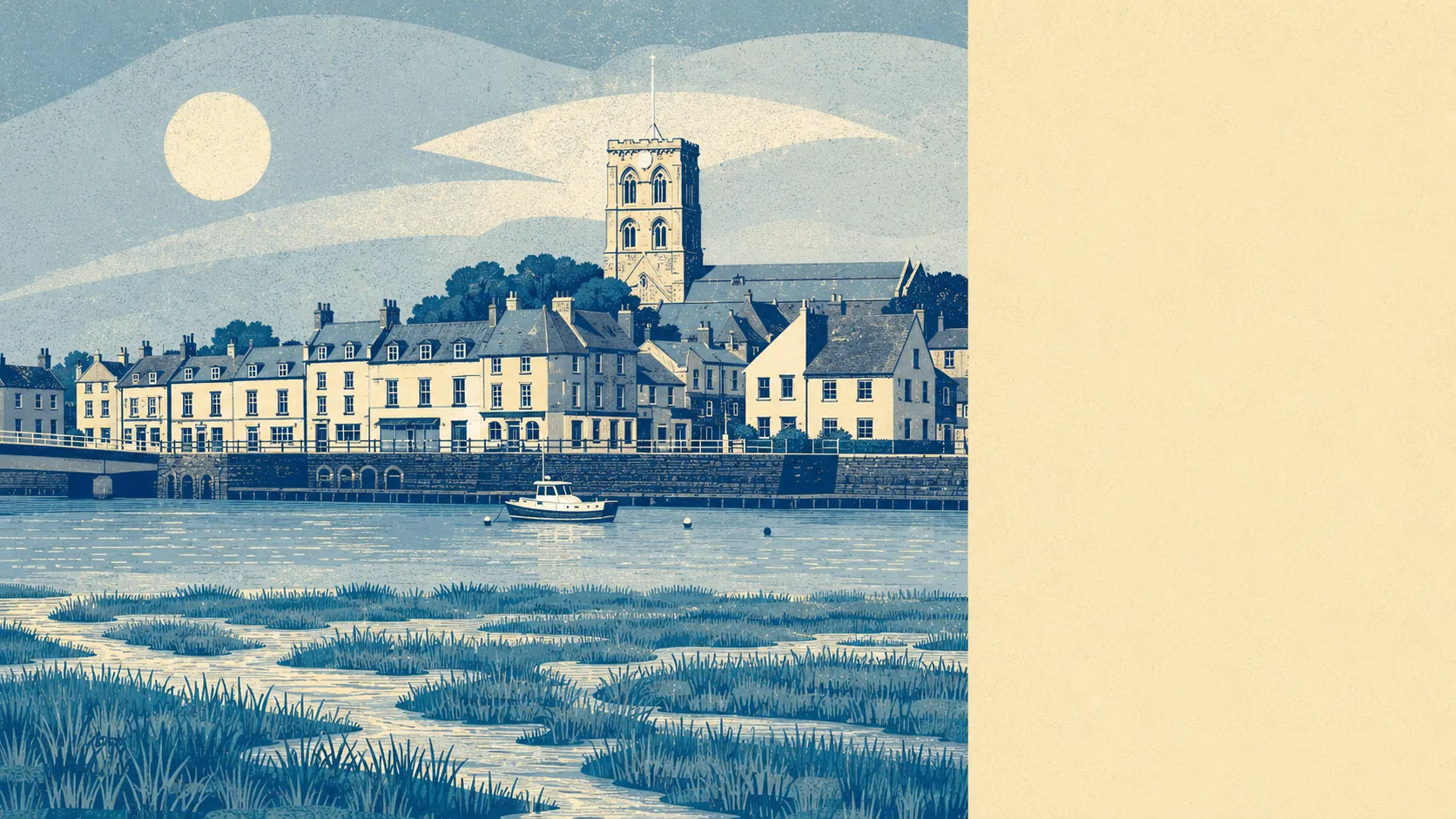
The area around Shoreham is what buyers picture when they say they want to be near the sea, and unlike most coastal towns it delivers on the picture. Green space starts about a hundred and seventy metres from the average front door. Over twenty separate parks or bits of open ground sit inside a one-kilometre walk. The estuary is closer than the shops. The setting is the strongest thing Shoreham has going for it, and the environment rating for the area quietly runs to full marks.
Green space in Shoreham is baked into the geography of the town. A typical Shoreham address sits about a hundred and seventy metres from the nearest park, common, or bit of open ground. Over twenty separate patches of green sit inside a one-kilometre walk, which is more than most residents will get around to using in a decade. The picture for blue space runs the same way. The average address sits under half a kilometre from the nearest bit of open water, and more than forty patches of it sit inside a kilometre, thanks to the combination of the sea and the estuary running along the town's southern and western edges. The National Cycle Network runs close to about seven in ten Shoreham postcodes, which is what turns the green-and-blue picture into something residents can move through rather than only look at.
The character of the area comes from what it sits between. The town centre backs onto Old Shoreham, the older village going back to pre-Roman times, and looks out across the River Adur to Shoreham Beach via the Adur Ferry Bridge that opened in 2013. The estuary is a working one, and the port is still commercial. The airport, sitting west of the main town, is the oldest licensed airport in the country and still in operation. East of the town centre you get Southwick, Portslade-by-Sea, and Kingston by Sea blurring into one continuous coastal strip that eventually resolves itself into somebody else's district. West lies Lancing, which strings the coastal belt together with a set of stations at roughly regular intervals along the same railway line. Immediately north the geography stops being coastal at all and becomes the kind of coastal countryside that fewer coastal towns have hung onto than you might think, though none of it carries a formal protection designation, which is either a warning about the next twenty years or a story of how quietly it has held on. That is the area, in aggregate: a working estuary, a beach that still functions as a beach, a village or two nearby that predates most English towns, and a stretch of countryside behind that has quietly stayed rural because nobody has yet built a train station in the middle of it.
Full marks on the surrounding-area picture, which is the honest verdict. The land around Shoreham is what makes buyers put up with the parts of the town that need putting up with. It is the strongest thing Shoreham has, and it is what will still be here in a hundred years' worth of coastal-town churn.