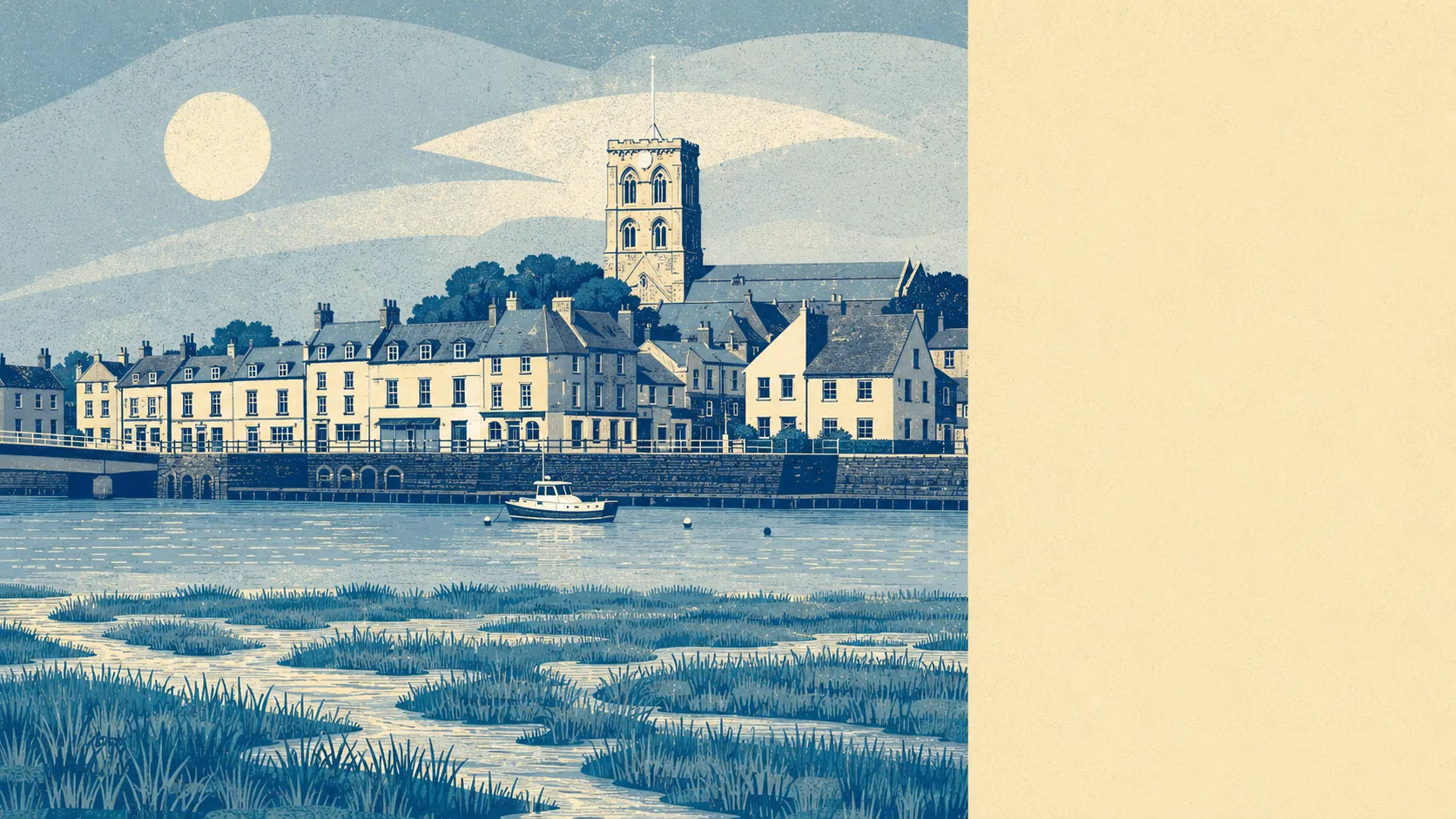
Shoreham is Brighton without the marketing budget. Median age forty-six. Seven in ten homes owned. About a quarter rent. Same coast, half the pretension.
The housing stock tells the truth about who lives here. About half the homes are houses, roughly a third are flats, and one in ten is a bungalow, which is the kind of ratio that produces a median age of forty-six on its own. Most of it went up between the end of the war and the early 1980s, which is why the streets do not bother pretending to be Georgian. Roughly half the stock scores an energy rating of A to C. About one in seven sits at E or worse, and that is where the pre-1930 pockets get their revenge on your gas bill.
A typical sale in the last twelve months landed at about £420,000, off under three hundred transactions. Terraced houses sit close to that. Semis are closer to £455,000. Flats clear at around £250,000. Detached houses want six hundred thousand and change. Council tax mostly lands in band C, with over a fifth of homes in the two cheapest bands. That is a whole coastal town at prices Brighton priced past a decade ago.
Typical private rent across the Adur area, which is the district Shoreham sits in, runs to about £1,380 a month. That is the area figure, not the Shoreham-only one, but it does the honest work. Rents in the district have climbed close to four percent in the year. By Sussex standards that is quiet.
Crime runs at roughly seventy-three offences per thousand residents a year, which is about five percent above the local-authority average. That is not a Brighton figure. Whatever noise gets made about coastal towns, Shoreham's crime picture is quiet, and the marginal position above the district average sits inside the usual variation between neighbouring places on the same stretch of coast.
Shoreham-by-Sea station sits on the West Coastway Line, which runs to Brighton in one direction and Portsmouth in the other. Roughly two in a hundred residents commute by train. Nearly four in ten work from home, which is what happens in a place where the sea does most of the commuting-alternative work. About nine in ten homes can get gigabit broadband, which means the working-from-home number is real, not aspirational.
About one in six Shoreham postcodes sits in Flood Zone 3, which is the higher tide-and-storm-surge category. The town runs along a river and a coast, and the river gives the game away in the postcode maps. That is the thing to check before you sign, especially south of the town centre and along the beach. Green space runs the other way. A typical resident lives about a hundred and seventy metres from a park, a common, or open ground, with more than twenty within a kilometre. The area rating for green and blue space comes in at the top of the scale, and it earns it.
There are fifty-nine listed buildings on the ground in Shoreham. Three are Grade I. Three are Grade II starred. The rest are Grade II. That is enough that anyone turning up with a plastic-window quote will find a heritage officer looking over their shoulder. Owners of pre-1930 stock, which is roughly one in eleven homes here, are the ones who feel it most.
Seven in ten homes are owned. The median age here is forty-six. The typical household earns close to fifty-seven thousand a year. That is a settled coastal town where people move to and largely stay, and it looks it.
It suits people who want a coastal address, a working port at the end of the road, decent broadband, and prices Brighton priced past a decade ago. It suits parents who want a house they can own with a garden they can use, and older working-age people who have got the London flat out of their system.
It does not suit anyone whose commute has to be by rail on a fixed timetable, or anyone whose life plan requires the shortest possible walk to a wine bar. Anyone whose bottom line is "never having to check a flood map" should have a longer conversation with themselves before signing anything south of the railway line.
Shoreham has quiet claims. New Shoreham was laid out on a grid plan by the Normans towards the end of the eleventh century, and St Mary de Haura Church went up in the decade after 1103, which is more historical continuity than most seaside resorts can honestly reach for. The composer Havergal Brian moved down from London in 1958 and wrote twenty symphonies here over the next ten years, which is more symphonies than Brighton has produced. The playwright Charles Bennett was born in the town in 1899. The esports shoutcaster Paul Chaloner in 1971, which is the kind of civic detail that could not have been predicted at the time. And Shoreham Airport, west of the main town, has been a licensed airport longer than any other in the country, with an Art Deco terminal from 1936 that has stood in for scenes in The Da Vinci Code, Woman in Gold, and Poirot. Shoreham does not lead with any of this. It gets on.
The verdict on Shoreham is three out of five, which is the honest answer, and the two things pulling the score go in opposite directions. The strongest thing about the place is what surrounds it: green space and open water within walking distance of most homes. The weakest thing is what one in six postcodes has to face down in a stormy November. Either commit to being a coastal-town person who checks the flood map before signing, or accept that Brighton was never going to let you have a garden.