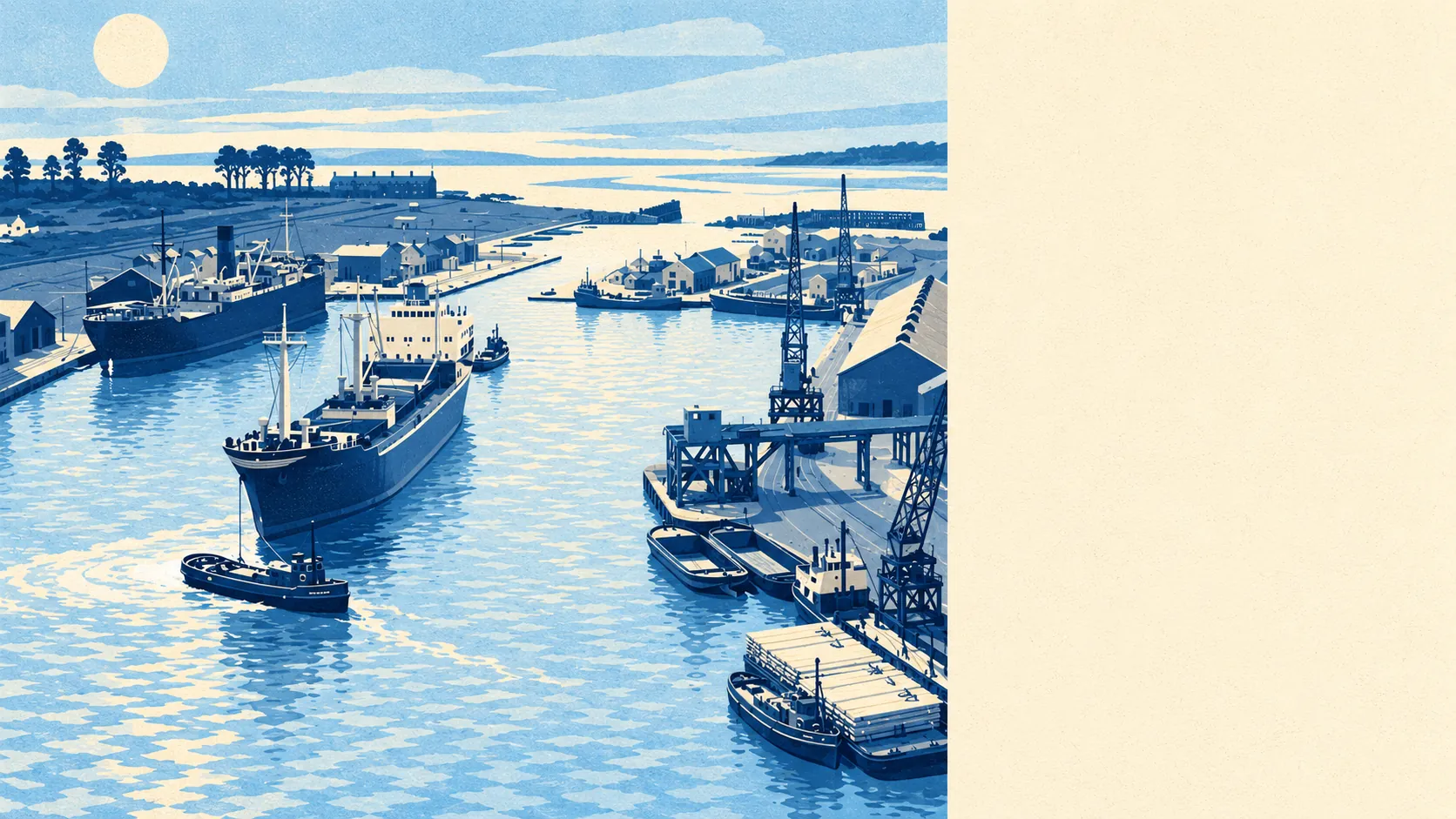
Sharpness will sell you a whole house beside a working port for under a quarter of a million pounds, and that price is most of the reason to come. Terraces go for less. Semis go for more. Most homes pay one of the two lowest council tax bands. Getting anywhere else is the part you pay for, in time.
The Land Registry recorded 13 sales here in the twelve months to May 2026, with a typical price of about £236,000. With only 13 sales, one unusual house can move that figure. The 8 terraces that sold had a median of £219,000, and the 5 semi-detached houses £280,000, so the extra bedroom and the side passage cost about what you would expect. Band B is the most common council tax band, and about 61% of homes are in Band A or B. Your monthly bills start low before the heating goes on.
Typical private rent across the Stroud area was about £1,040 a month in April 2026. That is an Office for National Statistics average for the whole district, so the valley towns count as much as this end of the estuary. Sharpness has no rent figure of its own.
The council tax valuation list covers 700 homes. Terraces are the biggest group at about 34%, followed by semis at 29%, detached houses at 17%, flats at 11% and bungalows at 7%. About 44% were built before 1930. Among homes with an energy certificate, about 52% are rated A to C and 14% are E or worse, so the older terraces and the newer houses do not heat alike. About 74% of homes are on mains gas and around 10% heat with electricity alone. Mains gas reaches most of the village, which is more than the railway does.
Historic England lists three buildings here, all at Grade II, and there is one conservation area, Sharpness Old Dock. The planners' strictest attention goes to the dock, where the ships tie up. That leaves most of the housing to its owners. A loft conversion on an ordinary terrace is a normal planning matter. Outside the old dock, nobody is going to argue with you about sash windows.
Transport is where Sharpness takes back what the price saved you. In the 2021 Census, almost nobody took the train to work: the share rounds to 0%. About 63% drove and 27% worked from home. There are 20 bus stops. The 5 with timetable data average 17 weekday departures and about 2 buses in the peak hour, and all 5 run at weekends. The Department for Transport's modelled times date from 2019, and the public transport ones will have aged worst. They put the nearest town centre 44 minutes away by public transport or 22 by car, and a hospital 104 minutes away by public transport or 41 by car. The nearest station is Lydney, which is on the other bank of the Severn, and nobody rows to work. Broadband does better: about 95% of premises can get superfast and 63% gigabit. That explains why so many people work from home.
Gloucestershire Constabulary recorded about 44 crimes per 1,000 residents here in the year to May 2026. That is roughly 4% below the Stroud average, so crime runs at about the district's normal level. For a port, the smugglers are not pulling their weight.
The flood figures depend on which measure you use. In the Environment Agency's river-and-sea flood zones, about 9% of Sharpness postcodes are in Zone 3, the highest band, and none are in Zone 2. On the wider postcode measure, which counts any flood indicator including surface water, about 6% of postcodes are at high risk on at least one indicator and around 27% at low risk. The agency has two recorded flood events here. The most recent was in 1968, when a main river overflowed its channel where there were no raised defences. The shoreline management plan for this coast is to "hold the line" at 20, 50 and 100 years. That is a plan for the coast, and the money to carry it out still has to be found.
On average, the nearest green space is about 250 metres from home, with 9 green spaces within a kilometre. Open water is about 340 metres away. The view from most of the village is the Severn, and because it is a working river, the view sometimes includes a ship.
About 63% of households own their home and the median age is 42. That makes Sharpness a village of settled owners. It is no retirement colony and has no student flats. The Office for National Statistics models median gross household income at about £60,000 for the financial year to March 2023. That figure is before tax and covers a wider area than the village. The roll call is short: dock workers, families, and people who chose the estuary.
Sharpness works for buyers who drive or work from home and want a house with outside space for a modest sum. Anyone who needs a train every morning, or a hospital within a short trip, should look elsewhere. So should anyone who expects a village shop on every corner.
About £236,000 buys a house here with the Severn at the end of the road. A buyer would struggle to get that combination cheaper anywhere nearby. The cost is distance: almost every journey out starts with car keys. Sharpness is better than its dead-end address suggests, as long as you are happy to drive.