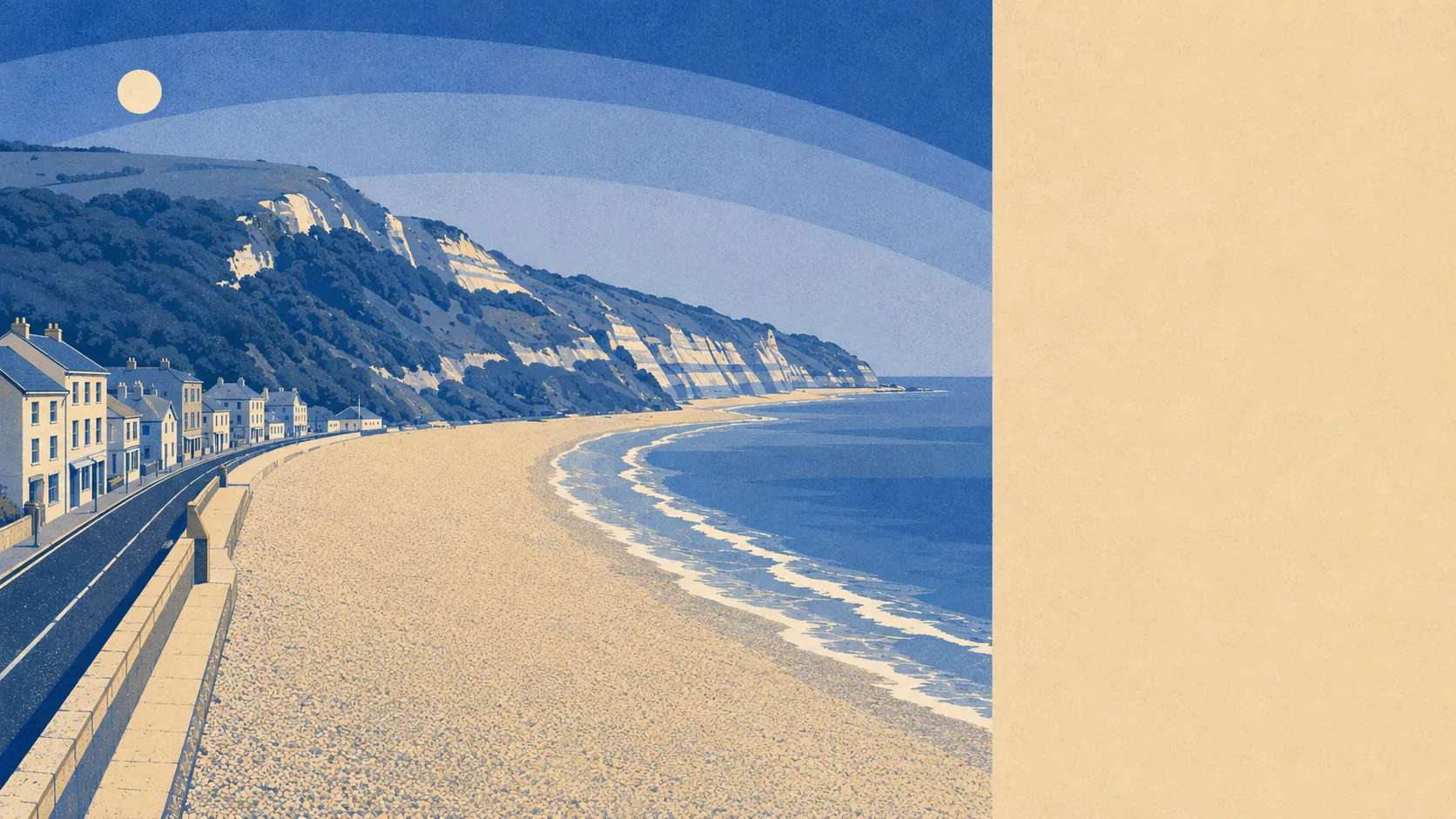
About £286,000 buys the middle of the market in Seaton. Detached homes reach around £380,000. Flats go for under £170,000. The whole spread would be a deposit conversation an hour up the coast. This is a seaside town that never learned to charge like one.
The Land Registry logged 128 sales in the year to May 2026, at a median of about £286,000. Detached houses took 55 of those sales at a median around £380,000, which makes the biggest homes the most-traded type here rather than the rare prize they are in most towns. Semi-detached homes came in at about £285,000 across 24 sales, terraces at about £280,000 across 21, and flats at about £169,000 across 28. Two dozen sales of a type is a thin slice, so treat the semi and terrace figures as the shape of the market rather than a valuation of your own front door.
The published house-price index for the area was down 0.1% over the twelve months to May 2026, which is a market standing still and breathing. Flats moved differently, down 3.6% over the same period. Those are recorded changes for a period that has already happened, not a forecast, and a tenth of a percent is not a story no matter how it is dressed up.
Council tax lands in the cheaper half of the scale. Band C is the most common band in the town, 31% of dwellings sit in bands A or B, and a band D bill runs to roughly £2,595 a year, which is the number worth holding against whatever you currently pay.
Renting is measured across the whole of East Devon rather than Seaton alone. The typical private rent across that district was about £970 a month as of April 2026, an average taken from the Office for National Statistics rent index rather than a middle value plucked from listings. By size, one-bedroom homes averaged about £686 a month, two-bedrooms about £898, three-bedrooms about £1,123 and four-bedrooms or larger about £1,621. A district that stretches from inland villages to the seafront will not price every street the same way, so those numbers are a starting point and not a quote.
Median household income in the area was about £47,000 gross, before any tax comes off, modelled for the financial year to March 2023. Set that against a middle sale price around £286,000 and the arithmetic is demanding rather than absurd. The flat end of the market is the part that genuinely stays within reach of a single local income, which is not something many towns with a beach can still say.
Measured by floor space, homes here go for a median of about £3,800 per square metre, across the sales that could be matched to an energy certificate's recorded floor area. That match covers roughly 72% of the year's sales, 92 of them, so it describes most of the market rather than all of it. The typical matched home ran to about 80 square metres, which is the size behind the figure.
On bedrooms, the Census 2021 count puts 37% of households in two-bedroom homes and 32% in three-bedroom homes, with 18% at four bedrooms or more and 13% in one-bedroom homes. The two-bedroom home is the default unit in Seaton, which fits neatly with that floor-area figure and explains why so much of the stock feels built for two people and an occasional visitor.
Value for money is where Seaton is at its strongest. You are buying south-coast postcodes at prices that inland market towns would recognise, and the market is not currently asking you to hurry.