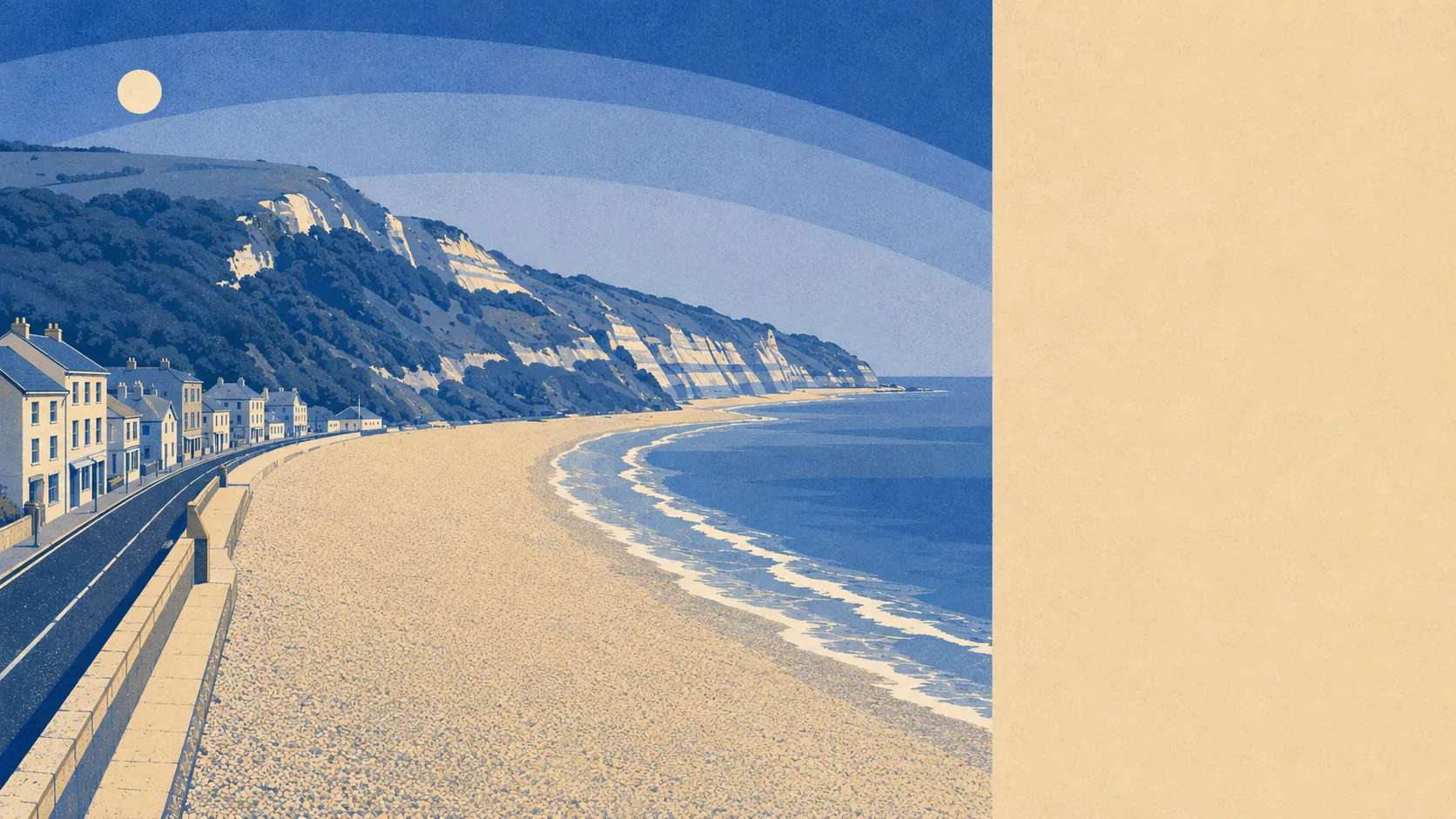
Yes, provided your week does not depend on a railway station. Seaton is a Devon seaside town that stopped chasing things a long time ago and turned out to be rather good at it. Seven in ten own their homes. The typical resident is past sixty. The most common home is a bungalow. This is not a town in decline. It is a town that arrived, parked, and put the kettle on.
The bungalow plurality is the first honest thing about the place. Across the 5,670 dwellings on the council-tax valuation list, 27% are bungalows, 22% flats, 22% detached houses, 15% terraces and 13% semis, which is a housing stock built for people who have finished enjoying stairs. Only 22% of it predates 1930, so the Victorian resort image most buyers arrive with is mostly wrong: this is a post-war town wearing an older name. Of the 2,971 homes holding an energy performance certificate, 46% sit in bands A to C, 39% in band D and 15% in band E or worse. Mains gas heats 72% of homes. Another 14% run on electricity alone, and in a single-storey property with a lot of outside wall, that is a running-cost fact worth knowing before the viewing rather than after the first January.
The Land Registry recorded 128 sales in the twelve months to May 2026 at a median of about £286,000. Detached homes ran to roughly £380,000, semis £285,000, terraces £280,000 and flats £169,000. A terrace and a semi land at almost the same money here, so the choice between them comes down to how much you enjoy sharing a wall. The Land Registry's House Price Index puts the wider average at about £344,000 as of May 2026, barely moved over the year and up 15% across five. Council tax sits low: band C is the most common, 31% of dwellings fall in bands A or B, and a band D bill runs to about £2,595 a year.
Renting is measured across East Devon rather than Seaton alone. Typical private rent across the district is about £970 a month as of April 2026, up 7% on a year earlier, with one-bedroom homes around £686, two-bedrooms around £898 and three-bedrooms around £1,123. Those are district-wide figures covering inland villages and coastal towns alike, so a flat with a sea view is under no obligation to obey them.
Recorded crime runs at about 41 offences per 1,000 residents over the twelve months to May 2026, against about 50 across East Devon, putting Seaton roughly 17% below the district average. That is the published rate, not something worked back from a headcount. What happens next is the less cheerful half: Devon and Cornwall Police charged someone in 8% of cases over the same period against about 12% nationally, and recorded no suspect at all in 26%. Low crime with a low charge rate is a fine combination right up to the moment it is your shed.
Seaton has no railway station, and the commuting numbers show the town made its peace with that years ago: 54% drive to work, 21% work from home, 15% walk, under 1% take a train and 1% take a bus. There are 43 bus stops in the town, 41 with published timetables averaging 32 weekday departures each, and every one of those carries a weekend service, which beats plenty of larger places. Department for Transport modelling puts the town centre 8 minutes away by car and 16 on foot, a doctor's surgery 9 minutes on foot, and the nearest hospital 52 minutes by car or 71 by public transport. That modelling dates from 2019, so treat the public transport times as the optimistic version. Broadband is the genuine surprise: superfast reaches every premise, gigabit reaches 52%, and nothing falls below the universal service obligation. At least one mobile operator covers 100% of the town, and all operators reach 97%.
Water is a street-by-street question rather than a town-wide one. On the postcode flood indicators, which include surface water, 13% of Seaton postcodes carry a high rating on at least one measure, 20% medium and 37% low. Separately, the Environment Agency's river-and-sea flood zones cover 10% of postcodes in zone 3 and 3% in zone 2, a narrower question about the estuary and the sea. There are 39 recorded flood events in the town's history, the most recent in February 2014 when the sea overtopped defences. The shoreline management plan is hold the line at every horizon it covers, meaning the defences are intended to stay put for the next hundred years rather than be quietly given up. In return for the water, green space sits about 210 metres from the average front door with 18 spaces inside a kilometre, open water about 280 metres away, and 79% of postcodes fall within roughly 300 metres of the National Cycle Network.
Heritage constraint is light. The area holds 21 listed buildings, one of them Grade I, one Grade II star and 19 Grade II, alongside four scheduled monuments and two conservation areas covering Seaton and Beer. Inside those conservation areas, changing windows and doors becomes a conversation with the council rather than a weekend job. Outside them, and most of the stock is outside them, nobody is going to stop you.
Ownership runs at 73%, the median age is 61, and median household income was about £47,000 in the financial year to March 2023. Almost 38% of households are one person living alone, 24% of them pensioners, while couples with children account for 10%. The town also carries 150 holiday lets against 122 shops and 12 pubs on the ratings list, which is the arithmetic of a resort that never fully switched the season off. In February the town belongs to the people who live in it. In August it is on loan.
This page also covers Beer, immediately west along the coast with a conservation area of its own, and Branscombe beyond it.
It suits people buying a life rather than a commute. Retirees, remote workers who have stopped pretending they need a station, and anyone who wants a doctor's surgery within walking distance and a beach at the end of the road get a great deal here. The bungalow stock also means the single-storey move can happen later without leaving the town, which matters more than buyers in their forties think it will.
It does not suit anyone who has to be somewhere else by nine. There is no train, the bus carries 1% of commuters, and the hospital run is the better part of an hour by car. Anyone looking near the estuary or the seafront should put the exact address into the Environment Agency's long-term flood-risk tool before getting attached, because the flood answer here changes by street rather than by town.
Seaton is a good place to live, and it is honest about which sort of good. Its real strength is what sits around it: green space and open water minutes from almost every front door, crime below the district average, and a coastline the plan says will be defended rather than abandoned. The weak spot is getting out, because transport and connectivity are the thinnest part of the case, and no amount of gigabit broadband has ever built a railway. Buy here because you want to be here, and the town will hold up its end of the bargain.