Green, surprisingly wet, and short on anywhere to spend money. Green space is a few minutes' walk from most front doors. There's water in more than twenty spots within a kilometre. The gardens are enormous. Rudgwick's surroundings are generous with everything except shops.
Green space averages about 250 metres from a Rudgwick home, with about five separate spaces within a kilometre. That's closer than many towns manage, and it's why dog walkers here don't need to plan a route. They need to pick one.
Water is even easier to reach than you'd expect for an inland village. The nearest blue space, meaning a river, stream, pond or lake, averages about 280 metres away, and there are about 23 within a kilometre. It's a landscape of small water rather than a riverfront, but there's plenty of it.
The National Cycle Network passes about 510 metres from the average home, and about 53% of postcodes sit close to it. That's enough for a proper weekend ride without loading the bike into the car first.
The premises ratings for the wider area list 371 shops, 34 pubs and 22 restaurants. Those figures cover a wider area than the village itself. Rudgwick's own share is what you'd expect of a village, so treat them as what's reachable, not what's on your street.
Air quality is good. Fine-particle pollution across the Horsham council area averaged about 6.5 micrograms per cubic metre in 2024, and that's a council-area figure rather than a reading taken in the village.
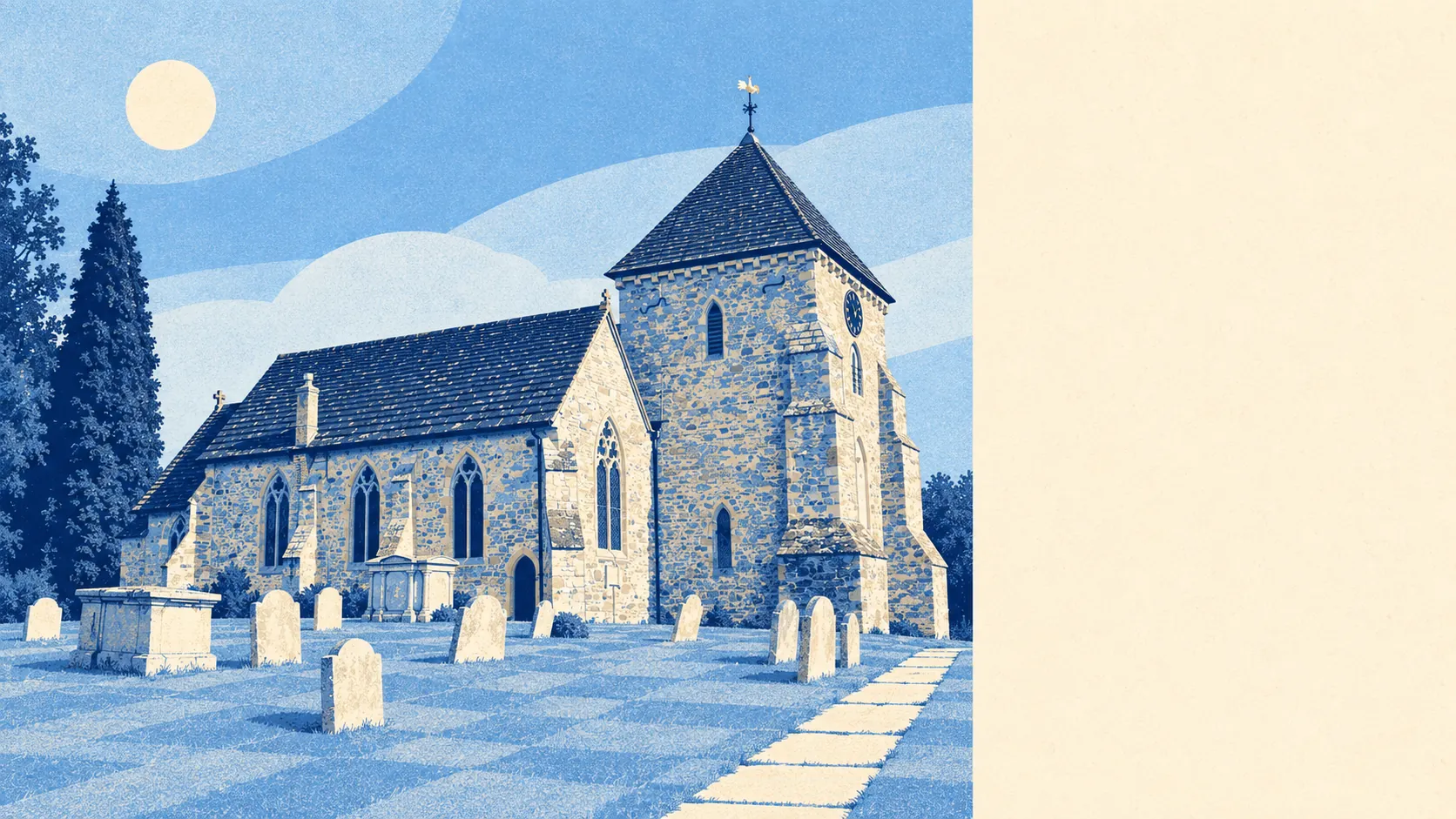
The character is older than the housing suggests. The parish church of the Holy Trinity has a Norman font of Sussex marble, and there are two conservation areas in the area, Rudgwick and Slinfold. The surrounding scatter of hamlets, Bucks Green, Ellen's Green, Rowhook and The Haven, gives the parish the feel of a network of small places rather than one centre. Some of the history underfoot goes back further still: nearby scheduled monuments include the Alfoldean Roman site, a stretch of Stane Street, and the moated site at Drungewick Manor. The Romans built a road through here, and the villages that grew up since have been driving on it ever since.
Private outdoor space is generous. Rudgwick has about 472,000 square metres of garden for every 1,000 residents, which describes a village of large plots rather than courtyards. If you want somewhere to put a trampoline, a vegetable patch and a shed for the lawnmower, the gardens here have room for all three.
The valuation list shows 70 rateable premises in the area. The biggest group is workshops, with 27, followed by offices with seven, and smaller numbers of industrial units, shops and leisure premises. These are premises on a list, not a guide to what's currently trading. The picture is still clear enough: Rudgwick is a place where people fix things, run small businesses and work from sheds, not where they browse.
For eating out, all 10 of the rated food premises in the area hold the top food hygiene score, and none rates low. It's a small sample, but a clean one.
No protected-landscape designation overlaps Rudgwick: no area of outstanding natural beauty, no site of special scientific interest, and no ancient woodland. That isn't a flaw. It's ordinary working Sussex countryside, green and wet and farmed, without a brown sign or a visitor car park in sight.
The surroundings are one of Rudgwick's real strengths, with green space and water a short walk from almost everywhere. Bring your own shopping list and plan to drive to fill it.