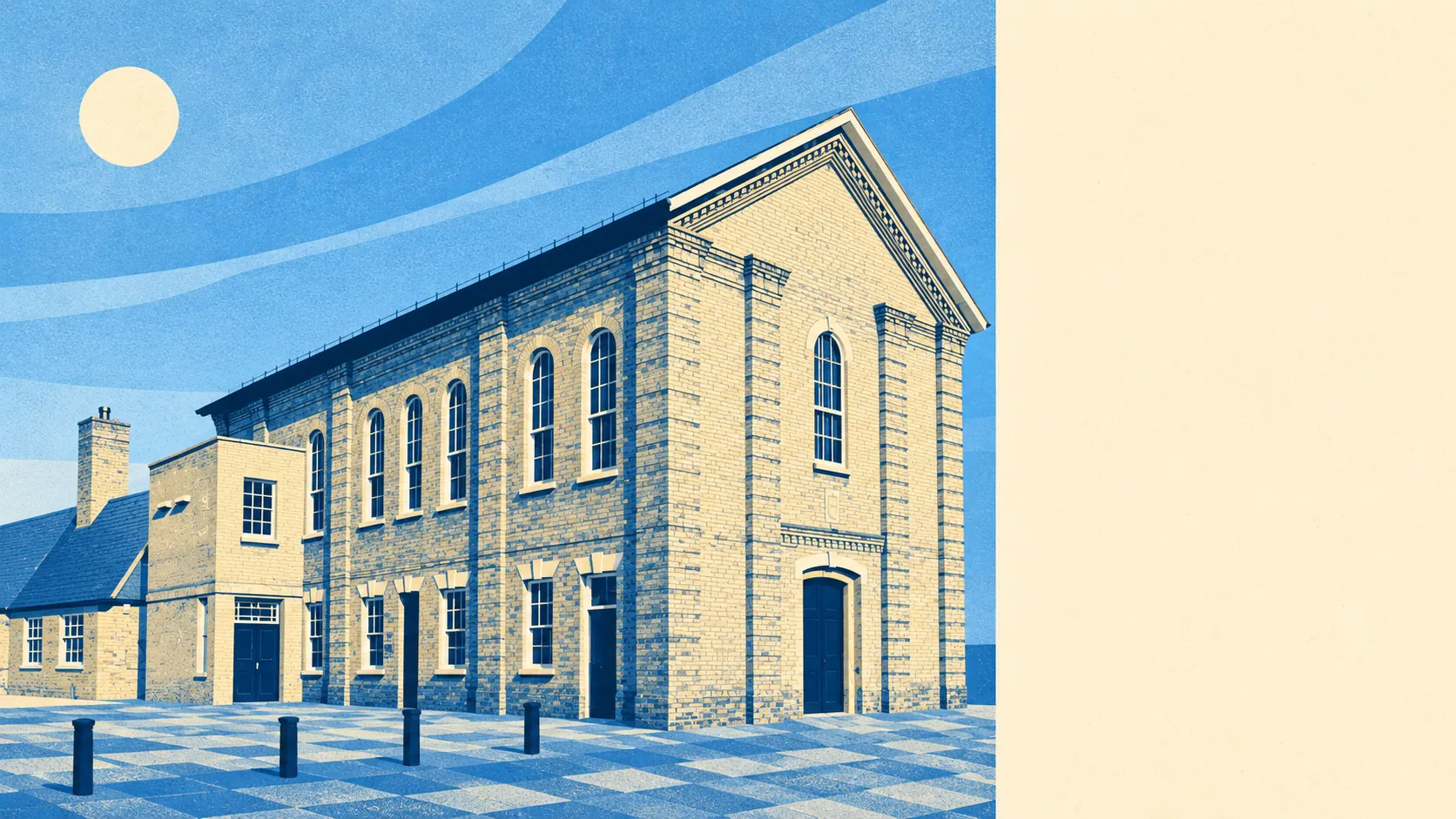
Royston is a town of people who arrived, did fairly well, and decided to stay. Seven in ten own their home. Almost nobody is out of work. Most describe their health as good. For a buyer, that means neighbours with a stake in the place and every reason to keep it tidy.
What the town lacks in drama it makes up for in stability. About 71% of households own their home, according to the 2021 Census, and the median resident is 41. That is old enough to have a mortgage, but young enough that the school run hasn't ended yet. Gross household income averaged about £66,000 a year across the town in the financial year to March 2023. That is an Office for National Statistics model averaged over two wide areas, so it describes Royston as a whole and says little about any one road. Unemployment is about 2%. A town where people can afford to stay put gets a parish that keeps turning up to things.
The Land Registry recorded 228 sales in the year to May 2026, at a median of about £362,000. The spread by type is wide. Flats went for around £205,000, terraced houses for about £355,000, semis for about £395,000 and detached houses for about £515,000. Most homes are in council tax band C, and only about a fifth are in bands A or B. The cheap end of the town is a flat, and there are 55 of those sales to show for it.
Renting costs about £1,420 a month, but that is the typical private rent across the whole of North Hertfordshire as of April 2026. It covers Hitchin and Letchworth as well as Royston, so it gives a rough idea and little more.
The housing is an even split between detached, semi-detached and terraced houses, each about a quarter of the valuation list, with flats at about a fifth and bungalows at 4%. Only about 11% was built before 1930. Most of Royston is post-war, so the period cottage on the High Street is the exception. The energy ratings follow from that: about 60% of certificated homes are rated C or better, and only about 8% are E or worse. About 78% of homes heat with mains gas, and about 12% rely on electricity alone. James I built a hunting lodge here in 1607, and the town has spent most of the time since building semis around it.
For the commute, Royston station has direct trains to King's Cross and Cambridge, and Meldreth and Ashwell & Morden are within reach for the villages. Even so, the 2021 Census found only about 4% of working residents taking the train. About 42% drove and about 39% worked from home. The station brings more Cambridge commuters into the town than it carries out of it. There are 68 bus stops, averaging 16 weekday departures each. The Department for Transport's modelled journey times date from 2019, and its public transport figures age fastest. On broadband, Ofcom puts gigabit-capable service at about 88% of premises.
Flood risk is where Royston does worst, and two different measures explain why. In the Environment Agency's river and sea flood zones, none of the town is covered: Royston stands on chalk slopes with no river to burst. On the wider postcode indicators, which include surface water, about 9% of postcodes carry a high flood indicator, about 14% medium and about 36% low. The threat here is rain on hard ground with nowhere to drain. Insurers have spreadsheets for that too.
Royston recorded about 60 crimes per 1,000 residents in the year to May 2026, roughly 11% below the North Hertfordshire average, and it is policed by Hertfordshire Constabulary. Anti-social behaviour makes up a larger share of the total than it does nationally. For most residents, that means trouble that is noisy rather than dangerous.
There are 115 listed buildings, including four at Grade I and seven at Grade II*, and one conservation area covering the old centre. Royston Cave, found in 1742 underneath the central crossroads, is listed too, which makes it the one basement in town that nobody will ever get permission to convert. For the post-war semis that make up most of the town, extending is ordinary planning. In the old core it is a conversation with the conservation officer.
Six schools in the district averaged about 103 in Key Stage 2 maths, just above the expected standard. The two secondary schools averaged about 44 on the Attainment 8 measure of GCSE results. King James Academy Royston is the main secondary, and Roman Way Academy, Tannery Drift School, Icknield Walk First School and Studlands Rise First School cover the younger years. Across Hertfordshire as a whole, Ofsted rates 203 of its 227 graded schools good or outstanding. That figure describes the county system a child joins, and tells you little about the town's own schools.
Green space is about 150 metres from the average front door, with 22 green spaces within a kilometre. Therfield Heath, the hill to the south-west, is a nature reserve covered in prehistoric barrows, and it is the best free amenity in North Hertfordshire. Water is further off, the nearest is about 970 metres away on average. The Greenwich Meridian has a signpost on Newmarket Road, so residents can stand with a foot in each hemisphere on the way to the shops.
This page also covers the villages in the Royston postcode, from Therfield and Reed on the chalk ridge to Barkway, Barley, Litlington, Steeple Morden and Whaddon. Most of them treat Royston as their high street, whichever county they are in.
Victoria Wood and the trumpeter Alison Balsom both came from Royston. William Cobbett described it as a common market town, not mean, but having nothing of beauty about it. Two centuries later, that faint praise is close to the town's whole appeal: Royston is useful and doesn't pretend to be pretty.
Royston is right for a family that wants a three-bed semi, a heath at the end of the road and a train line to Cambridge or London for the days the laptop can't cover. Anyone after thatch, nightlife or a riverside walk will be better served elsewhere, as will anyone who regards a surface-water flood indicator as a minor detail.
Its strength is the people. Neighbours own their homes, have jobs, stay healthy and stay put, so the street a buyer moves into today should look much the same in ten years. The weak point is the rainwater, which runs off the chalk and collects in some postcodes, and that is worth knowing before an offer goes in. Royston is a better-than-average town, and its biggest asset is the people who never quite got round to leaving.