Yes, provided you own a car and don't need a station. Seven in ten own their homes. Half the workers drive to the job. The nearest ticket office is in another town. A comfortable, grown-up place that gets you nowhere without an ignition key.
The housing is a spread rather than a theme. Across every home on the council-tax list, about 27% are semis, 26% detached, 22% terraced, 14% flats and 9% bungalows. That is the profile of a town that grew outward in instalments instead of upward in a hurry. Only about 10% of homes were built before 1930, and the certificated stock is mostly post-war. On energy certificates, 58% sit in bands A to C, 34% in D and 8% in E or worse, so most viewings won't end in a lecture about draughts. About 75% of homes run on mains gas. The listing won't mention the ground. The British Geological Survey puts every postcode here in shrink-swell clay class 3, which your surveyor should read before your extension plans do.
The Land Registry recorded 151 sales in the year to mid-May 2026, at a median of £290,000. Flats went for about £141,000, terraces about £276,000, semis about £311,000 and detached houses about £416,000. The gap between semi and detached is where the estate agent earns a living. For a first-time buyer the flats are the only way in, and there were 21 of them all year. Council tax most often falls in band C, with about 33% of homes in bands A or B.
Renters should budget around the Wiltshire figure: about £1,060 a month is the typical private rent across the Wiltshire area as of April 2026. That is a county-wide mean, not this town's own number, and it was up about 7% on the year. Landlords read that line with more pleasure than tenants do.
Police recorded crime at about 57 per 1,000 people in the twelve months to May 2026, around 9% below the Wiltshire average. Criminal damage and arson make up about 12% of the total against 7% nationally, which is bad news for whoever owns the bus shelter and no reason to buy elsewhere. It is a market town doing what market towns do, which is mostly staying out of the local paper.
The school run is short. The town has Wootton Bassett Infants' School, Noremarsh Junior School, Longleaze Primary School and St Bartholomew's Primary Academy, with Royal Wootton Bassett Academy on the north-west edge. The six primaries counted in the local postcode districts averaged 104 on the end-of-primary maths score, and the one secondary counted posted an Attainment 8 score of 51. The typical walk is about 11 minutes to a primary and 24 to a secondary. Across Wiltshire as a whole, Ofsted has graded 106 of 128 settings good or better. Nobody here needs to rent a flat by a school gate for a year to fix an admissions list, which spares a certain type of parent a specific humiliation.
Connectivity is the weak spot. The town has had no station since 1965, so commuters head to Swindon or Chippenham for London and the West Country. Almost nobody here commutes by train, well under 1%, while about 50% drive and about 36% worked from home at the last census. The 59 bus stops average 35 weekday departures each, about 2 an hour at peak, and 42 of them run at weekends. The Department for Transport's 2019 modelling put the nearest hospital 62 minutes away by public transport against 20 by car, which settles the car question. Broadband is the one part that works as advertised: gigabit reaches about 93% of premises and superfast reaches all of them. The home-workers worked it out first.
Flood risk comes in two measures, and they say different things. In the Environment Agency's river-and-sea flood zones, no postcodes fall inside zone 2 or 3. On the wider postcode indicators, which include surface water, about 10% of postcodes carry at least one high-risk flag and 14% a medium one. The rivers leave the town alone. The drains are the question, so ask about surface water, not the river maps. Green space is close: the average home is about 230 metres from one, with around 17 inside a kilometre, and water is about 415 metres away. The old Wilts & Berks Canal runs through the parish south of the town, and a trust is restoring it, which counts as a hobby here.
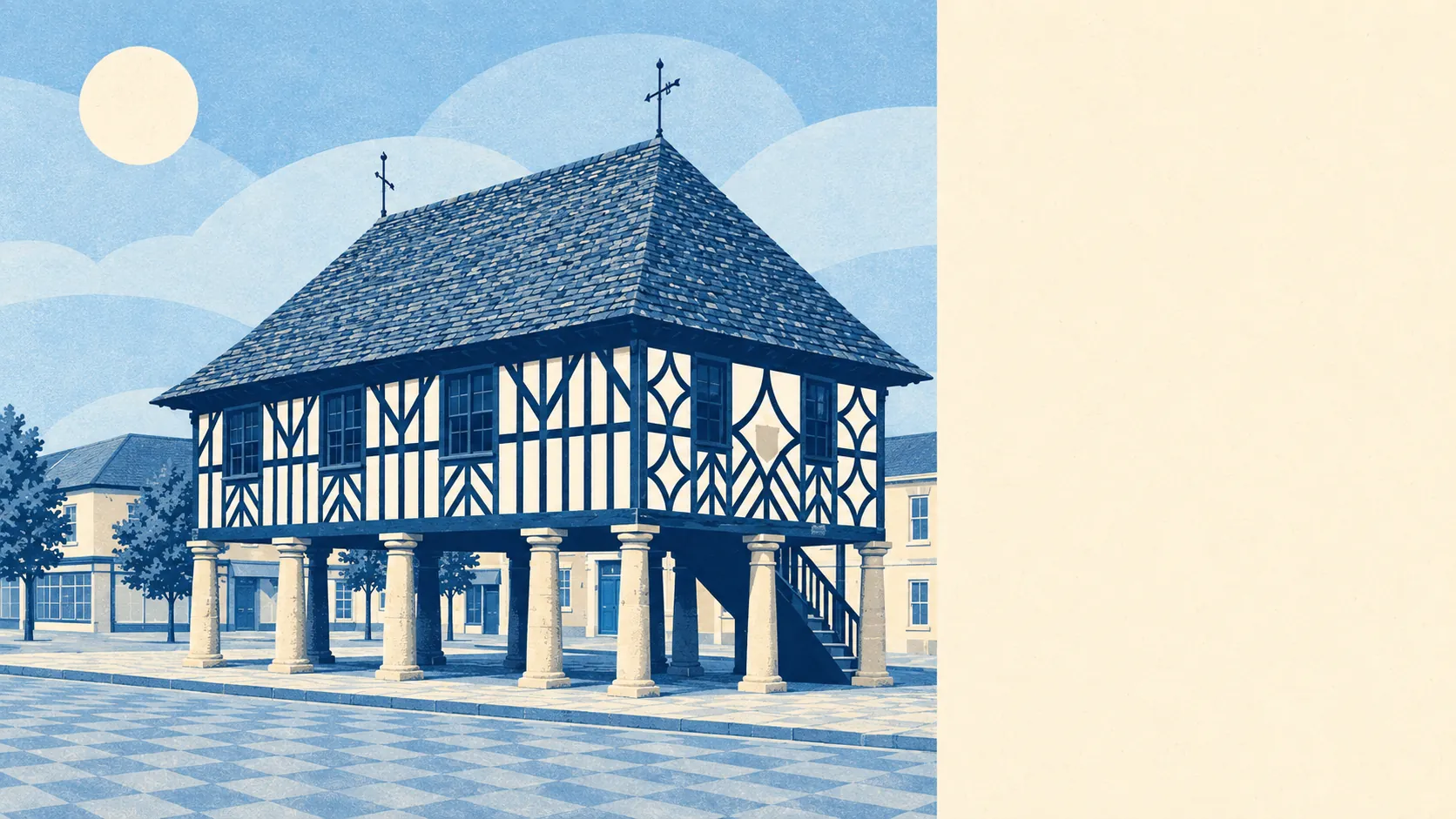
The heritage rules touch fewer homes than the High Street suggests. There are 56 listed buildings, none Grade I, 2 Grade II* and 54 Grade II, along with one conservation area, named Wootton Bassett, and 3 scheduled monuments. For most buyers in a post-war semi, none of this changes anything. For the buyer who fell for a period frontage in the conservation area, it means the council gets an opinion on the windows.
About 71% of households own their home, the median resident is about 46, and gross household income averaged about £60,100 in the financial year to March 2023, on the Office for National Statistics' modelled estimate. The last time the town moved wholesale was 1015, when the Danes sacked it and the survivors went uphill to where the High Street stands now. Nobody has shown much interest in moving since.
It suits the buyer who has done the moving phase of life and wants a semi, a garden, a primary school around the corner and a motorway nearby. Two-car households who work from home a few days a week will find nothing to complain about except the price of the detached houses.
It doesn't suit anyone who needs a train every morning, a hospital without a car, or a night out that doesn't end in a taxi to Swindon. If your plan depends on public transport, the timetable will change your mind within a month.
Royal Wootton Bassett is a good place to live for people who drive. Its real strength is what surrounds it: green space a short walk from nearly every door, rivers that stay in their lane, and a school list short enough to walk. The weak spot is transport, and no amount of broadband turns a bus every half hour into a commute. Buy the car first, then the house.