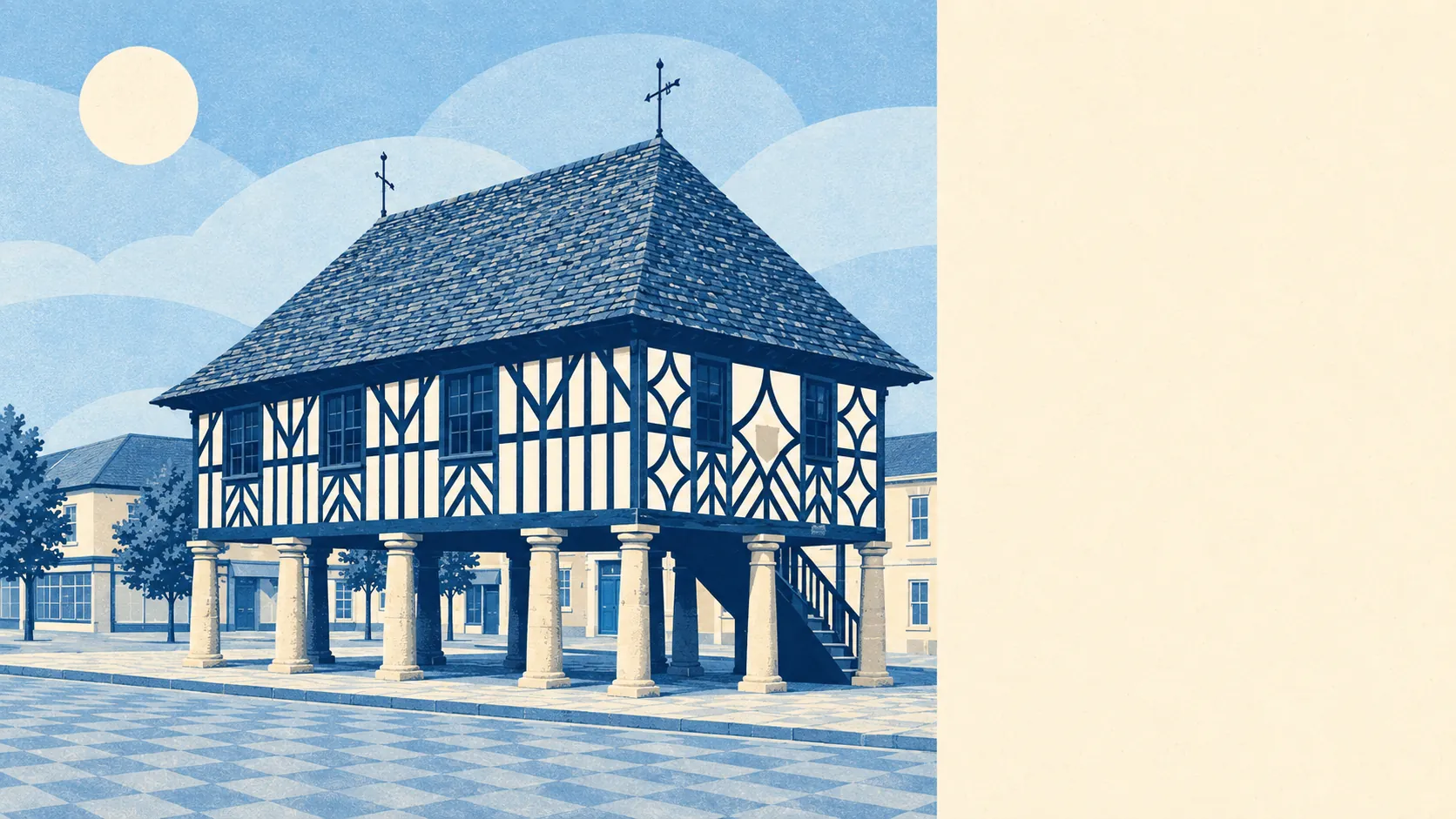
Mostly yes, as long as the house is one of the ordinary ones. Listed buildings are a thin slice of the town. There is one conservation area. Your neighbours file planning applications as a hobby. The heritage rules rarely get in the way here, and the clay does.
The town has 56 listed buildings. None is Grade I, 2 are Grade II* and 54 are Grade II. Listing covers the whole building, inside and out, so almost any change that affects its character needs listed building consent on top of any planning permission, and doing the work without it is a criminal offence, not a paperwork slip. That matters a great deal to the owners of those 56 buildings and not at all to the owner of a post-war semi three streets away. Check the listing register for your address. The estate agent's description of a house as "full of period charm" does not count as research.
There is one conservation area, named Wootton Bassett. Inside it, changes that would pass without a second look elsewhere can need consent, particularly to anything visible from the street, and demolition within the boundary brings its own consent regime. Buyers who fall for a frontage inside the line should expect the council to have a view on it. Buyers outside the line mostly won't hear from the council at all.
There are 3 scheduled monuments in the area, the strictest tier of protection. They concern land close to a monument rather than a typical rear extension.
The rest of the town is busy extending. The council logged 1,329 planning applications between April 2024 and June 2026, and 644 in the most recent twelve months. That doesn't say how many were approved, and nobody should read an approval rate into it. It does show that altering a house here is a normal thing to do, not a battle.
The real constraint is underground. The British Geological Survey's shrink-swell hazard reaches class 3 here, and 100% of the area's postcodes reach that class. Clay of this kind swells when wet and shrinks when dry, and it takes little notice of your extension timetable. In practice that means deeper foundations than a builder might price by default, a structural engineer's view before the quote gets signed, and a sober look at any large trees near the footprint. None of it is a reason not to build. It is a reason not to let the cheapest quote win.
For most houses here, the practical route starts with permitted development: many single-storey rear extensions and loft conversions on an unlisted house outside the conservation area can go ahead without a full application, subject to national size limits and conditions. A listed building, or a house inside the Wootton Bassett conservation area, takes that shortcut away or narrows it, so the order of work there is planning advice first, architect second. Building regulations apply everywhere either way, and on this clay building control will take an interest in the foundations.
Your freedom to extend here is middling: the heritage rules touch a small corner of the town, and the ground under all of it asks for more concrete than the brochure mentions.