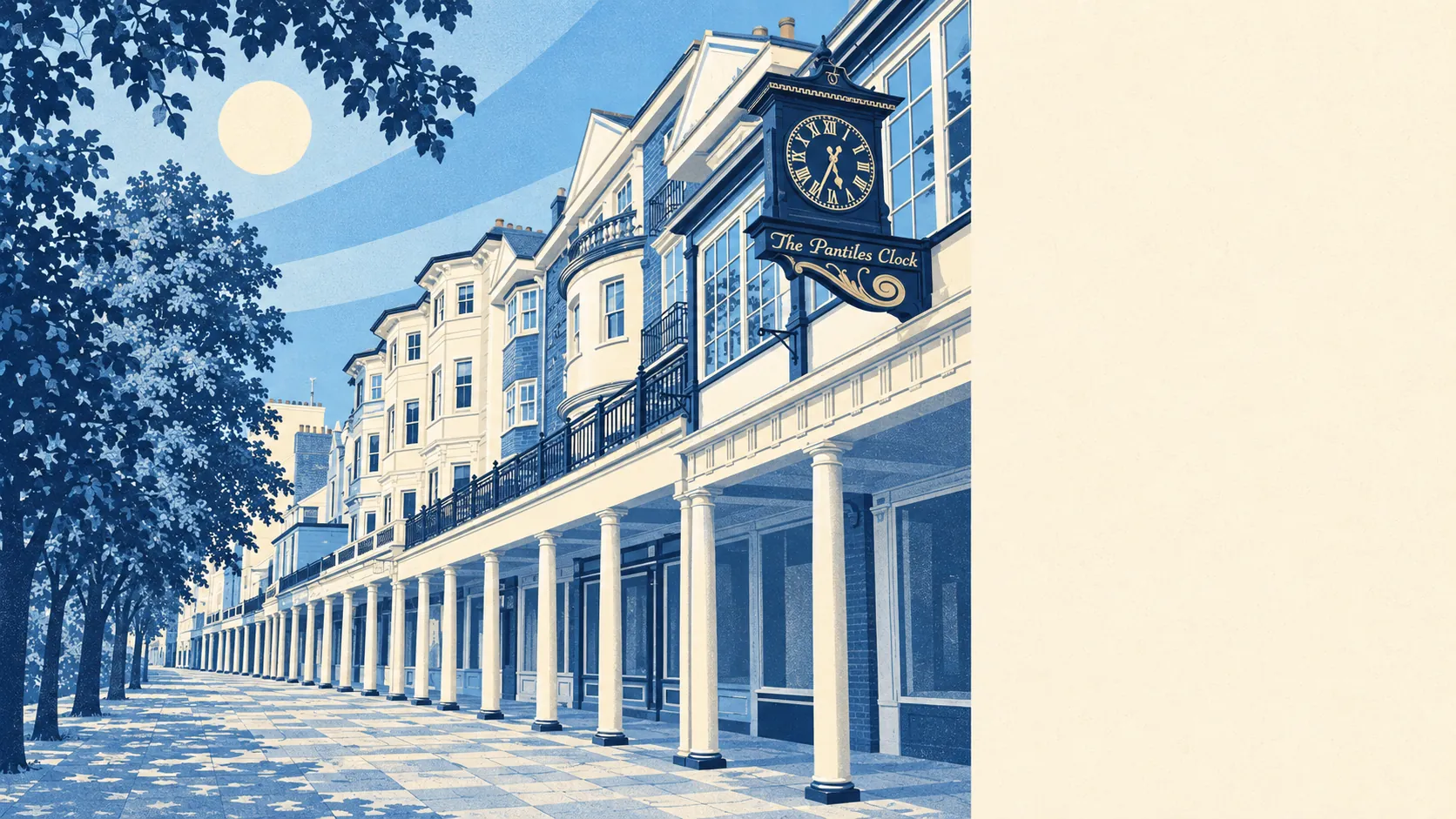
Greener than a town this pleased with itself needs to be. There's a park a couple of minutes from most front doors. Two dozen green spaces sit within a kilometre. Sandstone rocks stick out of the grass like the town forgot to tidy them away. Most towns have a park. This one has a habit.
On average, the nearest green space is about 140 metres from home, with about 24 green spaces within a kilometre. That's Calverley Grounds by the centre, Dunorlan Park on the east side and the open common where Wellington Rocks sit, plus the smaller patches in between. Dog owners never have to plan a route here. They pick one.
Water's close too. The nearest pond, lake or stream is on average about 440 metres away, with about 12 within a kilometre. The town sits at the head of a valley where the River Teise starts, so none of it is grand. It's streams and lake edges, not a river frontage.
The National Cycle Network runs on average about 830 metres from home, and about 31% of postcodes are close to it. There's no ancient woodland inside the area itself. The hills do the rest of the job of keeping cyclists humble.
The high street is a proper one. The valuation list carries 1,964 rateable premises in the area, and shops and offices dominate: 794 shop premises, 553 offices, 66 restaurants and 41 pubs. Those are premises on a list, not a count of places open today, but the balance is clear. This is a town built to be shopped in, and the office count shows a working weekday underneath the Pantiles postcards.
Across the Tunbridge Wells council area, fine-particle air pollution averaged about 7 micrograms per cubic metre in 2024. That's a council-wide figure rather than a reading for any one street.
Private gardens are generous for a town this dense, at about 112,000 square metres of garden for every 1,000 residents. The villas and semis on the slopes carry most of that. The flats in the converted terraces mostly rely on the park.
Among the 429 rated food premises, 79% hold the top hygiene score and about 2% sit at the bottom end. The town takes its lunch seriously, and the inspectors largely agree.
The character comes from the rock and the history. High Rocks, with its prehistoric rock shelters and hillfort, sits just outside town, and the Spa Valley Railway runs steam trains from Tunbridge Wells West out past it to Groombridge and Eridge. Rusthall, High Brooms and Hawkenbury have been folded into the town's edges, and Frant sits just over the county line to the south. Woodbury Park Cemetery and the Calverley Park grounds are on the register of historic parks and gardens, so even the green space comes with a listing.
On protected landscape, about 1% of the area overlaps the High Weald Area of Outstanding Natural Beauty, which starts on the town's edge. There's no Site of Special Scientific Interest inside the area and no ancient woodland. The designated countryside begins where the town stops, which suits a town that likes a view but keeps its drainpipes.
The surroundings are one of the town's real strengths: parks at the end of the street, rocks on the common and the High Weald starting where the streets stop. For somewhere this built up, the countryside is never far off.