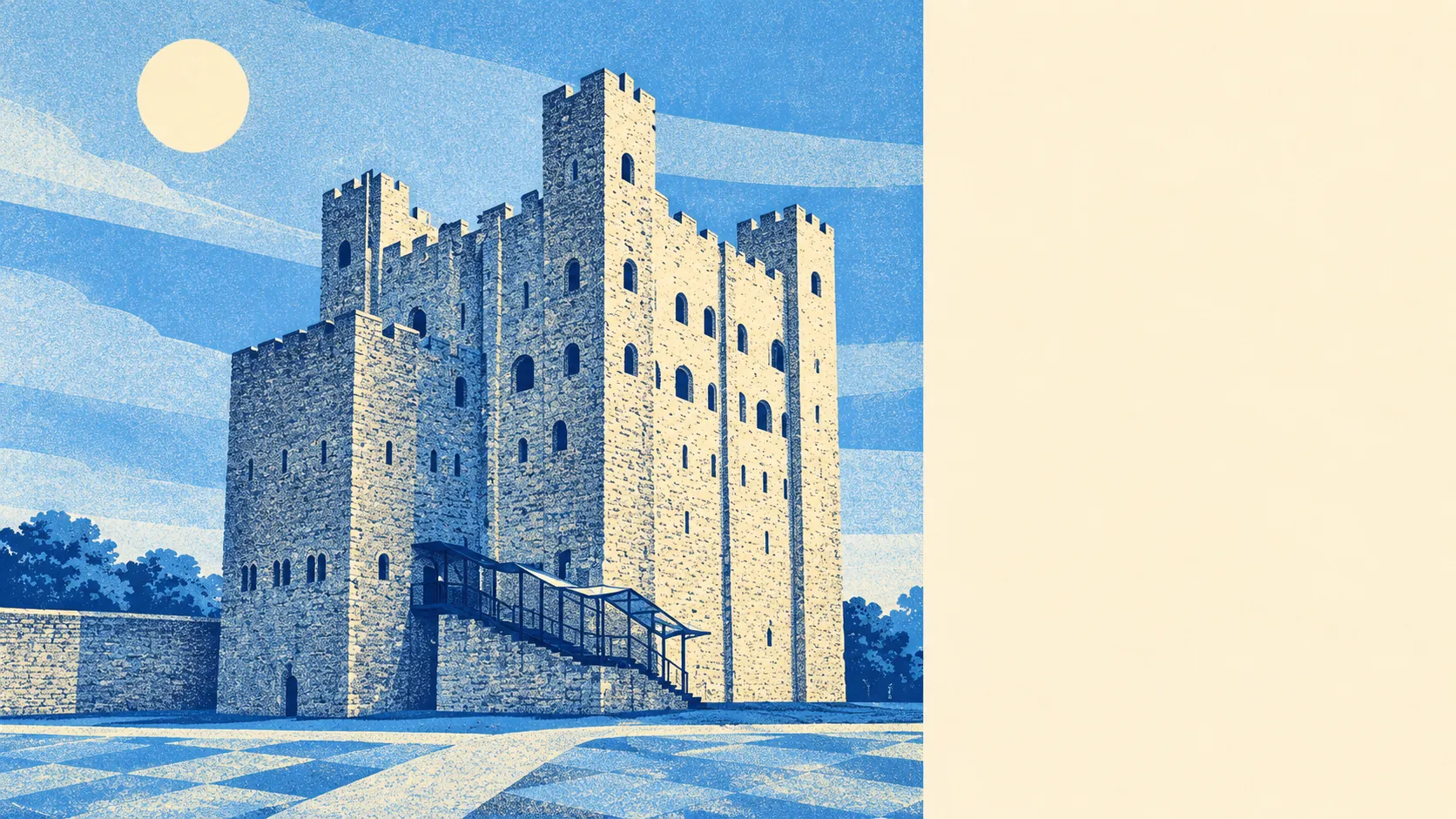
Yes, Rochester is a bit safer than the Medway average, and it has been a long time since anyone laid siege to it. Crime runs slightly below the wider area. The mix of offences looks much like the rest of the country. Shoplifting is the one category where it stands out. It is an ordinary town with ordinary crime, and a castle that has seen far worse.
Police recorded 7,708 crimes in Rochester in the year to May 2026. The published rate is about 102 crimes per 1,000 people, around 6% below the Medway local-authority average. That puts Rochester a little under the wider area, not in another league. Buyers expecting a cathedral town to have no crime at all will be disappointed. Buyers expecting the worst reputation of the Medway towns won't find it here either.
To put the two rates side by side: Rochester sits at about 102 per 1,000 and Medway as a whole at about 108. The gap is real and modest. That's worth knowing when an estate agent calls a street "very safe" or a forum poster calls the whole town a warzone. Neither of them has looked at the numbers.
It is a built-up place. There are about 6,470 people per square kilometre on average, and unemployment was about 3% at the last census. About 4% of households are overcrowded. That is a busy, working, mostly housed town, and a town this size will produce some crime simply because there are enough people in it.
By category, violence and sexual offences account for about 36% of recorded crime, against about 35% nationally. That broad legal category includes common assault without injury, and it is the largest category almost everywhere, so the share here is ordinary. Anti-social behaviour is about 17%, against 16% nationally. Criminal damage and arson is about 8% against 7%, other theft about 6% against 7%, and vehicle crime about 4% against 5%. Shoplifting stands out at about 12% against 8% nationally, which is what happens when a town has a proper high street that people walk down. The residential streets aren't where that figure comes from.
Kent Police, the force covering Rochester, charges a suspect in about 16% of cases, against about 12% across England and Wales. That ranks it 6th of 42 forces. It is a force-wide figure, not Rochester's own, and it says nothing about how often crime happens here. It only tells you what happens once a crime is reported. About 36% of cases across the force close with no suspect identified. If your bike goes missing, that is the honest answer to whether they'll catch whoever took it.
Rochester Castle held out through sieges in 1215 and 1264. The present-day town has a crime rate a little below its neighbours', and for safety that's a solid result. On the residential streets, most people will rarely think about it.