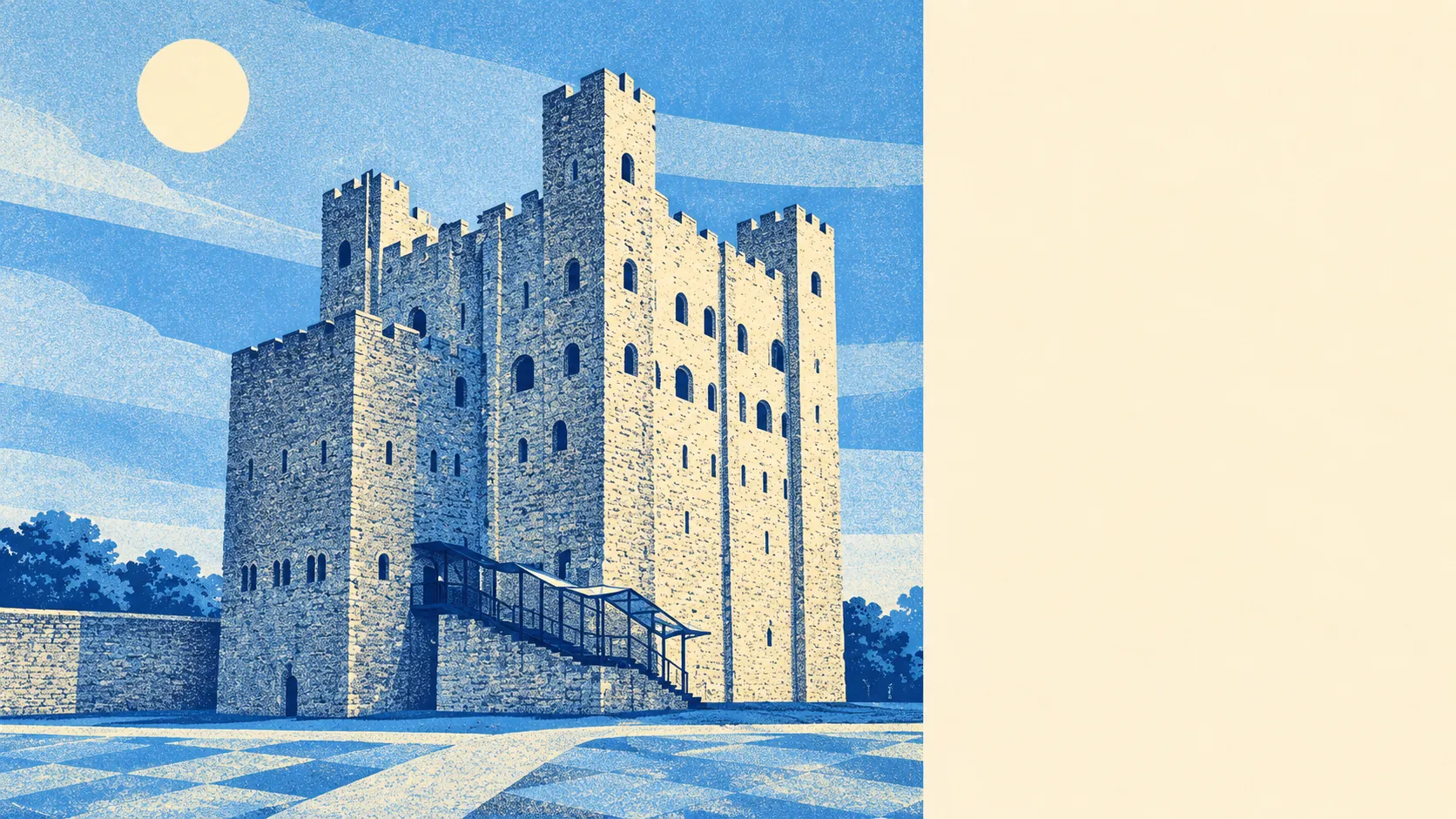
Yes: Rochester is a medieval postcard stapled to a commuter town. Nearly two in three households own their home. The typical sale sits a little over three hundred grand. There's a patch of green round almost every corner. The castle is for the visitors, and the rest of the town is for the mortgage.
The housing is mostly terraces. On the council-tax list, about 39% of homes are terraced, 26% semi-detached and 21% flats, with detached houses at about 9% and bungalows at 6%. Only about 22% were built before 1930. That surprises people who come for the cathedral and assume the whole town is timber and crooked beams. Most of it is ordinary brick streets climbing away from the river. On the energy certificates, about 51% of homes rate A to C, 39% sit in band D and 11% rate E or worse. Around 82% of homes heat with mains gas, and about 6% rely on electric heating alone. Ask which one you're getting before the viewing, because an electric-only flat in an old building will tell you by February.
The Land Registry recorded 625 sales in the year to May 2026, at a median of £305,000. Flats went for about £180,000, terraces for about £286,000, semi-detached houses for £350,000 and detached houses for about £508,000. The jump from terrace to semi is where most buyers here make their decision. The detached market is small enough that a nice garden and a bad road can cost the same. Band C is the most common council-tax band, and about 34% of homes sit in bands A or B. Either the valuation office took pity on the terraces or it hasn't walked up the hills lately.
For renters, typical private rent across the Medway area was about £1,240 a month as of April 2026. That is a figure for the whole local authority, not for Rochester's own streets. A flat with a view of the cathedral won't be charged at the Medway average, and the landlord knows it.
Rochester recorded about 102 crimes per 1,000 people in the year to May 2026, around 6% below the Medway average. So it sits a bit under the wider area rather than miles clear of it. A high street that brings in day-trippers and shoppers brings in the matching share of shoplifting, and nothing in the figures suggests the residential streets pay for the town centre's evenings.
Schools are where Rochester wins arguments. Ofsted has graded 37 of the 40 local settings it has rated as good or outstanding, including 4 outstanding. Primary pupils averaged 104 in the Key Stage 2 maths assessment across 27 schools, and the 8 secondaries averaged an Attainment 8 score of 53. Medway still runs a selective system, and the town's grammar schools include The Rochester Grammar School and Sir Joseph Williamson's Mathematical School. Williamson founded his school to teach boys navigation and mathematics. The admissions rules now test parents in both.
Rochester Rail Station has high-speed services into St Pancras, with Strood and Chatham stations a stop either side. Even so, only about 4% of working residents commute by train. About 28% work from home and around 51% drive, so plenty of people who moved here for the fast trains now mostly use the car park. Gigabit broadband reaches about 83% of premises and superfast about 98%. There are 368 bus stops in the area, which covers most of the gaps that the station and the car leave.
Flood risk is the weak spot, so here it is without any jokes. About 16% of postcodes carry a high rating on at least one flood indicator, and that includes surface water. In the Environment Agency's river-and-sea flood zones, about 6% of the area falls in Zone 3 and about 4% in Zone 2. Rochester grew up at a river crossing and has had to live with the river ever since. Check the exact address before you fall for the riverside flat. Once you move away from the water, the surroundings are generous. The nearest green space is about 160 metres away on average, and there are around 22 within a kilometre.
There are 336 listed buildings in the area, 26 of them Grade I, and 10 conservation areas, including Historic Rochester and Star Hill to Sun Pier. Rochester Castle, the cathedral, Restoration House and Eastgate House all sit within that heritage mesh. If you buy inside it, a new window becomes a planning application and a satellite dish becomes a conversation. Some buyers find that reassuring and some find it infuriating, and the conservation officer can tell which kind you are from the first email.
About 64% of households own their home, and the typical resident is 39. Average gross household income was about £57,500 in the financial year to March 2023. That is a mid-career, mortgage-paying town rather than a retirement enclave or a student quarter, and the high street's gift shops are aimed at people who don't live here.
This page also covers Strood and Frindsbury across the river, Borstal to the south, Wouldham further up the Medway and Allhallows out on the peninsula. Borstal gave its name to an entire prison system, which is not the historic claim its estate agents lead with. Allhallows sits out on the peninsula. Anyone who calls it Rochester has never driven there after work.
Rochester suits families who want grammar-school options without paying commuter-belt prices further west. It also suits people who work from home and want a cathedral close to walk through at lunchtime. If you like old buildings but want to live in a newer one, you can have both here, a few streets apart.
It suits people less well if they want to extend a listed house however they like, or if they buy near the river without checking the flood maps. It also frustrates anyone who expected the high-speed trains to change their life and then kept driving. If you need a driveway and less heritage red tape, the newer estates in the wider Medway towns are an honest trade.
Charles Dickens lived nearby at Gads Hill Place and couldn't stop writing about the town. In The Mystery of Edwin Drood he renamed it Cloisterham, and Restoration House found its way into Miss Havisham's house in Great Expectations. Plenty of people have fallen for Rochester. Dickens is the one who made money from it.
Rochester is a good place to live, a bit better than average, and it earns that honestly. Its real strength is the surroundings: parks close by, the river and old streets you can walk to. The schools come a close second. The weak spot is flood risk near the water, and some homes pay a heritage tax in paperwork. Choose the right street and you get a cathedral town for the price of an ordinary one. Choose the wrong one and you'll learn a great deal about river levels and planning officers.