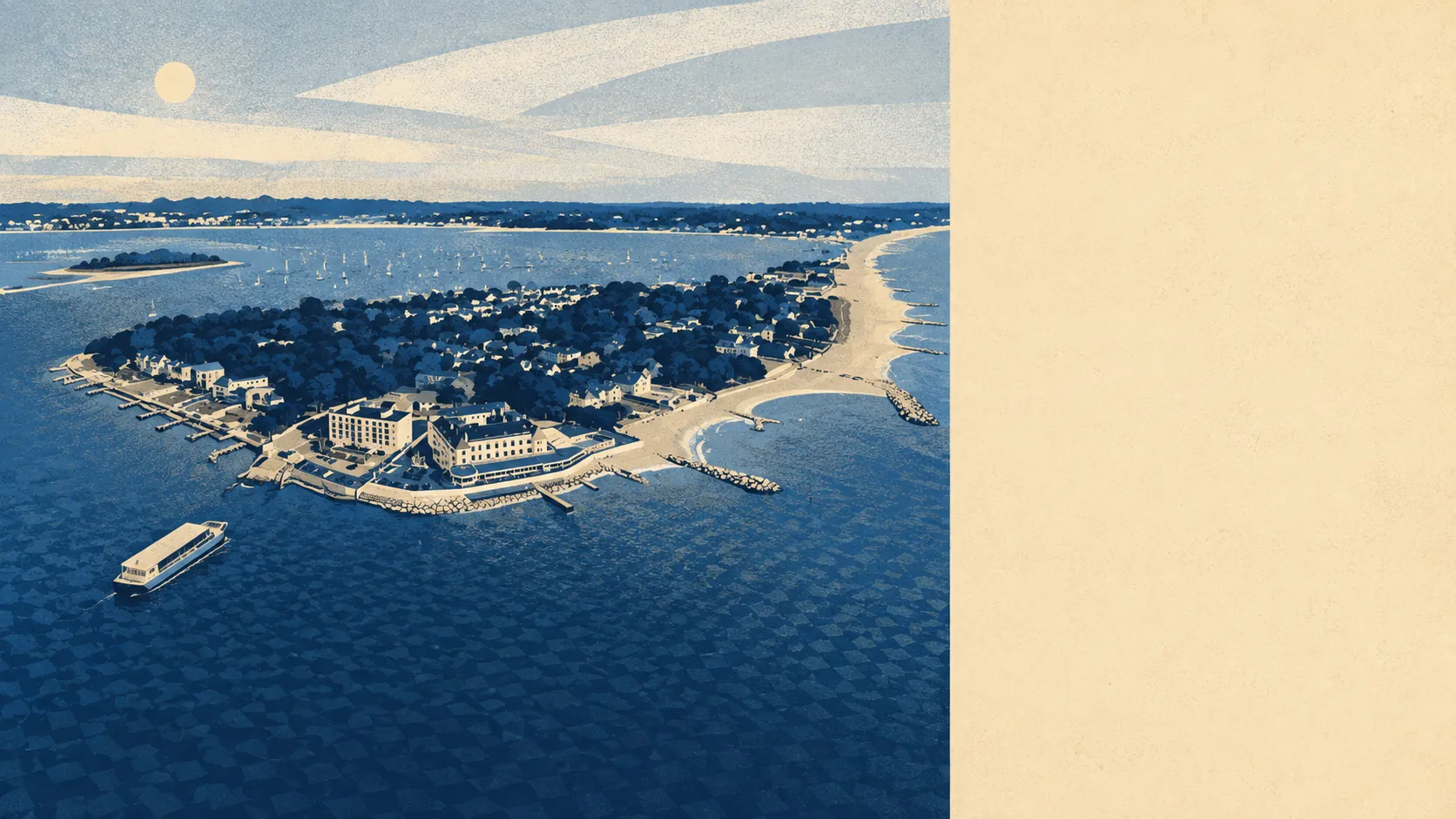
Poole is about 143,000 people who mostly own their homes and mostly finished moving some time ago. Two thirds are owner-occupiers. The typical resident is in their mid-forties. Close to a third of households are one person living on their own. This is a town people arrive at rather than pass through, and the numbers make very little effort to disguise it.
On tenure, about 68% of homes are owner-occupied and about 20% are privately rented. That is a high ownership base for a coastal town with a working port attached, and it shapes everything downstream: the streets turn over slowly, the neighbours stay put, and the rental market is a minority sport played mainly around the town centre and the university edges.
The age profile matches. The median age is around 45, and about 25% of residents are in the twenty-five to forty-four bracket. So it is neither the retirement colony the seaside reputation implies nor a young town pretending otherwise. It is a place with a solid working-age middle and a heavier tail at the older end than a city would carry.
Household income across the area was modelled at roughly £53,700 gross for the financial year to March 2023. That is before tax, and it describes that year rather than today. It is a comfortable figure rather than a wealthy one, which is worth holding in mind given how much of this town's reputation is built on the handful of streets where nobody is living on it.
Household make-up, from the 2021 census that underlies every population figure here, shows about 31% of households as one person living alone. Around 15% are single pensioners, and that group sits inside the one-person figure rather than alongside it. Couples with dependent children make up about 18% and lone-parent households about 10%. The dominant domestic unit in Poole is one person and a front door, which explains rather a lot about the demand for flats and small houses.
On qualifications, about 31% of residents hold a degree-level qualification, about 17% hold none, and about 2% are full-time students. That is a genuinely mixed picture rather than a graduate enclave or its opposite, and given two universities operate campuses inside the town's boundaries, the low student share tells you they mostly live somewhere other than where the lecture theatres are.
Health self-reports come in at about 82% describing their health as good or very good. At the wider council level, covering Bournemouth, Christchurch and Poole rather than this town alone, both preventable mortality and adult smoking, at about 9%, are classed as similar to England overall. Nothing here stands out in either direction, which for a health comparison is the outcome most places would take.
Who lives here comes out somewhere in the middle. Poole is a settled, moderately prosperous, quietly ageing town with a strong ownership base and no particular extremes at either end, and the households living in it look far more ordinary than the postcodes on the water suggest.