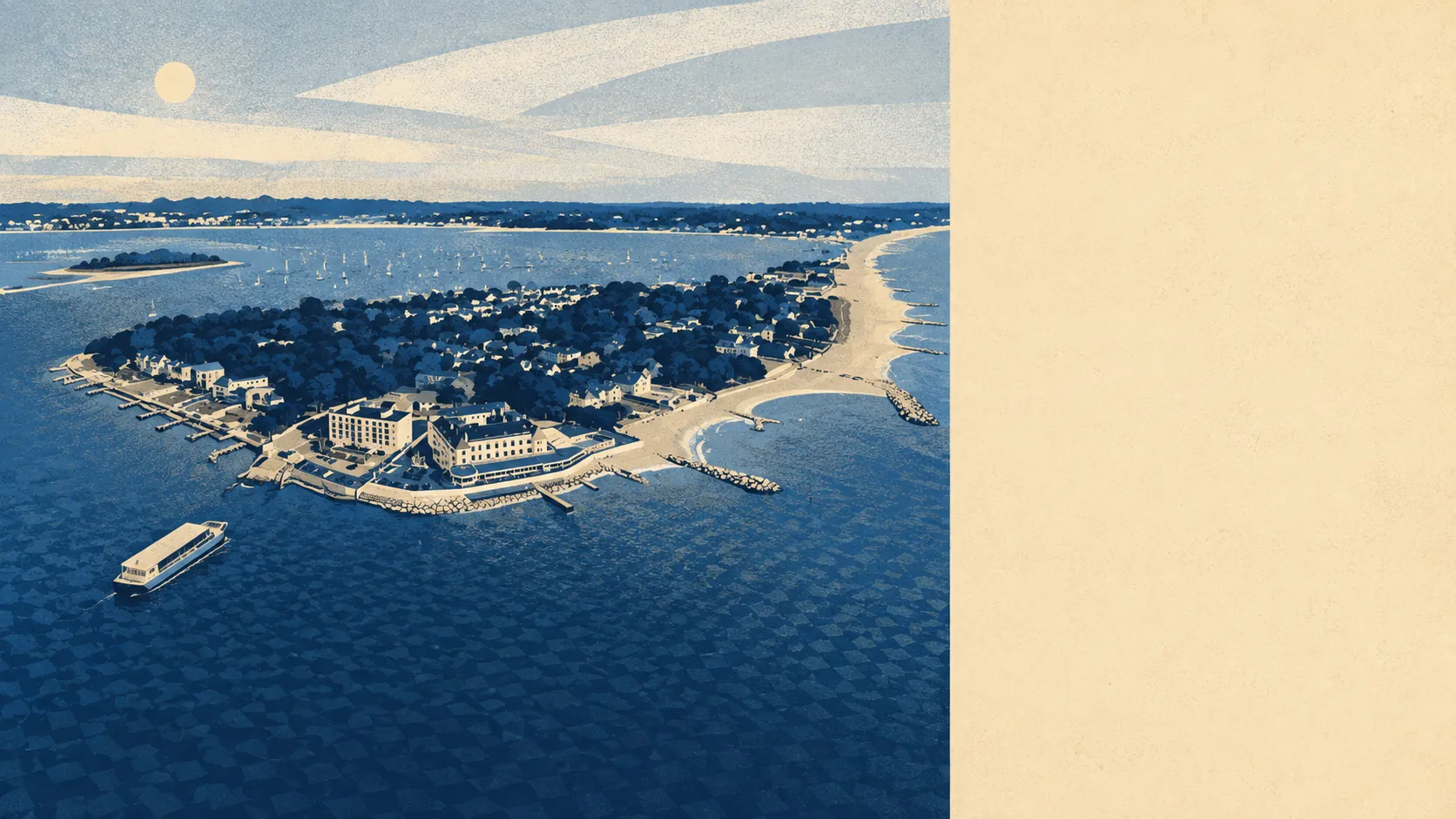
The surroundings are the strongest thing this town has, and it is not close. Green space sits about two hundred metres from the average front door. Water sits barely further out than that. There are more blue spaces within a kilometre of the typical postcode than green ones, which is an unusual sentence to be able to write about anywhere in England. Poole got a great deal wrong over the years, but it never made anyone drive to reach the outdoors.
On green space specifically, the average Poole postcode has roughly 14 green spaces within a kilometre and sits about 190 metres from the nearest one. That is not a park at the end of the borough with a bus route attached. That is a town where the walk to grass is shorter than the walk to most people's parked car.
Water is the other half of it. The average postcode sits about 510 metres from the nearest blue space, with around 22 of them inside a kilometre. Poole Harbour, Holes Bay and the coast between them mean that access to water here is a default condition rather than a premium someone charges for, whatever the estate agents in the harbour-facing streets would prefer you believe.
Cycling is patchier. The National Cycle Network sits about 1,060 metres from the average postcode, and around 33% of postcodes count as close to it. Useful if you land in the right third, a car journey to the trailhead if you do not.
The high street, or what the valuation list calls one, runs to 1,944 shop premises, 140 restaurants and 78 pubs. That is a broad retail base for a town this size, spread across a lot of separate centres rather than concentrated into one strip.
For air quality, fine particle levels across the Bournemouth, Christchurch and Poole council area averaged about 6 micrograms per cubic metre in 2024. That is a council-area figure rather than a street-level one, and it reflects a coastal position with a great deal of open water upwind.
The character of the place comes from having several centres instead of one. Poole Park sits between the harbour and the town centre. Compton Acres does the formal gardens. Brownsea Island sits out in the harbour where the Scouting movement began. Canford Heath is heathland rather than parkland and behaves accordingly. Sandbanks, Lilliput and Canford Cliffs face the water, Broadstone and Canford Heath face inland, and Hamworthy carries the port. Nobody agrees on what the middle of Poole is, which is exactly the point.
Private outdoor space follows the same generous pattern. Gardens across the area work out at roughly 108,000 square metres per 1,000 residents. That is the figure that matters more than any public park count, because it is the outdoor space you do not have to share with anybody, and Poole has plenty of it.
The wider commercial base is bigger than the shopfronts suggest. There are 5,228 rateable non-domestic premises on the valuation list, including 1,304 offices and 421 holiday lets alongside the retail. Those are premises rather than businesses currently trading, which is a distinction worth holding onto, but the office count tells you this is a working town rather than a resort that empties in October.
Eating out is reliable in the least glamorous way possible. Of 757 rated food premises, about 89% hold the top hygiene score and about 1% sit at the bottom of the scale. Those odds are good enough that the inspection rating is not the thing worth agonising over when picking somewhere.
One honest absence is worth stating. No area of outstanding natural beauty, no site of special scientific interest and no ancient woodland overlaps this area. The green space here is parks, heath, gardens and coastline rather than nationally designated landscape, which changes nothing about using it and quite a lot about how it gets protected.
The surroundings are where Poole is genuinely exceptional. Green space, water and private garden are all closer and more abundant here than most people in England will ever have, and that is the argument for living here that survives every other argument against it.