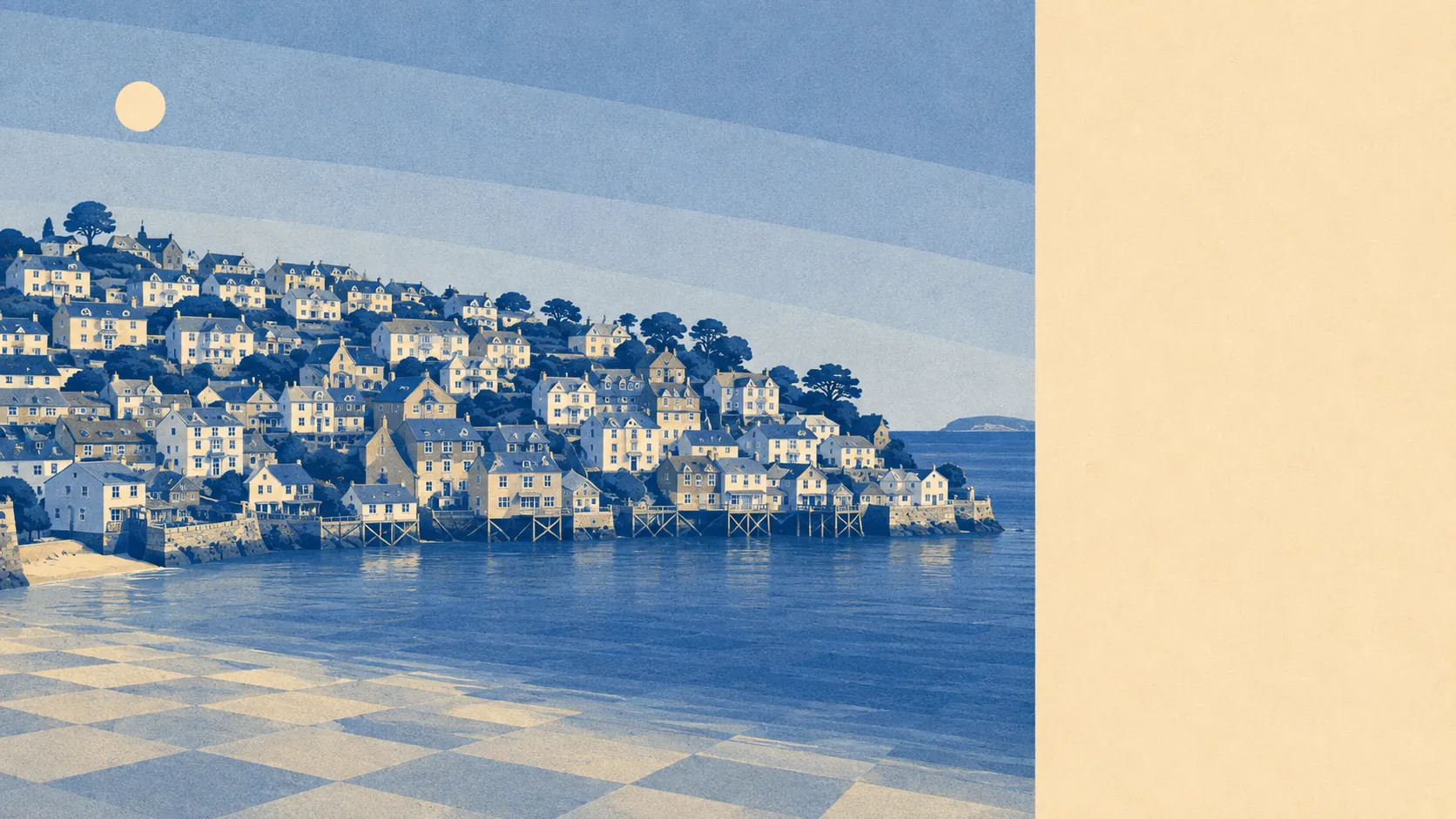
About £400,000, which buys you a hill, a view and a parking problem. Sixteen homes changed hands here in a year. A terrace goes for a good deal less than a detached house, as it does everywhere, except the gap here is the width of a whole extra property. Council tax, meanwhile, still thinks this is a village of working cottages. That contradiction is the Polruan property market in one line.
The Land Registry recorded a typical sale of around £401,000 in the year to April 2026, across 16 sales. That is a very small number of transactions, so read the median as a rough centre of gravity rather than a settled price. The split by type is where the useful detail sits. Terraced homes came in around £255,000 across six sales, semi-detached around £408,000 across five, and detached around £518,000 across four. Space, in other words, costs roughly the price of a terrace on top of a terrace.
For direction, the published house-price index for the area stood at about £280,000 as of May 2026, up around 4% over twelve months and down about 0.1% over the month, which is small enough to be noise rather than news. Over five years the index is up roughly 11%. Flats have gone the other way, down about 0.4% over the twelve months, though flats are a marginal part of this village and that figure describes the wider index area rather than Polruan specifically.
Council tax is the part of the picture that flatters the place. The most common band is B, and about 34% of dwellings sit in bands A or B. A band D property in Cornwall carries an annual bill of roughly £2,590, with band A around £1,730, so a buyer coming from a city will find the running cost of the local authority relationship easier than the entry price.
Renting is only available at area level. The typical private rent across Cornwall is about £1,000 a month, which is a mean from the Office for National Statistics index rather than a median of advertised listings, and it covers the whole local authority rather than this village. By bedroom, that runs about £690 for a one-bed, £880 for a two-bed, £1,080 for a three-bed and £1,510 for four or more. Studio and room rents are not published at this level, so anyone quoting you one is guessing.
Against local earnings, the price is a stretch and not a subtle one. Modelled gross household income before tax for this area was about £39,300 in the financial year to March 2023, which is the most recent year the modelling covers rather than a current figure. A typical sale at around £401,000 sits a long way above what that income supports on ordinary lending, which is the arithmetic that quietly explains who has been buying here and where their money came from.
By floor space, the sales that could be matched to an energy certificate came out at a median of roughly £3,600 per square metre, on a typical floor area of about 83 square metres. That match covers around 38% of the sales, so treat it as the shape of the market rather than the whole of it. Eighty-odd square metres is a modest house by national standards and a fairly normal one for a village built for shipwrights rather than second-home brochures.
On bedrooms, the Census 2021 count puts about 46% of households in three-bedroom homes, roughly 22% in two-beds, around 19% in four or more and about 13% in one-bed. The three-bed is the default here, which is worth knowing if you are hunting for either end of that range.
Value is where Polruan comes off worst. You are paying a coastal premium for older, harder-to-heat property in a village with one road in, and the price sits well ahead of what local incomes explain. The view is genuinely the product, and it is priced accordingly.