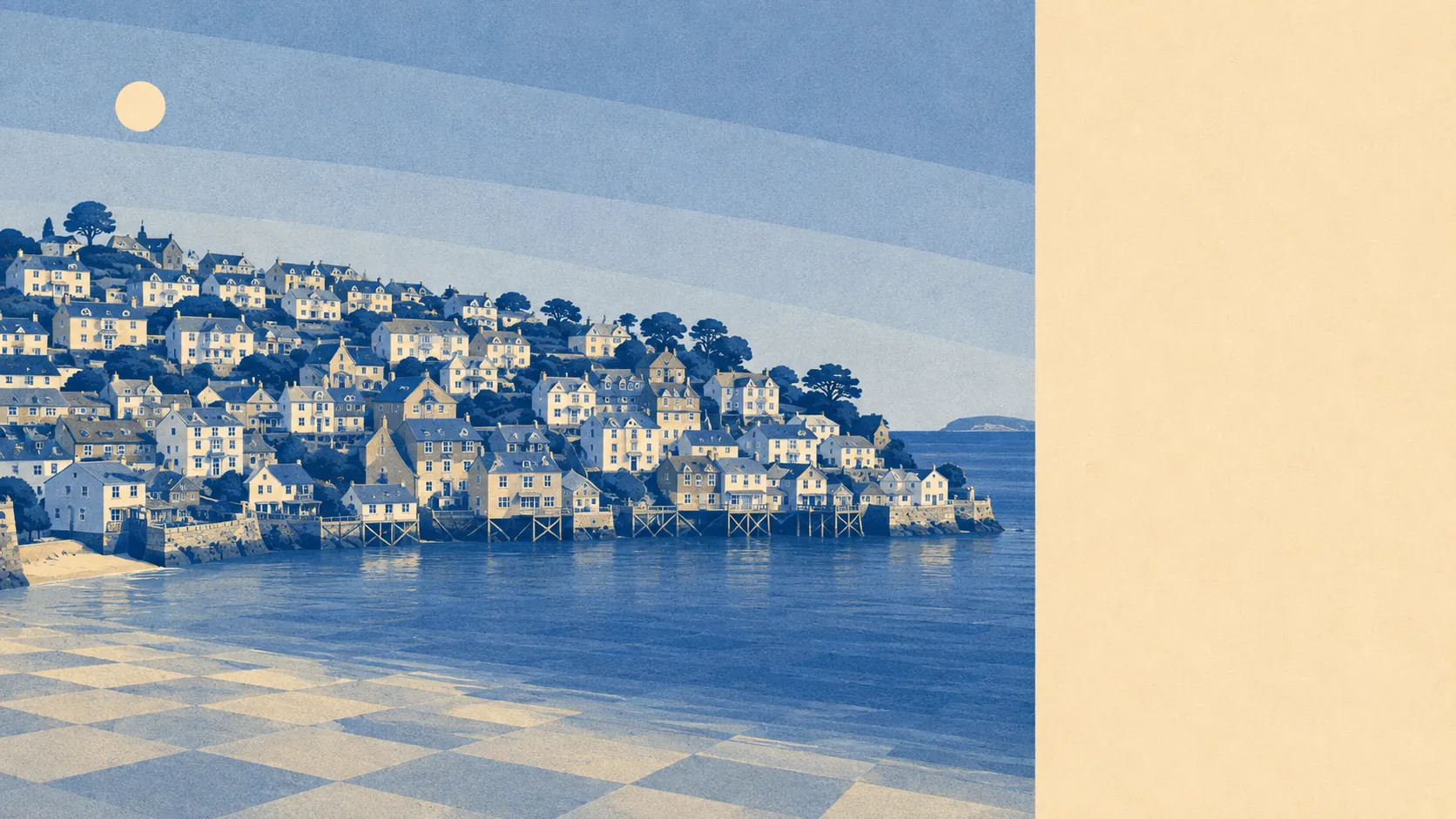
Polruan is a good place to live if you have made peace with the ferry. Most homes here were built before 1930. The typical resident is closing in on sixty. A quarter of households run no car at all, and the ones that do keep them at the top of the hill like a coat rack by the door. This is not a village that will meet you halfway on convenience, and the people who stay are the ones who stopped asking it to.
The housing stock is old and it is stubborn. On the council tax valuation list, about 54% of dwellings here were built before 1930, and the mix runs roughly 35% detached, 22% terraced, 20% bungalows and 14% semi-detached, with flats at about 4%. That last figure is the one that surprises people, because a village stacked this steeply looks from the water like it should be all flats and it is almost entirely houses. Heating is where the age bites. Only about 6% of households are on mains gas and roughly 38% run on electricity alone, which in a pre-1930 stone house facing the Channel is a running-cost fact worth knowing before the viewing rather than after. The energy certificates back that up: about 58% of certificated property here sits at band E or worse, and only around 12% reaches band C or better. Nobody is winning an insulation prize on Fore Street.
On price, the Land Registry's last twelve months to April 2026 put the typical sale at about £401,000 across 16 sales, which is a thin market by any standard and means one unusual transaction moves the picture. Underneath that, the split is wide. Terraced homes came in around £255,000, semi-detached around £408,000, and detached around £518,000, so the difference between a house in the village and a house with room around it is roughly the price of a second house. Council tax is gentler than the sale prices imply. The most common band is B, and about 34% of dwellings sit in bands A or B, which is the valuation list quietly remembering what these cottages were before anyone wanted a view from them.
Renting is harder to pin down at village level. The typical private rent across the Cornwall area is about £1,000 a month, up around 5% over the year to April 2026. That is an area figure covering everything from Bodmin to the coast, not Polruan's own, and in a place where holiday letting takes a serious bite of the stock, the long-term rental you actually want will be scarcer than the number implies.
On crime, the published rate is about 61 recorded crimes per thousand residents over the year to May 2026, which sits roughly 18% below the Cornwall average. That is a genuinely quiet figure, and worth reading with the usual caution attached to small places: with 102 recorded crimes in total, a handful of incidents shifts the category mix by several points, so treat the shape of the crime as noise and the overall level as signal. Devon and Cornwall Police charge in about 8% of cases against a national figure of around 12%, which is a force statistic rather than a village one, but it is the force you would be ringing.
Connectivity is the weak point and it is not close. There is no rail, and the Department for Transport's modelling puts the nearest town centre at about 27 minutes by car and 83 minutes on public transport, with a hospital at roughly 61 minutes driving. The six bus stops in the village average about 16 scheduled weekday departures between them and none of them run at weekends. Around 37% of residents drive to work and roughly 32% work from home, which tells you how the village has solved the problem: by not commuting. Broadband is the consolation. Superfast reaches 100% of premises, though gigabit reaches none of them, and mobile coverage from at least one operator reaches almost every premise. Fast enough to work from, not fast enough to boast about.
The environment is where Polruan stops apologising. Green space averages about 130 metres from a doorstep, with water at roughly 160 metres, and every postcode in the village sits within 500 metres of the coast. Flooding is more nuanced than the setting suggests. None of the village sits in the river-and-sea flood zones under Environment Agency mapping, though about 3% falls into the climate-change allowance zone. On the broader postcode indicators, which include surface water, about 11% of postcodes carry a high rating and around 22% carry a low one. Radon is the one to take seriously: the whole village sits in the highest radon band, which means a test and, if needed, a fitted sump rather than a shrug. Ground stability, by contrast, is about as benign as Cornwall gets.
Heritage is a real constraint here, not a decorative one. There are 13 listed buildings including one at grade two star, three scheduled monuments including St Saviour's Chapel, the Polruan Blockhouse and the medieval wayside cross on Fore Street, and two conservation areas covering Polruan and Fowey opposite. In practice, that means window replacements, external alterations and anything visible from the water go through a process rather than a weekend. Buyers who want double glazing and a rear extension should price in the paperwork and the possibility of a no.
The village itself skews settled and older. Around 60% own their homes, the median age is about 58, and typical household income runs around £39,300 gross before tax. Roughly 38% of households are a single person, and about 23% are a pensioner living alone, which is a village where neighbours notice when the curtains stay shut and that cuts both ways depending on how private you are.
It suits people who work from home or have finished working, who want water on three sides and a walk to Pont Creek more than they want a Waitrose. It suits sailors, obviously. It suits anyone whose social life fits inside a village that knows them.
It does not suit families needing a secondary school run, given Fowey River Academy sits across the water and modelled journey times to a secondary run to about 28 minutes by car. It does not suit anyone who needs a hospital in a hurry, anyone with a car per adult, or anyone who assumes the ferry is a novelty rather than infrastructure.
Polruan is a fair place to live and an excellent place to be from. Its real strength is the surroundings: water, green space and coast path within a couple of minutes of the front door, in a village quieter than the county around it. The weak spot is getting anywhere, and no amount of view compensates for a bus timetable that gives up on Saturdays. Buy here because you want to be in Polruan, not because you want to be near anything.