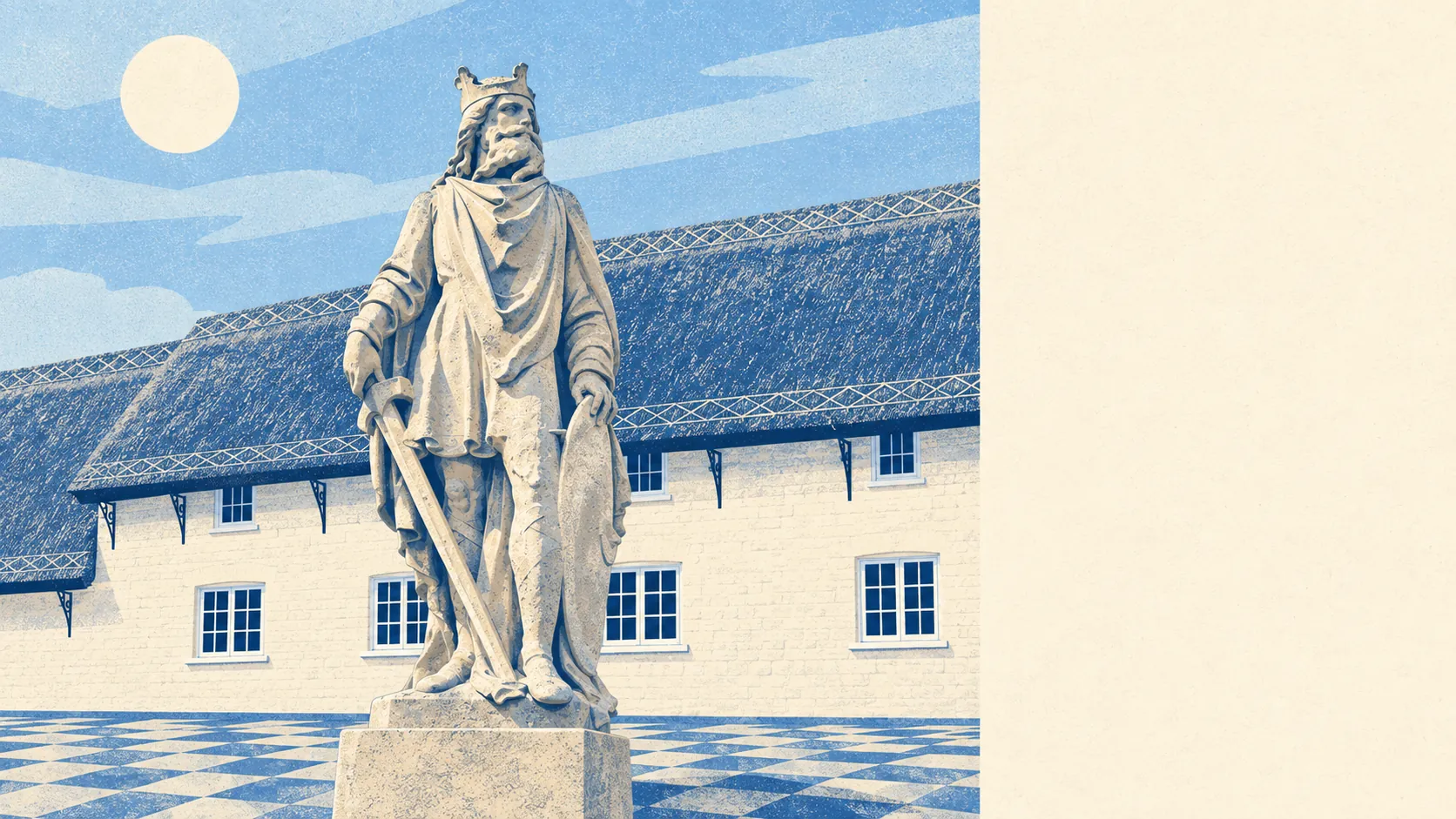
Yes, as long as you moved here for the Downs and not the gas main. The whole village sits inside protected downland. Hardly anyone is on mains gas. Two in three households own their home, and crime runs about a fifth below the county. The view is free, but the heating comes at a price.
The housing is mixed, as if every decade since the railway got its turn with the planning committee. On the council-tax valuation list, detached houses and terraces each make up about 27% of homes, semis 17%, bungalows 16% and flats 12%. About 23% of the stock was built before 1930. A bungalow share that size tells you this is a place people settle in rather than pass through. Then there's the heating. Only about 7% of homes have mains gas, and around 40% are heated by electricity alone. Of the 1,205 homes with an energy certificate, about 31% sit in bands A to C, 38% in band D and 31% in band E or worse. A listing calls an older cottage with electric heating "characterful". A January bill calls it something else. Ask for the running costs before the second viewing, not after completion.
The Land Registry recorded 56 sales in Pewsey in the year to May 2026, with a median price of about £335,500. Property type moves that number more than location does. The seven flats sold went for a median of £210,000, the 14 terraces for about £294,000, the 12 semis for £310,000 and the 23 detached houses for about £453,000. Terraces and semis sit close together. Detached is where the Vale starts charging for the view. Band C is the most common council-tax band, and only about 19% of homes are in bands A or B, so a cheap council-tax bill is hard to find here.
Pewsey has no reliable rent figure of its own. The typical private rent across the Wiltshire area was about £1,060 a month as of April 2026, and that is a county-wide average covering towns, villages and everything in between. Use it as a ballpark, not a quote. The rental market here is small, so a single new let can shift what's on offer.
The published crime rate for Pewsey, from police.uk data for Wiltshire Police's area, was about 50 per 1,000 residents in the year to May 2026. That is roughly 20% below the Wiltshire average. The numbers are small enough that a handful of incidents would move them, so nobody should read too much into the detail. Most of what keeps people awake here comes from the weather, not burglars.
Pewsey Primary School and Pewsey Vale School are each about ten minutes' walk from the typical home, which is a school run most villages can only dream of. At the two primary schools in the postcode district, the average end-of-primary maths score is about 107. At secondary level, the one school in the district has an Attainment 8 score of about 34, which covers results across eight subjects at sixteen. Pewsey Vale has no sixth form, so from sixteen it's a bus or a lift somewhere else. Across Wiltshire, Ofsted rates 106 of the 128 graded settings good or better. Families planning to stay through to sixteen should check both the primary and secondary numbers, not only the one that looks better.
Pewsey Rail Station is the village's pride, and almost nobody uses it to get to work. At the 2021 census about 1% of working residents commuted by train, against about 50% who drove and 32% who worked from home. The station gets admired more than it gets used. Of the village's 32 bus stops, those with timetable data average about 32 weekday departures each, or roughly two an hour at peak. Superfast broadband reaches about 99% of premises, but gigabit only about 44%, so half the village streams in top quality while the other half waits for the upgrade. All four mobile operators cover about 98% of the area.
Flood risk is the serious part. About 19% of Pewsey's postcodes are rated high on at least one flood indicator, including surface water, and about 12% are rated medium. In the Environment Agency's river-and-sea flood zones, about 5% of postcodes are in Flood Zone 3 and 2% in Flood Zone 2. The gap between those figures points to where rain runs off, not only to where the Avon goes. Check the exact address, not the village average. Radon also deserves a test: about 97% of postcodes are in radon band 3 or above, and the top band reached is High. On the plus side, the nearest public green space averages about 160 metres from home, there are around 16 within a kilometre, and the whole place sits in the North Wessex Downs Area of Outstanding Natural Beauty. About 97% of postcodes are within roughly 150 metres of the National Cycle Network. The Downs start about where the pavement ends.
Heritage rules add their own paperwork. The area has 53 listed buildings, one at Grade I and 52 at Grade II, and three conservation areas: Pewsey, Pewsey Wilcot Road and Fyfield. On top of the protected landscape, that means new windows, extensions and front-of-house changes can all need consent. It also means the fix for an old, electrically heated house is not always yours to choose. Double-glazing salesmen do not have an easy time here.
About 64% of households own their home. The median resident is 52, so on the same street one house is doing the school run while the next is planning the retirement party. Median gross household income was about £54,000 in the financial year to March 2023. That's comfortable, not flashy, which suits a village where the showiest thing going is a view of a hill. This page also covers Enford, the string of small settlements along the headwaters of the Avon on the edge of Salisbury Plain.
Pewsey suits people who work from home or drive, want open country on the doorstep and are happy to trade some convenience for it. It suits families who want both schools within walking distance, and buyers who will read a flood map before they read the estate agent's adjectives.
It suits less well anyone who needs a sixth form nearby, a gas boiler, full-fibre broadband on every street, or freedom to change a period house without asking permission. Buyers who fall for a thatched roof and only look up the flood zone afterwards tend to learn the hard way.
The village has a long record of people leaving and taking the name with them. The poet Stephen Duck was born in Charlton in the Vale. Joseph Gilbert went to South Australia in 1839 and ended up making wine at a Pewsey Vale on the other side of the world. John Wesley preached at the parish church in 1764, and the rector at the time, Joseph Townsend, built the village's first bridge over the Avon, which has probably had more daily use. The cricketer Harold Sheppard is on the list too.
Pewsey is a good place to live, and better than average once you've done your homework. Its real strength is its setting: protected downland on every side, green space minutes away and a cycle route near almost every door. The weak spot is flood risk, which in some postcodes is a question for the insurer before the solicitor. Get the flood search, the radon test and the heating bills in writing, and the Downs will take care of the rest.