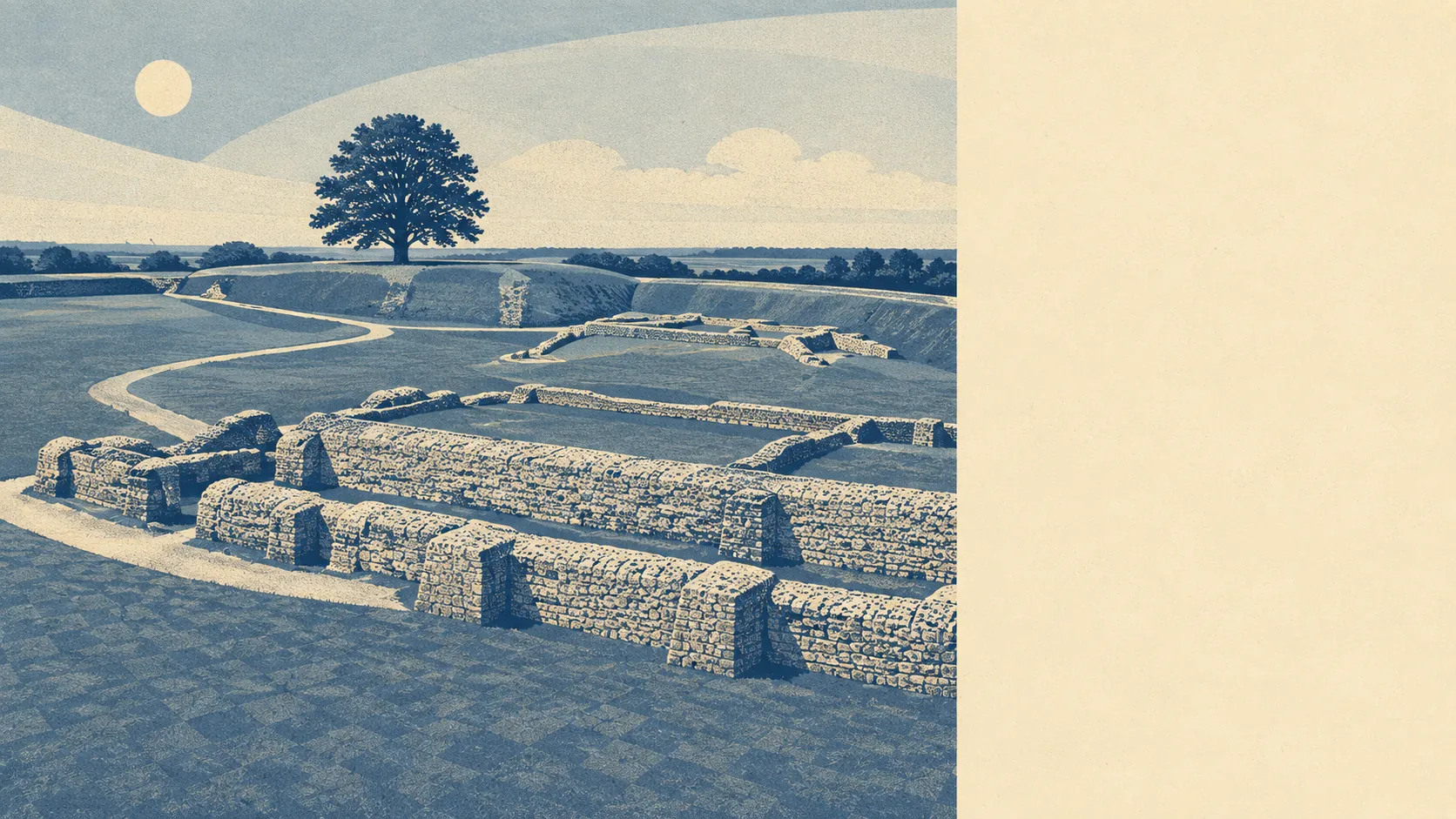
Old Sarum is a good place to live if you can accept that the oldest thing about it is the name. Most of the housing went up this century. Nearly every home sits in the top three energy bands. About half the households run two cars or more. Green space starts more or less at the end of the street. The hillfort gets the tourists, and the estate below it gets the people who wanted a warm house with a garden and were never that fussed about beams.
The council-tax valuation list, which covers every dwelling rather than only the ones certificated since 2008, puts the stock at roughly 31% detached, 27% semi-detached, 20% terraced, 14% flats and 8% bungalows. About 14% was built before 1930, which leaves the overwhelming bulk of it modern. It shows in the energy certificates: around 97% of certificated homes rate A to C, only 34 sit in band D, five in band E and two in band F. Heating is mostly conventional, with about 74% on mains gas. Around 7% run on electricity alone, which is the sort of thing worth establishing before the viewing rather than after the first winter bill.
The Land Registry recorded 50 sales in the twelve months to May 2026, at a median of about £290,500. Type splits it out properly: detached homes came in around £462,500 across 11 sales, semi-detached around £335,000 across 15, terraces around £265,000 across 13, and flats around £163,000 across 11. Measured by floor area, the median works out at about £3,285 per square metre across the 49 sales that could be matched to a certificate. Council tax lands mostly in band C, with about 22% of dwellings in bands A and B, and a band D bill of roughly £2,570 a year.
Renting is harder to pin to the estate itself, because the published figure is a Wiltshire-wide one. Typical private rent across the Wiltshire area sits at about £1,060 a month as of April 2026, up about 7% over the year, on the Office for National Statistics rent index rather than a count of advertised listings. Across the county, one-beds average about £730, two-beds about £950, three-beds about £1,190, and four-beds and larger about £1,710. Treat those as the county's weather, not this postcode's forecast.
On crime, the published neighbourhood rate for the twelve months to May 2026 is about 69 recorded offences per 1,000 residents, against roughly 62 across Wiltshire, so around 10% above the local-authority average. Worth holding alongside that: over the same period Wiltshire Police charged in about 10% of recorded offences against about 12% nationally, ranked 32nd of 42 forces, and closed about 34% with no suspect identified. That last set is a force statistic, not this estate's.
Schools are the strong end of the file. Across the four schools measured in the postal district, the average scaled score in maths at the end of primary was 103. Old Sarum Primary School carries the name, and modelled journey times put a primary within about a 16-minute walk or an 8-minute drive. Secondary is a 16-minute drive, 31 minutes by public transport, and the surrounding area includes Avon Valley Academy and The Stonehenge School. Ofsted has graded 128 settings across Wiltshire, of which 106 are good or better and 6 outstanding, with 20 requiring improvement and 2 inadequate. That is the county's ledger rather than the catchment's, and it is a good one.
Getting about is where the shine comes off. Around 52% of working residents drive, 33% work from home, about 4% take a bus, 4% walk, 2% cycle and 1% take a train. Salisbury Rail Station exists, and to a rounding error nobody here commutes on it. Modelled journey times from 2019 put the town centre 20 minutes away by car, 29 by public transport and 39 by bicycle, and those public-transport numbers age faster than the driving ones as services get withdrawn. Buses are better than the commuting split suggests, with 18 stops in the area, an average of 64 scheduled weekday departures at the 15 stops with service data, and a weekend service at 93% of them. Broadband is the genuine luxury: gigabit reaches about 96% of premises, superfast about 99%, nothing falls below the universal service minimum, and mobile coverage from at least one operator reaches every postcode.
Environmentally it reads well. None of the area sits in the river-and-sea flood zones mapped by the Environment Agency, and none of it carries a historic flood record. On the broader postcode indicator, which folds in surface water and other sources, about 9% of postcodes carry a high rating on at least one measure, 8% medium and 25% low. Green space averages about 96 metres away, with around 20 separate spaces within a kilometre, and gardens make up about 8% of the total area. Open water is further off, averaging about 1,390 metres. Radon comes out in the lowest band and the ground-stability hazards in the lowest class, so the geology is boring in exactly the way a buyer wants. The cost is noise: every postcode here sits near road noise of at least 65 decibels, with the loudest mapped band reaching 75.
Heritage constraints are concentrated rather than general. Seven listed buildings fall within the area, one at grade two star and six at grade two, with one entry on the Heritage at Risk register. There is a single conservation area, covering Old Sarum Airfield, and a single scheduled monument, Old Sarum itself. For most owners on the modern estate that means precisely nothing: change the windows, extend the back, carry on. Near the airfield and the listed hangars it means the opposite, and permitted development stops being something you can assume.
The character follows from the stock. About 51% own their home, the median age is 33, roughly 40% hold a degree, 32% of households are couples with children and 22% live alone. Modelled household income runs about £69,700 gross for the financial year to March 2023, about £47,800 after tax. Young families, recent kitchens, and a great many parked cars.
It suits buyers who want a new house that costs little to heat, a garden and somewhere to put two vehicles, close enough to a cathedral city to use it without paying for its period stock. It suits people who drive or work at home, and parents who want a primary at walking distance and open ground behind the house.
It does not suit anyone whose day starts with a train. It does not suit buyers who want a high street at the end of the road, or period features, or the quiet of somewhere off a main road. Renters should also be clear that the rental figures available here describe Wiltshire rather than the estate.
Old Sarum's real strength is what surrounds it: green space almost at the doorstep, no river-and-sea flood zone, ground that behaves itself. The weak spot is connectivity, since the buses and trains barely feature in how anyone here actually travels and the car absorbs the difference. Buy it for the house and the fields behind it. The people who end up disappointed are the ones who bought it as a Salisbury address and then discovered they had to drive to Salisbury.