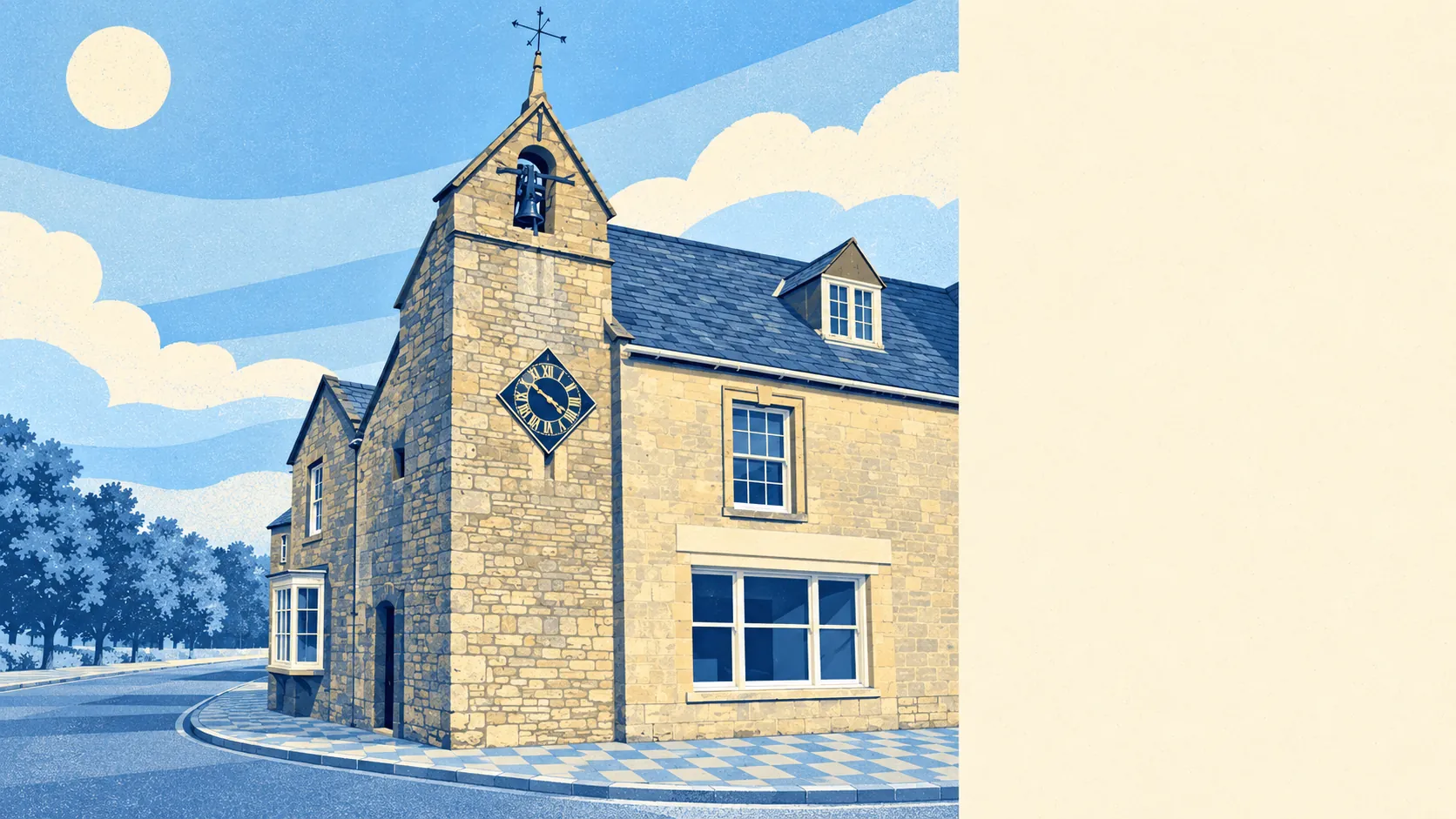
Yes, in most of the town, though the old centre comes with paperwork. Nearly a hundred buildings are listed. The historic core is a conservation area. The neighbours file planning applications by the hundred. How much freedom you get depends mostly on which century your house was built in.
Historic England's list covers 96 buildings in and around Moreton-in-Marsh. None is Grade I, 2 are Grade II* and the other 94 are Grade II. Listing protects the whole building, inside and out, so new windows, a removed wall or a changed staircase in one of those 96 all need listed building consent on top of any planning permission. Most of the 96 sit along the medieval High Street that Westminster Abbey had laid out in the thirteenth century. Their frontages are still being kept in line, these days by Cotswold District Council.
The area has one conservation area, covering the historic heart of Moreton-in-Marsh. Inside it, changes that would be routine on an ordinary street, such as cladding, some demolition, work to trees or alterations visible from the road, need a closer look and often a formal application. Check whether the house is inside the boundary and whether it is on the national listing register. Those two facts decide most of what you will be allowed to do, and the particulars often mention neither.
The area also has 2 scheduled monuments, the strictest tier of heritage protection. They matter mainly if your land is next to one.
Cotswold District Council received 816 planning applications for the area between April 2024 and June 2026, 386 of them in the last twelve months. Nobody files that many forms in a town where alterations are hopeless. People here extend, convert and rebuild all the time, and most of them do it on the post-war and newer streets behind the stone frontages.
In practice, the homes built after the war and the newer estates around the edge of town mostly get the ordinary permitted development rights for rear extensions and loft conversions, subject to the usual national limits. A listed building or a house inside the conservation area needs consent for much more, and the officers will have views about materials, roof lines and anything visible from the street. A brochure that promises "scope to extend" on a listed High Street cottage has made a promise the council still has to approve.
You have a fair amount of freedom to extend in Moreton-in-Marsh, and it shrinks the closer the house is to the High Street. Most newer homes can be extended without much fuss, while the old stone houses come with a heritage officer who will want a say.