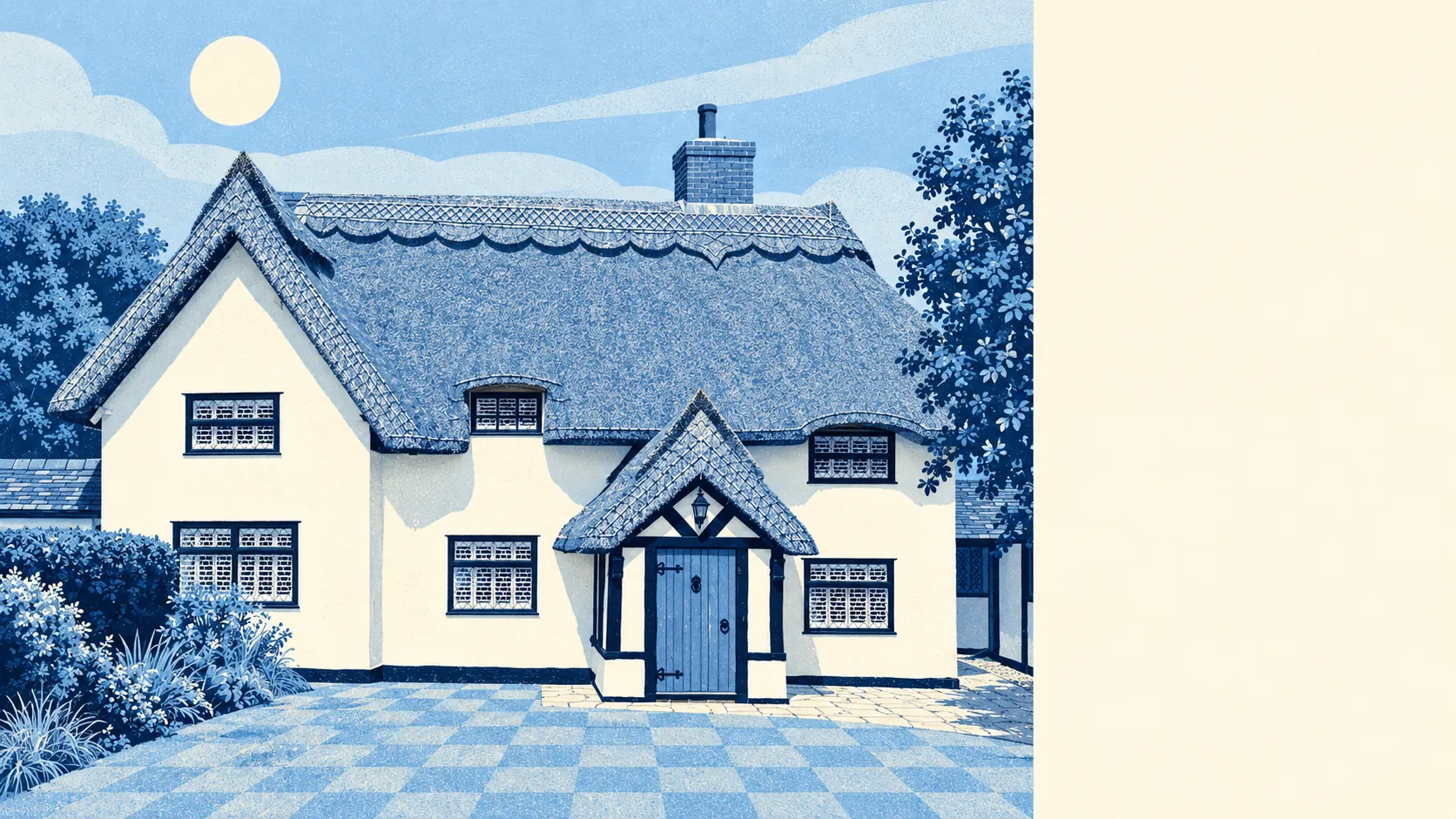
The area around Little Dunmow is farmland and river valley with a modern estate set down in the middle of it. Parks and open space are a short walk from most doors. Water is closer than you'd expect. The cycle network runs past the end of the road. The pubs and shops are mostly in the next village over.
The typical home is about 180 metres from the nearest public green space, and there are about eight green spaces within a kilometre. Children can be in a park before they've finished complaining about the walk.
Water is about 240 metres from the typical front door, and there are about 33 bodies of water within a kilometre, counting the River Chelmer, which runs along the valley floor, along with the ponds and streams that come with it. Few new-build estates in Essex were laid out this close to a river.
The National Cycle Network passes about 390 metres from the typical home, and about 68% of postcodes count as close to it. You can ride out into the lanes towards Felsted or Stebbing without going near a main road first.
Across the wider postcode district around the village, the rating list counts 121 shops, 25 pubs and 16 restaurants. Those are spread across Great Dunmow and the villages, so they describe the area a car reaches in a few minutes and not what's at the end of the close.
Across Uttlesford, fine-particle air pollution averaged about 7 micrograms per cubic metre in 2024. That is the district-wide figure, which suits a district made up mostly of fields.
Felsted and Stebbing both have conservation areas, and the countryside between them is scattered with medieval moated sites, Porter's Hall and Great Garnetts among them, along with hamlets like Bannister Green, Hartford End and Barnston. Flitch Green itself was built on the site of the old sugar beet factory. The village that grew out of a sugar beet works ended up with better broadband than any of the moated manors around it.
Private gardens are generous. Across the two statistical areas that cover the village, there are about 151,000 square metres of garden for every 1,000 residents, which measures the outdoor space people actually own. The farmland around the edges doesn't count towards it. Most houses here come with a lawn that needs mowing, and the extension plans tend to start on it.
Within the village itself, the valuation list records just six rateable business premises, each in a different category. Those are premises on a list, and they may or may not be trading. Little Dunmow is a place people live and leave to do their shopping.
Two food premises here have a hygiene rating, and both have the top score, with none at the bottom. That is a perfect record, with only two places to keep it.
No area of outstanding natural beauty, site of special scientific interest or ancient woodland overlaps the area. It is ordinary working Essex countryside, which means nobody's protected view stands between a resident and a walk across the fields.
The surroundings are one of Little Dunmow's real strengths: green space close by, the river closer, and room to walk or cycle straight out of the estate.