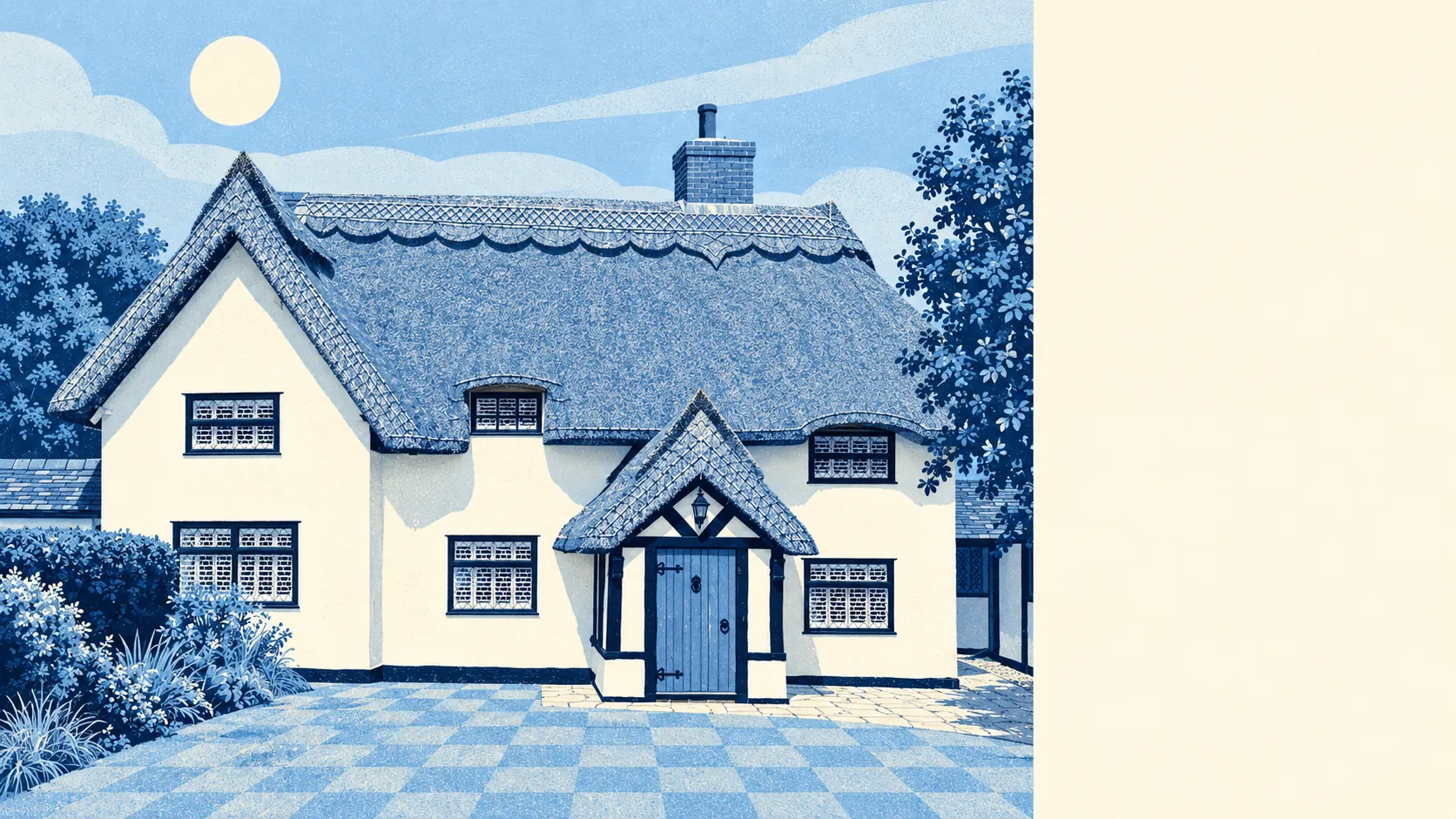
Yes, and here the paperwork is the easy part. Little Dunmow's built-up area has a handful of listed buildings, none above the lowest grade, and no conservation area. Most houses are young enough that the planners have little history to protect. The thing an extension really has to deal with is underground: the clay, which moves.
There are five listed buildings in the area this page covers, all Grade II. None is Grade I or Grade II*, and there are no scheduled monuments. Listing means listed building consent for almost any change to the fabric, inside or out, and that applies to the five buildings themselves and not to the houses that happen to stand near them. For everyone else, the medieval part of Little Dunmow lies elsewhere. The barony recorded in Domesday and the priory church both sit outside these streets, along with the conservation area that carries the village's name.
The neighbours are already building. The planning records for the wider area around Little Dunmow show 1,617 applications between April 2024 and June 2026, and 703 in the latest twelve months. Rear kitchens, loft rooms and garage conversions are the ordinary business of a planning department, and there is plenty of it here. The council's firmest refusals in recent memory were for Chelmer Mead, an entire new development, which was shelved after opposition and then refused in smaller forms. A single-storey rear extension is a much smaller thing to ask for.
The ground needs more thought than the planning. Every postcode in the area is class 3 on the national geological survey's shrink-swell scale, which means clay that swells when wet and shrinks when dry. For an extension, that usually means deeper foundations than a garden-room brochure assumes, and a structural engineer's view on the soil and on any trees nearby, because tree roots dry out clay. None of this stops a project. It goes into the budget, and it's best found on a drawing before the builder finds it in a trench. "Scope to extend" in the particulars is true here as far as the paperwork goes, but the particulars say nothing about the clay.
Day to day, most work on an ordinary house here will either fit permitted development, where the national rules allow modest extensions without a full application, or go through a normal householder application with no heritage layer on top. The one catch on a newer estate is that the original planning permission can sometimes remove permitted development rights for the houses built under it. The conditions on the house's original consent will say whether that happened here, and a conveyancer can check them in an afternoon. If the rights survive, a modest rear extension needs no application at all. If they don't, it needs an ordinary one, and nothing more.
Extending a house is one of the things Little Dunmow does best. The planning side is generous, and the real constraint is the clay, which shows up in the foundation bill.