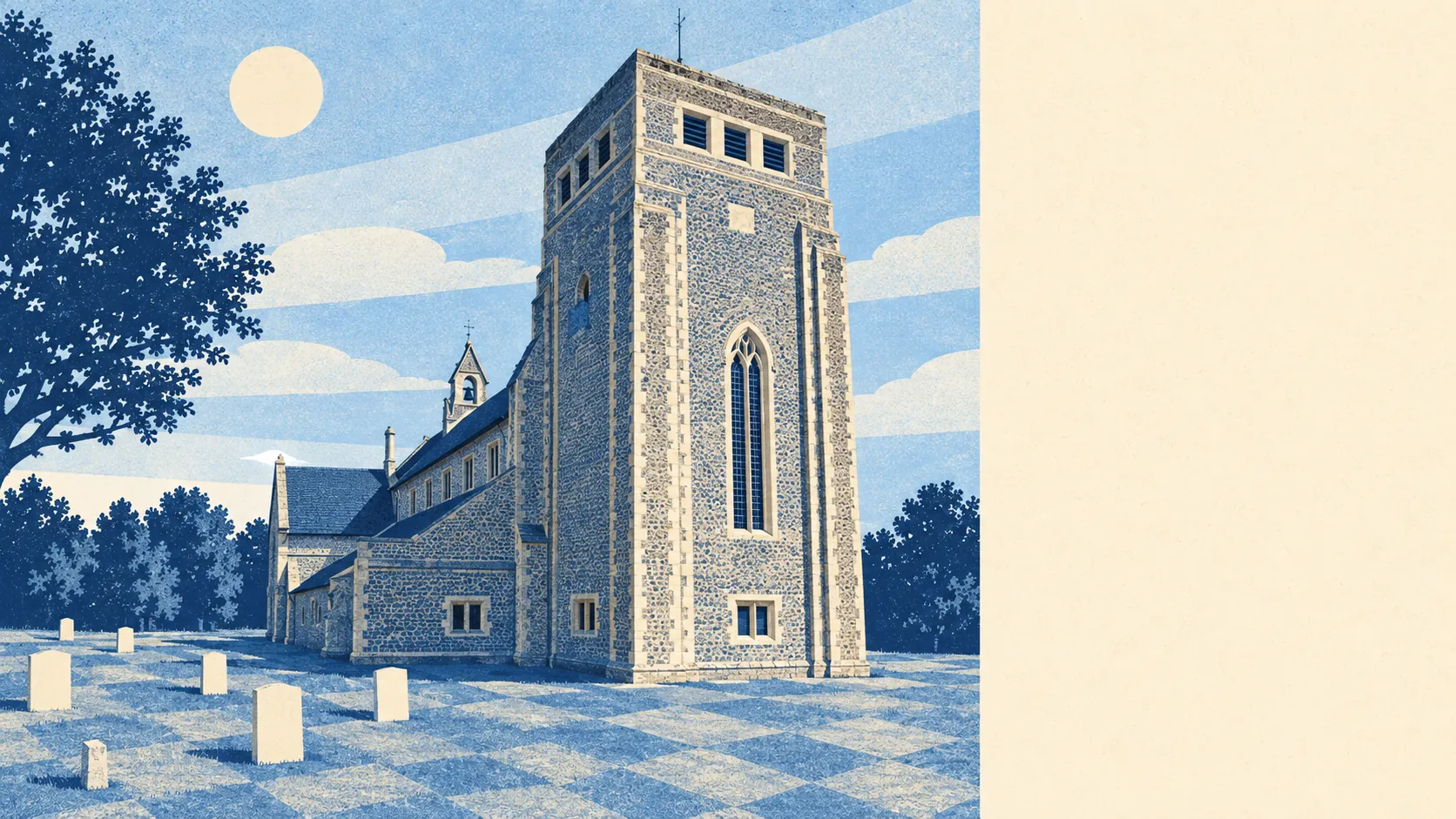
Countryside on every side, and a high street that still has its pubs. Green space is round the corner from most front doors. Streams and ponds are closer than most people expect. The pubs outnumber the restaurants three to one and then some. Liss is a small village with a very large back garden, and the back garden is a national park.
Green space is where Liss is strongest. The average home is roughly 150 metres from a green space, with about 14 green spaces within a kilometre. That's close enough to count as part of the house. Buyers who spend the viewing asking about the loft usually spend the first spring out on the common instead.
Water is close too. The average home is roughly 240 metres from blue space, and there are about 37 bodies of water within a kilometre, from the River Rother that splits the old village at West Liss from the newer one round the station, to the smaller streams and ponds that come with low-lying Hampshire. Pretty in summer, and worth remembering when you read a flood search.
About 78% of homes are close to the National Cycle Network, which runs on average about 300 metres away. That's close enough to start a proper ride without first strapping the bike to the car, which is more than a lot of keen cyclists can say.
The high street is modest and still going. The rated-premises data counts 37 shops, 7 pubs and 2 restaurants. Seven pubs against two restaurants tells you how Liss prefers to spend an evening: sat at a bar, not waiting for a table.
Air quality across East Hampshire as a whole, a council-area figure, ran at about 6 micrograms of fine particles per cubic metre in 2024.
The character comes from the ground around it. Newer suburbs spread out from the village, Hill Brow and Rake climb towards the county border, and the hamlets of Empshott and Hawkley sit in the lanes beyond. On Weavers Down and Woolmer Down, a short way off, bowl barrows and round barrow cemeteries mark some of the oldest occupation in the area. People have been choosing this patch for thousands of years, and the estate agents are only the latest to point it out.
Homes here have their own outdoor space as well. Private gardens across Liss add up to about 258,000 square metres for every 1,000 residents, which is a generous amount of lawn to mow by any standard. Liss isn't cramped: most residents have their own patch as well as the public ones.
The business rating list holds 141 rateable premises, and offices are the largest group at 40, followed by shops at 34, with a tail of other categories after that. These are premises on the valuation list, not a count of businesses open today. Even so, a village with more offices than shops is clearly home to plenty of people who either work locally or have given up the commute.
Eating out is clean if not extensive. Of 34 rated food premises, about 88% hold the top hygiene score and about 3% sit at the bottom end. The kitchens are tidy, even if there aren't many restaurants to book.
No area of outstanding natural beauty, site of special scientific interest or ancient woodland overlaps Liss itself. The protection that counts here is the South Downs National Park that the village sits inside, and that's more than enough designation for one parish.
The surroundings are one of Liss's real strengths. Green space, water, cycle routes and old downland are all close enough that most residents can be out of the house and into the countryside before the kettle boils.