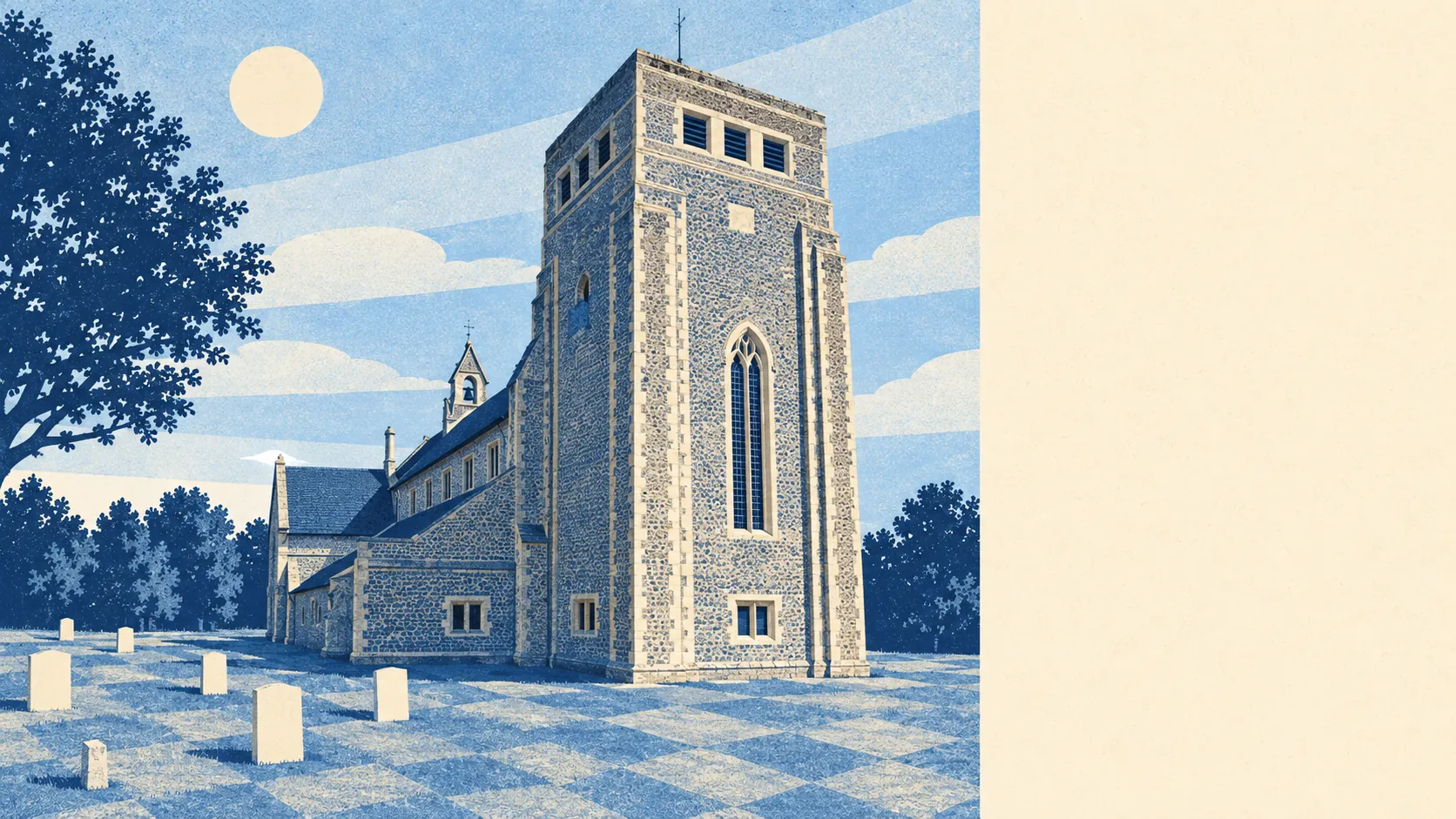
Mostly yes, and the clay will have more to say about it than the conservation officer. Just over a dozen buildings are listed. Two conservation areas cover the older parts of the village. The neighbours file planning applications at a steady rate. Liss will let you build, but it'll want to see the foundations first.
Liss has 13 listed buildings. None is Grade I, one is Grade II* and the other 12 are Grade II. Listing covers the whole building, inside and out, so even small changes such as a new window, a removed wall or a replaced staircase need listed building consent on top of any planning permission, and doing the work without it is a criminal offence. With only 13 in the village, the odds that your house is one of them are low. If it is, you'll know long before the builder turns up, because the conveyancer will have mentioned it more than once.
There are two conservation areas, Liss and West Liss, covering the historic cores. Inside them, changes visible from the street get more scrutiny, and some work that would go ahead without an application elsewhere may need one here. The typical post-war semi in the newer streets sits outside both, and it is where most of the village's extensions actually happen.
Planning activity is steady. From April 2024 to June 2026, 333 planning applications were lodged in the area, 156 of them in the last twelve months. That's the clearest evidence that people here do alter their homes regularly. Loft conversions and rear extensions are what happens to a house that people like but have outgrown, and the planning list suggests a lot of Liss has reached that stage.
The ground is the bigger practical issue. The British Geological Survey places the whole of Liss in shrink-swell class 3, a published hazard class meaning clay that expands when wet and shrinks when dry. That doesn't stop an extension. It means deeper foundations, a structural engineer's view before the architect gets carried away, and some care near large trees. Budget for the engineer's report, and treat any quote that doesn't mention foundations as incomplete.
In practice, most homes outside the conservation areas and the listed buildings can take the usual extensions, but Liss sits inside the South Downs National Park, and national park status can narrow what's allowed without a full application. Confirm with the planning authority before you assume anything is permitted development. A pre-application chat costs far less than an enforcement letter.
Freedom to extend here is middling. Heritage controls are light for most houses, the national park and two conservation areas tighten things in places, and the clay means every extension starts with a proper look at the ground.