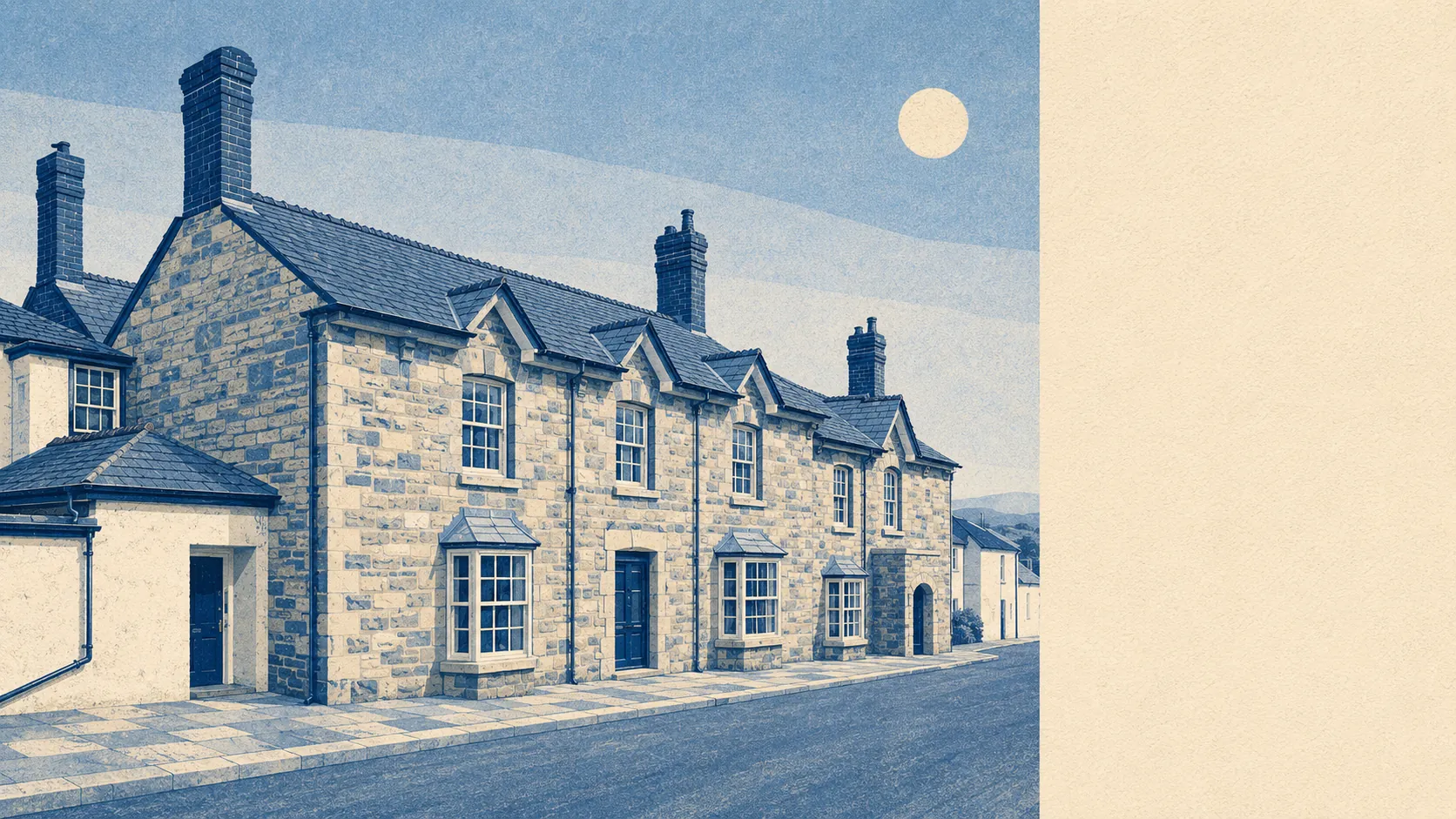
Owner-occupiers, and older ones. Seven in ten households own their home. The median resident is fifty. Fewer than one in five is aged between twenty-five and forty-four, the band most villages depend on to keep the school full. Nobody arrives here by accident, and very few leave in a hurry.
Tenure is where the settled character shows first. The 2021 census, which is the source for the population figures throughout this answer, put home ownership at 71% of households, with 20% renting privately and 9% renting from a social landlord. Nearly three in ten households renting is more than the countryside stereotype allows for, and in a village with 539 households in total it means the rental market exists without ever being large enough to have a personality.
The age profile is the fact that shapes everything else. The median resident is 50, and only 18% of the population falls in the twenty-five to forty-four band. That is a village weighted towards people who have already made their major moves rather than people still making them. It also explains the size of the houses, the number of cars on the drives and the general absence of anything open after six.
On money, modelled household income for this area came to around £51,400 gross in the financial year to March 2023, which drops to around £38,000 after tax. Both figures describe that year rather than today, and both are modelled averages for the wider area rather than a survey of Lifton doorsteps. They describe comfortable rather than affluent: enough for a mortgage on a semi, not enough to make the detached listings casual reading.
Household make-up follows the age profile faithfully. About 27% of households are one person living alone, and 14% of all households are a pensioner living alone, that second group being part of the first rather than an addition to it. Couples with dependent children account for 18%, and 8% are lone-parent households. So roughly a quarter of the village is families with children at home, and roughly a quarter is somebody living by themselves, which is a more evenly split village than the school-gate version of rural Devon suggests.
On qualifications, 28% of adults hold a degree-level qualification and 21% hold none at all, with full-time students making up 2% of the population. That is a genuinely mixed picture rather than a uniform one: a professional layer, a substantial group who left education early and went to work, and almost nobody currently studying. In a village with a dairy factory on its edge and farmland in every direction, that spread is exactly what the local economy has always produced.
One person in the whole area lives in communal accommodation rather than a private household, which is a rounding error on any measure and means every share above describes essentially the entire population.
The people who live here are settled, mostly older, mostly owners, on incomes that are steady rather than generous. It is not a prosperous commuter belt pretending to be a village, and the census does not let it pretend otherwise.