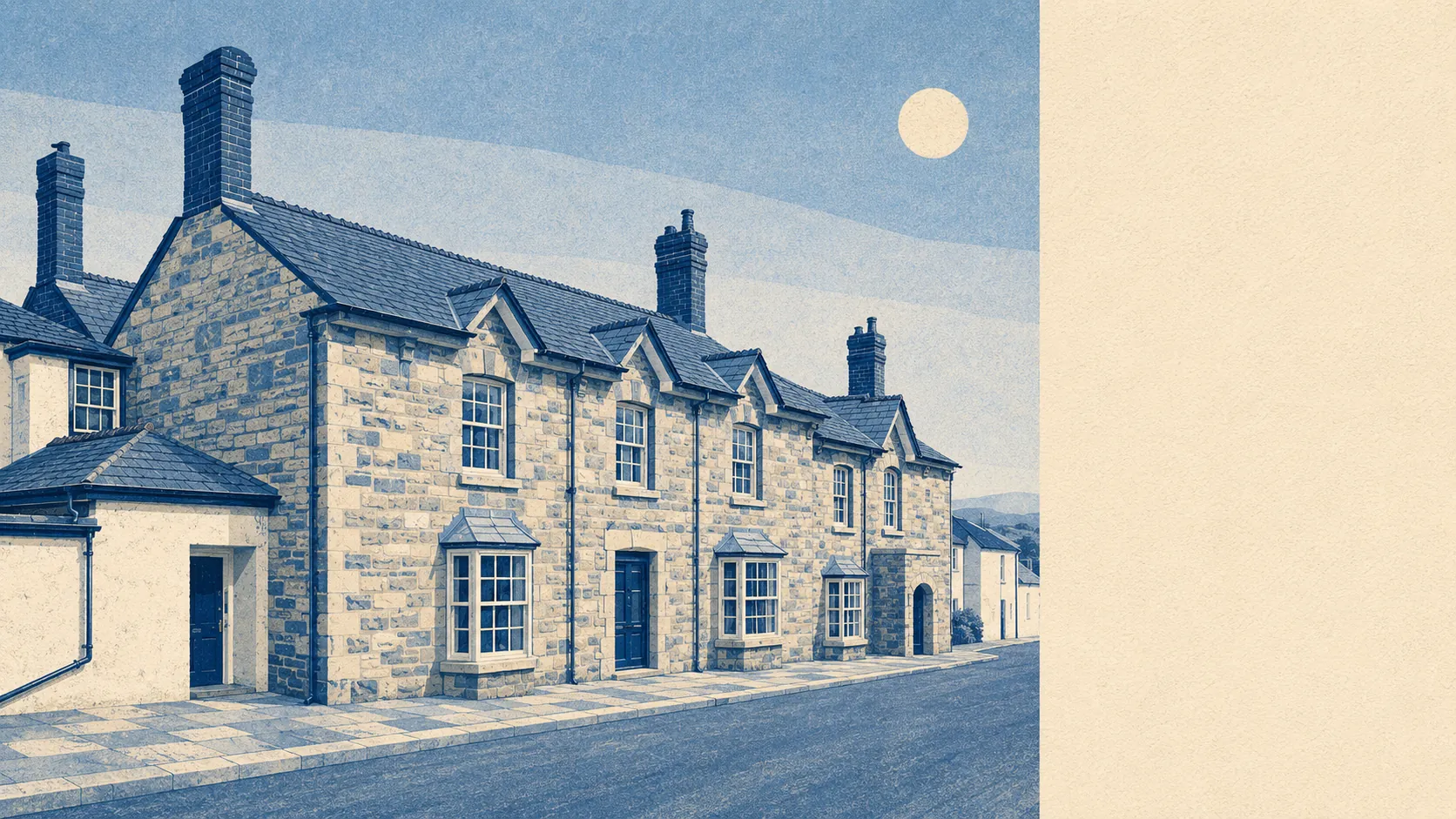
Farmland with two rivers running through it, and the countryside starts at the end of the drive. Green space sits little more than a hundred metres from the average front door. Water is barely further. More than nine in ten postcodes are within easy reach of a national cycle route. The surroundings here are not somewhere you drive to at weekends, they are the thing the village is standing in.
Green space access is about as good as the mapping gets. The average postcode has roughly six green spaces within a kilometre and the nearest sits around 126 metres away. That is not a park at the end of a bus ride, it is the field behind the house, and the practical consequence is that walking the dog does not require a plan, a car or a decision.
Water is close in a way that shapes the place. Blue space averages around 346 metres from the front door, with about 14 separate water features within a kilometre. Lifton sits near the confluence of the Wolf and the Lyd, and the surrounding country is stitched with the sort of small watercourses that come with valley farmland. The Arundell Arms, a former coaching inn once known as the White Horse, has built its reputation on the fishing, which tells you what the rivers mean here better than any map does.
Getting into all of it is straightforward. The National Cycle Network runs an average of around 183 metres from a Lifton postcode, and 92% of postcodes sit close to it. That is unusually good access for a rural village, where the standard experience is a lane, a hedge and a hope.
The amenity mix is exactly what a village of this size supports. The rating list carries two shops and one pub, and no restaurants at all. Anyone expecting a high street will be disappointed within about four minutes of arriving. What is here is a village, not a small town wearing village branding.
Air quality is one of the quiet advantages. Fine particle pollution across the West Devon council area averaged around 5 micrograms per cubic metre in 2024, which is a council-wide figure rather than a village one, but it reflects an area with no industry crowding it and no traffic density to speak of.
The character comes from what surrounds the village rather than what sits inside it. The hamlets ring it at close quarters: Tinhay, Liftondown, Portgate, Sprytown and Lawhitton, most of them a scattering of houses and a name on a signpost. Hayne Manor sits in registered parkland nearby. Saint Mary's Church has stood in the village since Norman times, though most of the current fabric is fifteenth century or later. The dairy factory that arrived in 1917 and grew into the Ambrosia works still anchors the eastern edge, which means this is a working village rather than a preserved one. Cornwall starts more or less at the far hedge.
Private outdoor space is where the numbers turn genuinely striking. Gardens here amount to around 376,000 square metres for every thousand residents. That is the measure worth paying attention to in a rural place, because the share of total land taken up by gardens is drowned out by farmland and makes the plots look smaller than they are. In plain terms, houses here have proper gardens, and quite a lot of them have more than that.
The wider premises picture backs up the working-village reading. The valuation list carries 45 rateable premises across the area, including four offices and 20 holiday lets, alongside agricultural and industrial units. Those are premises on a list rather than businesses currently trading, but the shape is clear enough: a bit of work, a good deal of tourism, and not much retail.
For eating out, eight premises in the area carry a food hygiene rating and 88% of them hold the top score. None sit at the bottom of the scale. That is a strong record, though with eight rated premises in total it describes a short menu rather than a scene.
One honest absence worth stating. No part of the area falls within a national landscape designation, a site of special scientific interest, or ancient woodland. This is ordinary working Devon countryside rather than protected countryside, which means fewer statutory constraints and no visitor traffic arriving to photograph it. Plenty of people would count that as the better arrangement.
The setting is the strongest thing Lifton has going for it, without much competition. Green space at the doorstep, water everywhere, cycle routes running through, gardens that would cost a fortune anywhere with a station, and air nobody has cause to complain about.