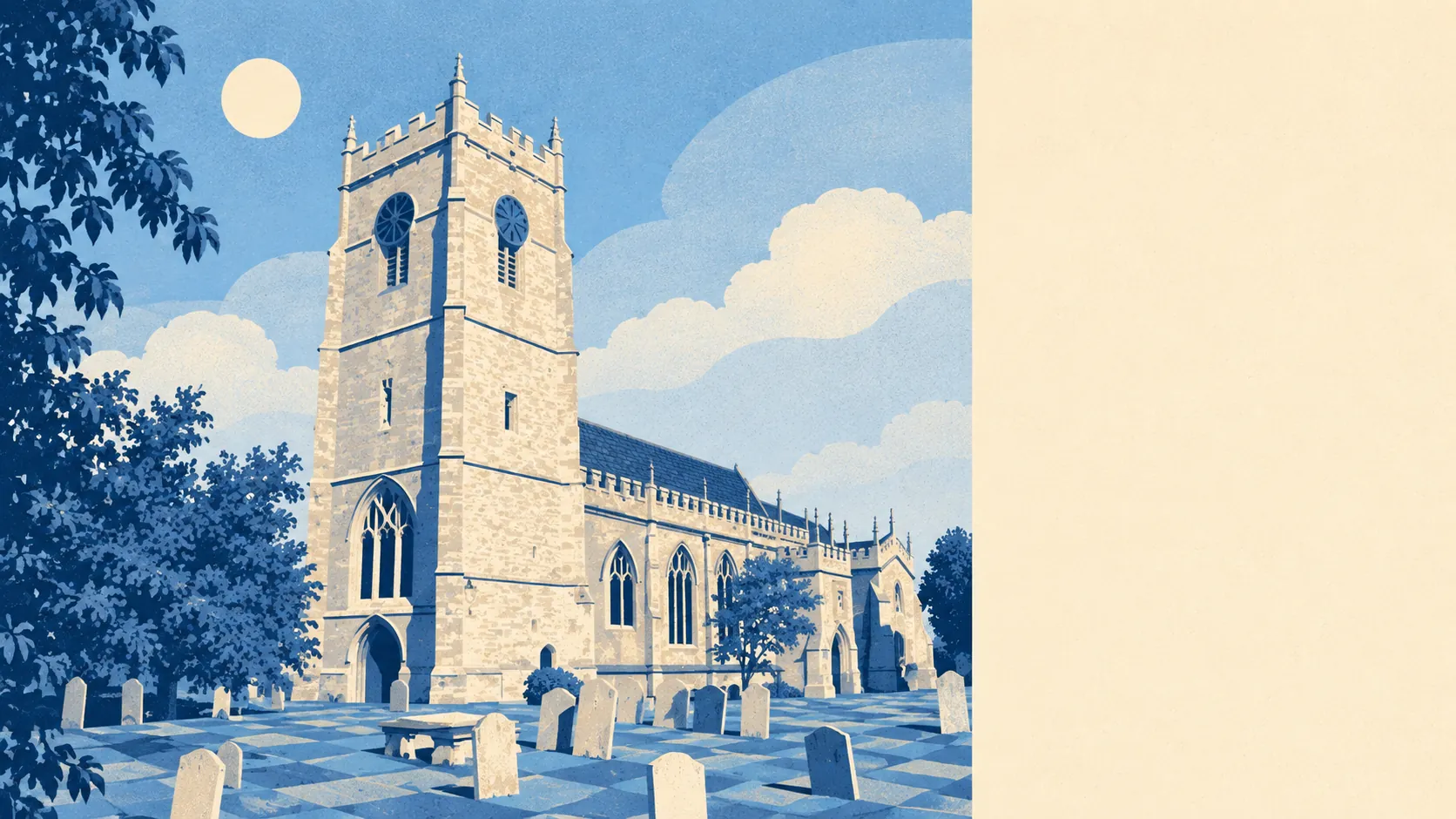
The area around Highworth is open farmland with a town sitting on top of it. There's a patch of green space a short walk from almost every door. The river is further off than the map suggests. None of the surrounding landscape carries a protected designation. It's ordinary English countryside, and there's a lot of it.
Green space is where Highworth does well. The nearest patch averages about 160 metres from home, and the typical address has around 17 green spaces within a kilometre. For most residents the question isn't whether there's somewhere to walk the dog. It's which one the dog prefers.
Water is less convenient. The nearest blue space, meaning a river, lake or pond, averages about 925 metres away, with around 2 within a kilometre. Hannington, to the north-west, has the Thames as its northern boundary, but on a hilltop the river is something you look down at on a walk, not something outside the window.
Getting further out takes more effort. The nearest stretch of the National Cycle Network averages about 8.4 kilometres away, and 0% of postcodes sit close to it. The ancient woodland share is 0%. The countryside here is fields, hedges and farm tracks.
The high street is busier than the town's size suggests. The rated-premises data counts 107 shops, 22 pubs and 9 restaurants, and with 22 pubs against 9 restaurants, the town clearly prefers a drink to a menu. Food hygiene is strong: of the 46 rated food outlets, about 85% hold the top score.
Fine-particle air pollution across the Swindon council area averaged about 7 micrograms per cubic metre in 2024. That's a council-wide figure, not a reading from the hilltop.
The character comes from what surrounds the town. Villages with their own conservation areas ring it: Sevenhampton, Hannington, Hampton, Coleshill, Stanton Fitzwarren and Upper Inglesham, along with the hamlets of Eastrop, Westrop, Redlands and Hannington Wick. The farmland beyond holds a string of scheduled monuments known as Highworth circles, ancient enclosures scattered across the fields and named after the town, alongside medieval settlement remains at Sevenhampton and a Roman villa west of Stanton House. Back in town, Highworth Town Football Club and the cricket club share the Elms Recreation Ground. It's a town that plays sport on Saturday, drinks afterwards, and has a Roman villa down the road it rarely mentions.
Private gardens are generous. Across the area there are about 125,000 square metres of garden for every 1,000 residents, measured across all 6 of its neighbourhood statistical areas. In practice, the lawnmower is standard household equipment, and the public parks get used by choice rather than because there's nowhere else to go.
The valuation list holds 188 rateable business premises, led by shops and offices, with workshops and other commercial units behind them. These are premises on the council's rating list, not a count of businesses currently open, so an empty unit and a thriving one look the same here. The rated-premises data puts offices at 145, so a lot of Highworth's working day happens above a shopfront or down a side street, not in a business park.
For eating out, about 85% of the 46 rated food premises hold the top hygiene score, and 0% sit at the bottom of the scale. The worst you're likely to find is a menu you don't fancy.
No area of outstanding natural beauty, site of special scientific interest or ancient woodland overlaps the area. That's not a failing. It means the land around Highworth is working farmland and not a landscape anyone has had to rescue, and it also means fewer extra layers of protection for a buyer to deal with.
The surroundings are one of Highworth's real strengths: parks close to every door, generous gardens behind them, and fields and villages in every direction beyond.