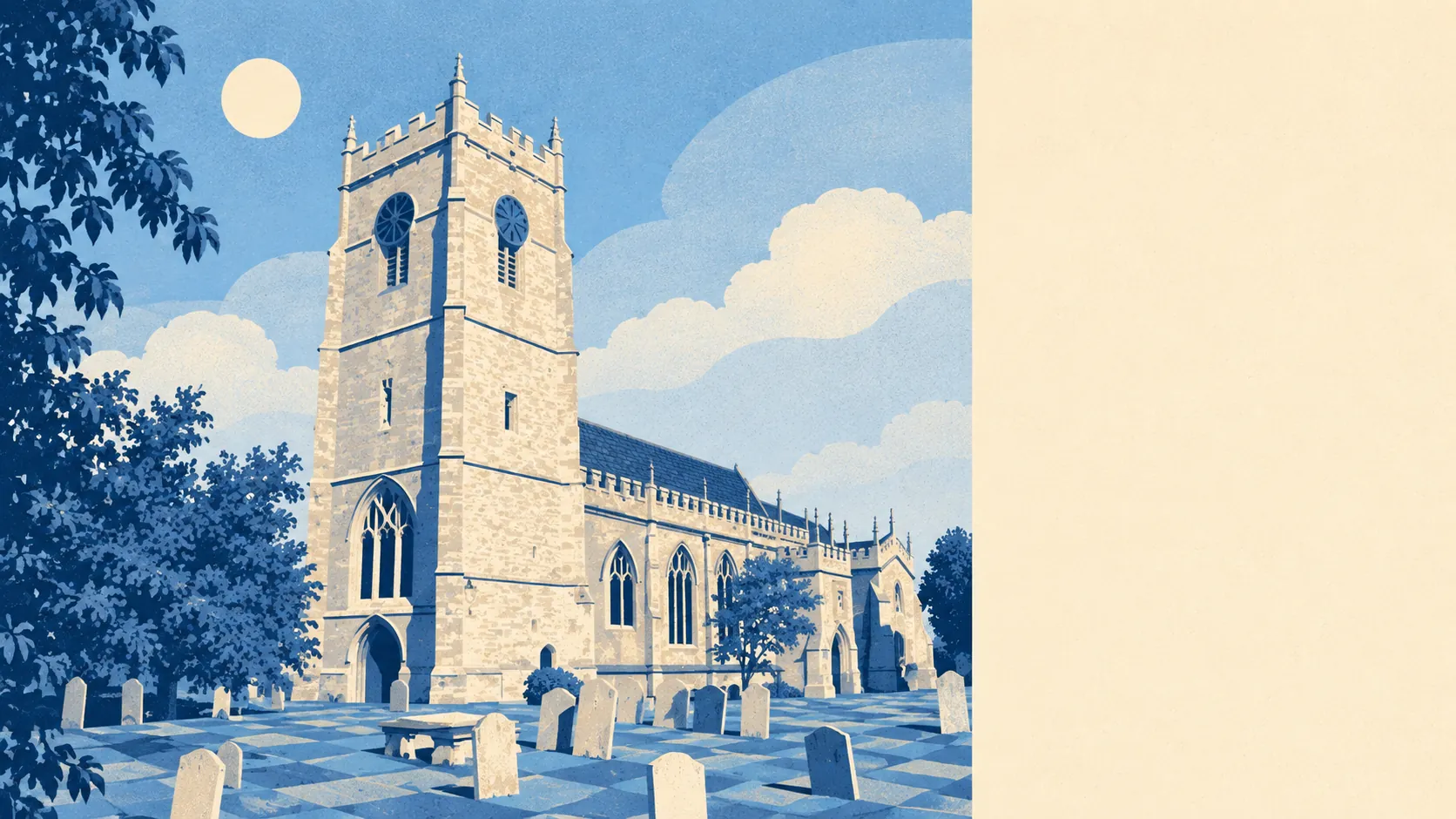
Highworth is a good place to live, provided you drive. Seven in ten households own their home. Crime runs at about half the Swindon rate. Almost nobody gets to work by train. It's a handsome hilltop market town, and the car keys stay on the hook by the door.
The housing is mostly houses, spread across the types more evenly than most towns manage. Of every home on the council-tax list, about 28% are detached, 26% terraced, 19% semi-detached, 14% bungalows and 12% flats. The Georgian and Queen Anne frontages that end up on the postcards are a minority: only about 12% of homes date from before 1930, and the energy certificates put most of the stock in the post-war decades. On those certificates, 40% of homes sit in band D, 47% reach C or better, and 13% are E or worse. About 77% heat with mains gas and 12% run on electricity alone. Ask which kind you're looking at during the viewing, because finding out in the first January is the expensive way to learn it. The bungalow share tells you something too. This is a town where a lot of people arrived, looked around and decided the next move would be their last.
The Land Registry recorded 102 sales in the year to May 2026, with a median of about £289,000. The split by type tells you more than the median does. Terraces went for around £242,000, semis about £305,000 and detached houses about £408,000, while the 8 flats that sold came in near £160,000. Council tax is gentle: band B is the most common, and about 37% of homes sit in bands A or B. The listing will say "historic market town". The median buys a post-war semi a few streets back from the history.
Renting is harder to price locally. Only about 13% of households rent privately, and the nearest published figure is about £1,080 a month, the typical private rent across the Swindon area as of April 2026. That's a borough-wide average, not a Highworth rent, so use it as a starting point and not as a quote.
Recorded crime in the year to May 2026 ran at about 47 per 1,000 residents, roughly 46% below the Swindon average of about 88. Violence and sexual offences make up the largest category, as they do almost everywhere, and the totals are small enough that a handful of incidents can shift the mix by several points. Buyers who rule Highworth out because the crime map says "Swindon" have read the wrong line of the address.
The two primary schools in the district average about 104 in the end-of-primary maths tests. The one secondary, Highworth Warneford School on Shrivenham Road, scores 46 on Attainment 8, the government's measure of results across eight exam subjects. Southfield Junior School sits next door to it, Eastrop Infant School is nearby, and Westrop Primary & Nursery School covers the west side of town. Across the wider Swindon authority, Ofsted has graded 38 of 46 settings good or better, 3 of them outstanding. A family can do the whole school run without ever leaving the hill, which suits the parents who moved here specifically to avoid leaving it.
Transport is where it comes apart. The branch line from Swindon closed to passengers in 1953, and Highworth has commuted by car ever since. About 53% of workers drive, 31% work from home, 3% take the bus and the train barely registers. There are 23 bus stops, averaging around 41 weekday departures each, and 90% of them have a weekend service. That's decent for a town this size, until you need a hospital: the Department for Transport's 2019 modelling puts one about 72 minutes away by public transport, against 23 minutes by car, and bus times tend to get worse as services are cut. Superfast broadband reaches about 94% of premises, but full-fibre gigabit reaches only 29%. For a place where nearly a third of workers stay home, that second figure is the one to check on your street.
Being the highest town in Wiltshire has one clear advantage: none of Highworth sits in the Environment Agency's river-and-sea flood zones. Surface water is a separate issue. About 7% of postcodes carry a high rating on at least one flood indicator including surface water, and another 8% a medium one. Rain still has to go somewhere, even on a hill. Green space is where the town does best. The nearest green space averages about 160 metres from the front door, with around 17 within a kilometre, and the countryside starts where the streets stop. To the north-west, Hannington runs down to the Thames, which forms its northern boundary, and Blunsdon sits over towards Swindon for anyone who wants the same setting a little closer to the ring road.
The heritage is real and it comes with rules. The area has 95 listed buildings: one Grade I, 8 Grade II* and 86 Grade II, including The Old Manor House on the High Street, parts of which date back to the late fifteenth century. The old centre has been a conservation area since 1976. Buy there and new windows, extensions and anything the neighbours can see will need permission, and a listed building needs consent for more than you'd expect. The Georgian front that sold you the house also gets a say in what happens to it.
About 72% of households own their home, the median age is 49, and gross household income averaged about £55,000 in the financial year to March 2023, on the Office for National Statistics' modelled estimate for the area. That makes Highworth settled, comfortable and in no hurry. People who arrive tend to stay long enough to have strong views about parking on the High Street.
It suits a household with two cars, jobs that are remote or a short drive down the A361, and a taste for old buildings they don't have to live inside. Families who want a primary, a secondary and a park all within walking distance will find them here, along with a market that has run weekly since its charter in 1206.
It doesn't suit anyone who needs a train, anyone without a car, or anyone planning to replace every window in a Georgian house by spring. Young renters wanting nightlife will find the pubs friendly and the last bus decisive.
History has left some odd details. John Goodson, a Lollard miller from Maggot Mill at Fresden, was burned for heresy in 1508, roughly where King's Avenue and the back of Southfield School are now. "Maggot" referred to the lively water that drove his wheel, not the state of his flour, which the town has presumably been explaining ever since. The composer Kate Lucy Ward was born here, as was Eric Buller, an army officer who also played cricket.
Highworth's real strength is its surroundings: green space at the end of every road, no river-flood exposure, crime well below the borough's, and a town centre worth protecting. The weak spot is transport. With no railway, a modest bus network and patchy gigabit broadband, everything depends on the car. Take the car and Highworth is one of the easier decisions in the Swindon area. Without one, you'll find out very quickly how steep the hill is.