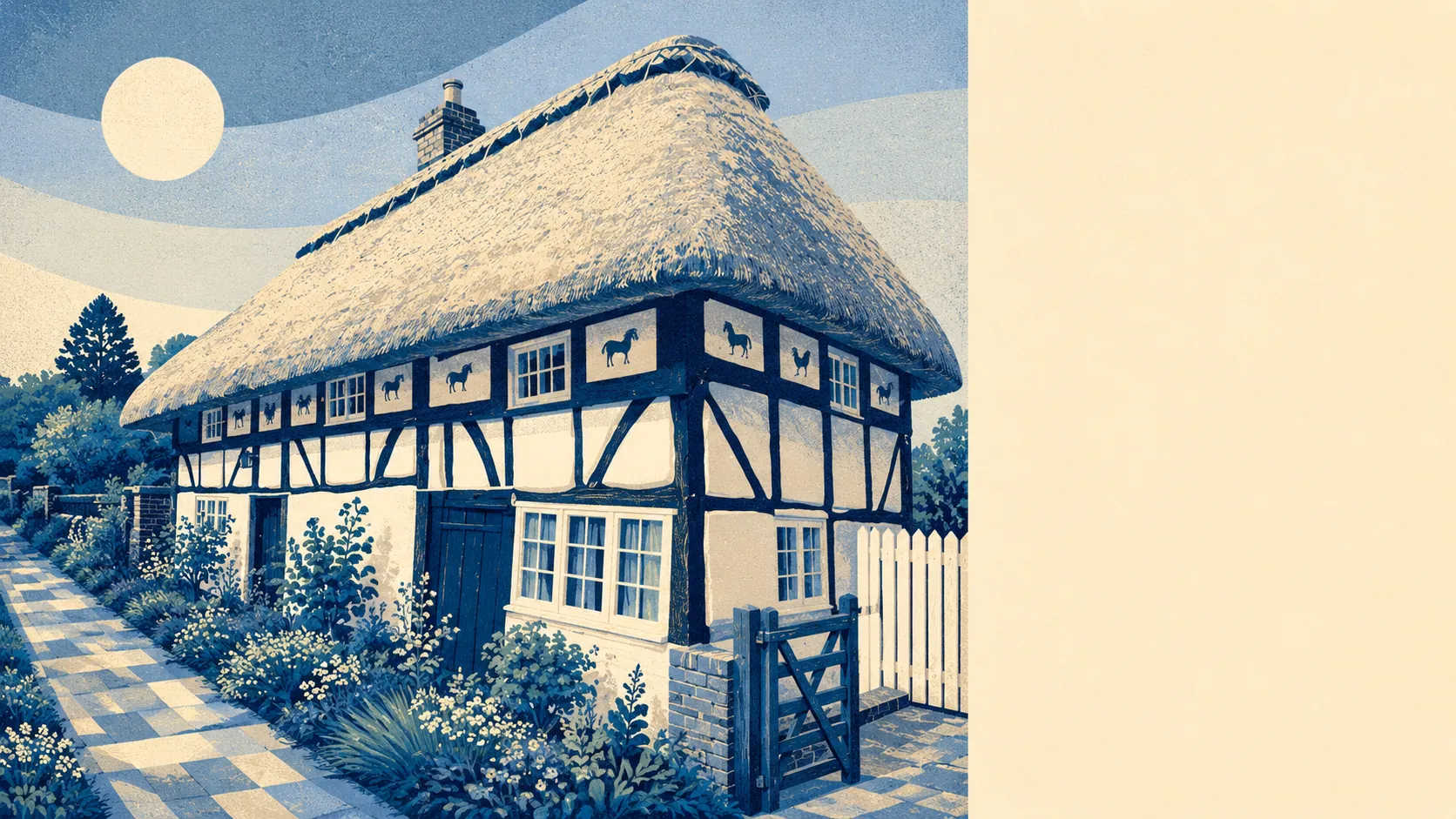
Mostly yes, but the address decides it. About 73 listed buildings sit within Henfield, of which 4 are Grade II* and most of the rest are Grade II. One conservation area covers the historic core. Around 215 planning applications went through the village in the last 12 months. The honest answer is that the freedom to extend depends entirely on which house you bought.
Listed buildings are the constraint that bites hardest. The 73 listed entries in Henfield are split into about 4 Grade II* properties and around 69 Grade II ones, with no Grade I present. A listing is a constraint on the whole property, including in many cases the interior fabric, not just the front elevation that everyone notices. The named heritage anchors include Old Lock Farmhouse, Potwell, Rus House, Wantley Manor and the parish churches of St Giles, St James and St Peter, but the listed register reaches into ordinary residential properties too. Owners of any listed house planning material changes need listed-building consent in addition to any planning consent that might be required, and the threshold for what counts as material is lower than most first-time owners assume. Replacing windows, altering a chimney, changing an internal partition or repointing in the wrong mortar all sit inside the consent regime for a listed property.
The conservation area is the other layer. The Henfield conservation area covers the historic core of the village and adds a second tier of planning sensitivity on top of any listing. A second conservation designation covers the Blackstone area in the wider parish. Conservation-area status removes some of the permitted-development rights a homeowner would otherwise have, which means changes that wouldn't need an application in an unconstrained postcode will need one here. Article 4 directions, where they are in force, can extend that restriction further by removing additional permitted-development rights for specified streets or building types. A buyer in or near the conservation area should check whether any such direction applies to the specific street before assuming the usual permitted-development envelope.
In practical terms, the village splits into three planning worlds. Houses outside the conservation area and outside the listed register sit broadly within the standard permitted-development envelope, which means rear extensions of normal proportions, loft conversions and outbuildings within size limits typically do not need a full application. Houses inside the conservation area but not listed lose some of those permitted-development rights and will need planning consent for things that would be automatic elsewhere. Listed houses sit in the most-controlled bracket and need both listed-building consent and, for many changes, planning consent on top. The 215 planning applications across the village in the most recent 12 months is a healthy throughput, which tells you the planning process here is busy rather than ossified, and applications do get decided.
Average overall, in the planning-freedom sense. Most houses can be added to in the way a typical buyer would want, but the listed and conservation-area stock will involve the planning conversation that comes with owning a piece of the village's history.