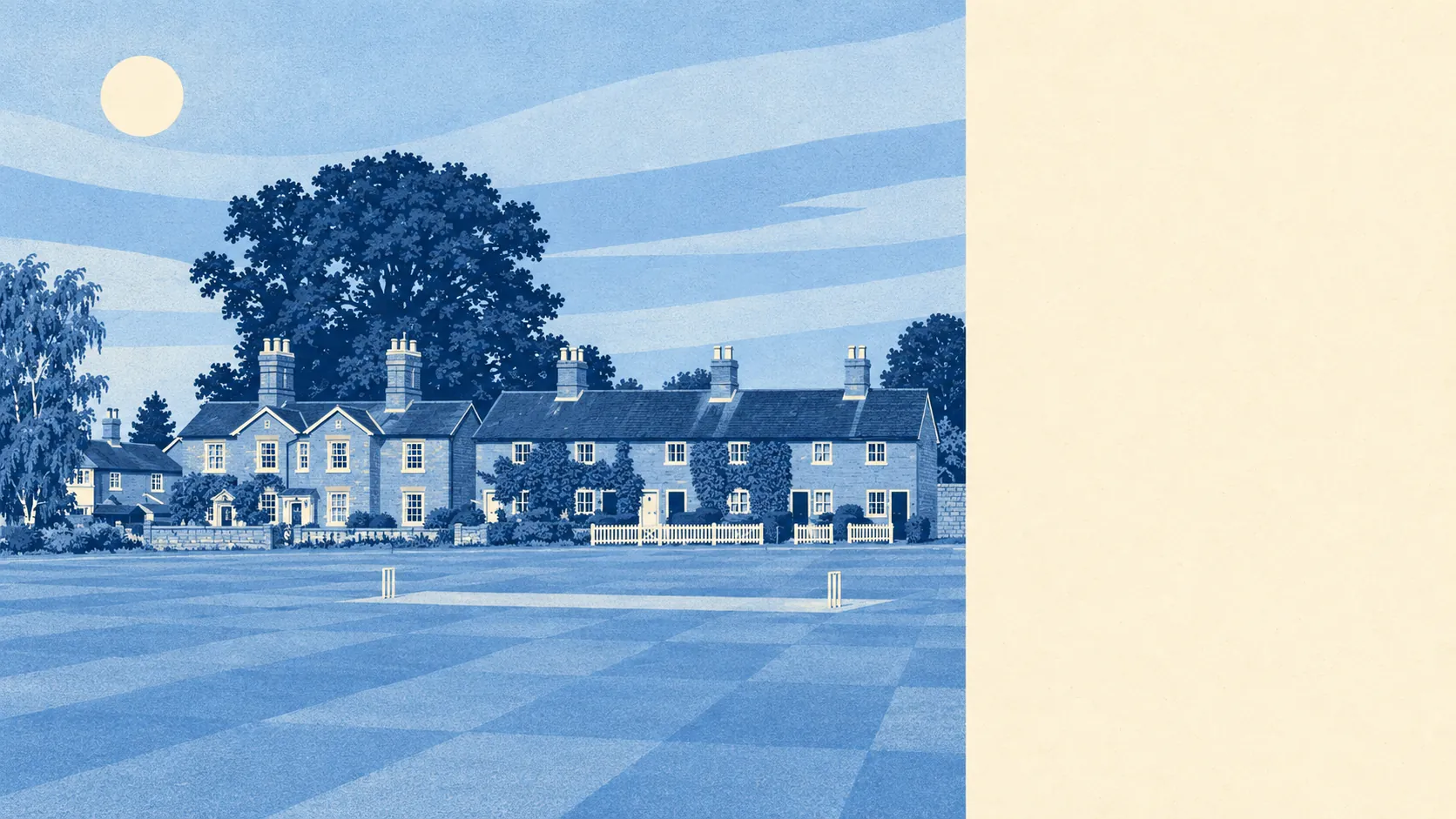
It's green, it's wet, and much of the nearby land once belonged to somebody's estate. Green space sits a short walk from most doors. Water is even closer. The old country estates fill the horizon. The countryside here comes with a gatehouse.
Green space is close to most homes. The average home is about 340 metres from green space, with around seven green spaces within a kilometre. That is enough choice that the dog gets a different walk each day and still hasn't seen them all by Friday.
Water is closer still. The average home is about 270 metres from a stream, pond or other blue space, with around 20 within a kilometre. That is part of the charm, and it is also why the flood-risk page is worth a read before you fall in love with a cottage by the brook.
For cyclists, the National Cycle Network is further away: the average home is about 8,250 metres from it, and no postcode here sits close to a route. The lanes are the main way to get out on a bike, not the national network.
Across the wider surrounding area, the rated-premises count includes 524 shops, 86 pubs and 25 restaurants. The pub count is the one that stands out. Hampshire's way of getting people out of the house has always involved a beer garden.
For air quality, Hart as a council area recorded fine-particle pollution of about 7 micrograms per cubic metre in 2024. That is a district-wide figure, not a reading from any particular street.
What sets the area apart is the parkland. Bramshill Park, Elvetham Hall, Tylney Hall, Dogmersfield Park and Stratfield Saye Park all sit in the wider landscape, along with the gardens at West Green House. Around them are small places such as Phoenix Green, Eversley Centre, Winchfield, Mattingley and Hazeley, which feel less like suburbs and more like the bits between the big houses. The overall character is old money that has mellowed, laid out so that the people with the longest drives also had the best views.
Homes here have plenty of private outdoor space too. The area averages about 396,000 square metres of private garden for every 1,000 residents, which means most homes come with a proper garden rather than a patio and a hopeful pot. That is the kind of space that turns "we should get a trampoline" into "we should get a second trampoline".
The valuation list records 380 rateable premises in the area. Among the named categories, there are 78 offices and 50 shops. These are premises on the list, not a count of businesses open today, and some will be empty or in other use. The mix suggests a place that works quietly from small offices and sells from a modest parade, rather than a retail destination.
Eating out comes with a clean bill of health. Of 61 rated food premises, about 84% hold the top hygiene score, and none sit at the bottom. The sandwich you buy here is unlikely to become an anecdote.
No protected landscape designation overlaps the area. There is no area of outstanding natural beauty, no site of special scientific interest and no ancient woodland. That doesn't mean the countryside is poor. It means the green here is working farmland and old estate parkland, not a national landscape, and it tends to be quieter for it.
The surroundings are one of Hartley Wintney's real strengths: green space and water almost everywhere, generous gardens, and some of the county's grandest old estates as the view.