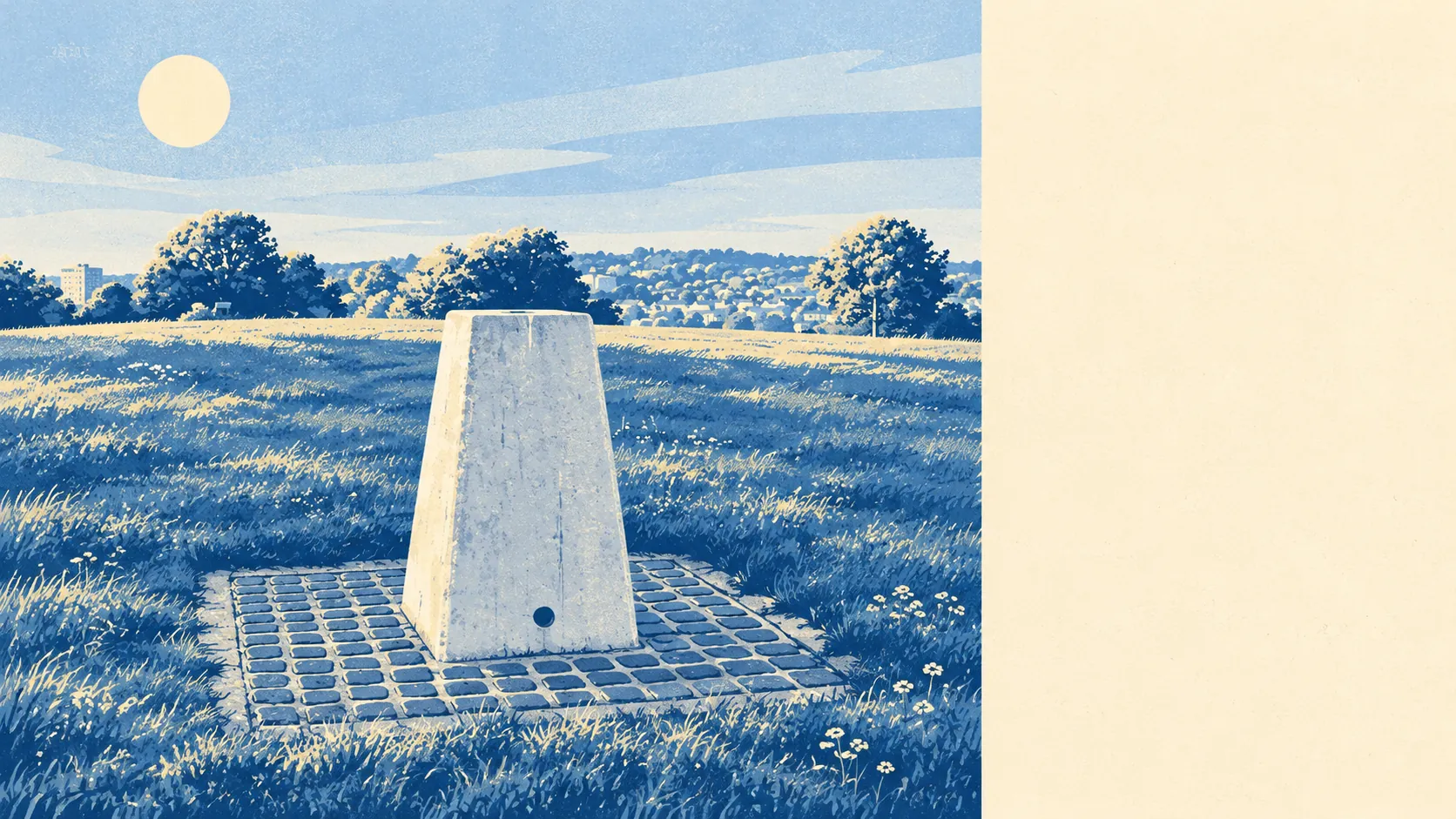
Greenford makes the rest of west London easy to reach, and that is most of why living here works. The Central line stops in town, nearly every home can get gigabit broadband, and every bus stop gets a weekend service. The weak half is the neighbourhood. On the government's deprivation ranking it has slid from the middle of the table towards the poorer end. It is a better place to set off from than to stand around in, and most people who chose it worked that out at the viewing.
The Central line runs from Greenford Rail Station, the Piccadilly line calls at Sudbury Hill Harrow, and a branch-line train runs from Greenford and South Greenford down to West Ealing. There are 303 bus stops. The 272 with timetable data average about 285 departures each on a weekday and around 15 in the peak hour, and all of them have a weekend service. Gigabit broadband reaches about 95% of the area, and every postcode gets 4G or 5G from all the operators. Even so, the 2021 Census found only 3% of working residents going by train and about a third driving, with 26% working from home. Two Underground lines and a branch railway of its own, and the A40 still gets more of the commuters than any timetable does.
Just over half of households own their home, about 56%, and the median age is 38. The Office for National Statistics models average gross household income at about £68,500 for the financial year to March 2023, which is a working suburb's income. The problem is which way things are moving. The Index of Multiple Deprivation put the typical neighbourhood here around the fifth decile in 2019 and nearer the fourth in 2025, with the first decile the most deprived. About 13% of households count as overcrowded. The interwar streets look exactly as they did in 2019. The ranking has moved.
Historic England records 44 listed buildings in and around Greenford: three Grade I, six Grade II* and 35 Grade II. There are also ten conservation areas, among them Canalside and Brentham Garden Estate, and three scheduled monuments, one of them an Iron Age settlement on Horsenden Hill. One entry is on the Heritage at Risk register. The ordinary housing is mostly interwar and unprotected, so for most owners an extension goes through the normal planning rules. Inside a conservation area, windows, roofs and frontages are watched more closely. The Iron Age settlers picked Horsenden Hill for the view and would now struggle to get permission for a shed there.
The Environment Agency's river-and-sea flood zones cover little of the place: about 3% of postcodes are in the highest zone and about 1% in the next one down. Counting every flood indicator, surface water included, the picture changes. About 15% of postcodes rate high on at least one and about 23% medium. The Environment Agency has 18 recorded flood events, the latest in December 1977, when a main river overflowed its channel. "No flooding in living memory" depends on whose memory and which kind of water.
Ofsted has graded 39 schools for this area, and 36 of them are good or outstanding, 14 of them outstanding. The ten primaries in Greenford, Ravenor Primary School and Oldfield Primary School among them, average about 107 in Key Stage 2 maths. The two secondaries, The Cardinal Wiseman Catholic School and William Perkin Church of England High School, average 60 on Attainment 8, the Department for Education's points score across eight exam subjects. The second is named after the chemist who discovered mauveine, the first aniline dye, in his factory by the Grand Union Canal in North Greenford in 1856. Few secondary schools can say their namesake found a new colour half a mile up the road.
The Metropolitan Police area figures put recorded crime at about 104 per 1,000 residents for June 2025 to May 2026, roughly 13% below the Ealing average. The mix leans one way. Vehicle crime is about 11% of the total against 5% nationally, and anti-social behaviour about 23% against 16%. In a town that commutes by car, the cars get the attention.
The Land Registry recorded 210 sales in the year to May 2026, at a median of about £510,000. Flats went for around £295,000, terraced houses £530,000 and semis £565,000. Detached houses make up about 1% of the stock, and the five that sold had a median of £560,000, below the semis, so the semi is as high as Greenford's ladder goes. Band D is the most common council-tax band, at about £2,139 a year, and only 11% of homes are in bands A or B. Private renters face Ealing's typical rent of about £2,060 a month as of April 2026, a borough-wide figure from the Office for National Statistics.
According to the council-tax valuation list, about 38% of homes are terraced, 37% are flats, 21% are semis and only 12% were built before 1930. Most of the houses went up between the wars, in the same decades Lyons was turning its 1921 factory into Greenford's biggest employer, and they have outlasted the factory, which is now Lyon Way Industrial Estate. About 54% of certificated homes rate C or better for energy and 8% E or worse. About 79% heat with mains gas and 9% with electricity alone.
The nearest green space is about 130 metres from the typical home, and water is about 400 metres away, usually the canal. Horsenden Hill, Perivale Wood, Northala Fields and Brent Valley Park are all close, and this page also covers Perivale and Brent. Ravenor Park, the largest park, hosts the Greenford Carnival every July. Until 1910 its tithes went to St. Mary's Church in Northolt, so for most of its history the town's biggest park was paying the neighbours.
The famous names lean refined for a town that made its money from tea and bread. Blanche Bingley, a Wimbledon singles champion, and the sculptor C. J. Allen were both born here. The bassoonist Vernon Elliott lived on Sudbury Heights Avenue in the 1930s, and the model Jourdan Dunn grew up here. In 1964 a band from the Oldfield Tavern played its first gig as the Who.
Greenford is right for commuters into London, for people who work from home on a fast line, and for families who want an interwar semi near the Central line. Buyers who want the neighbourhood to be the reason they moved should look further along the line.
Greenford is a better-than-average choice because leaving it each morning is easy. The neighbourhood you come home to is the part that is still going the wrong way, so take it if the journey matters more to you than the street.