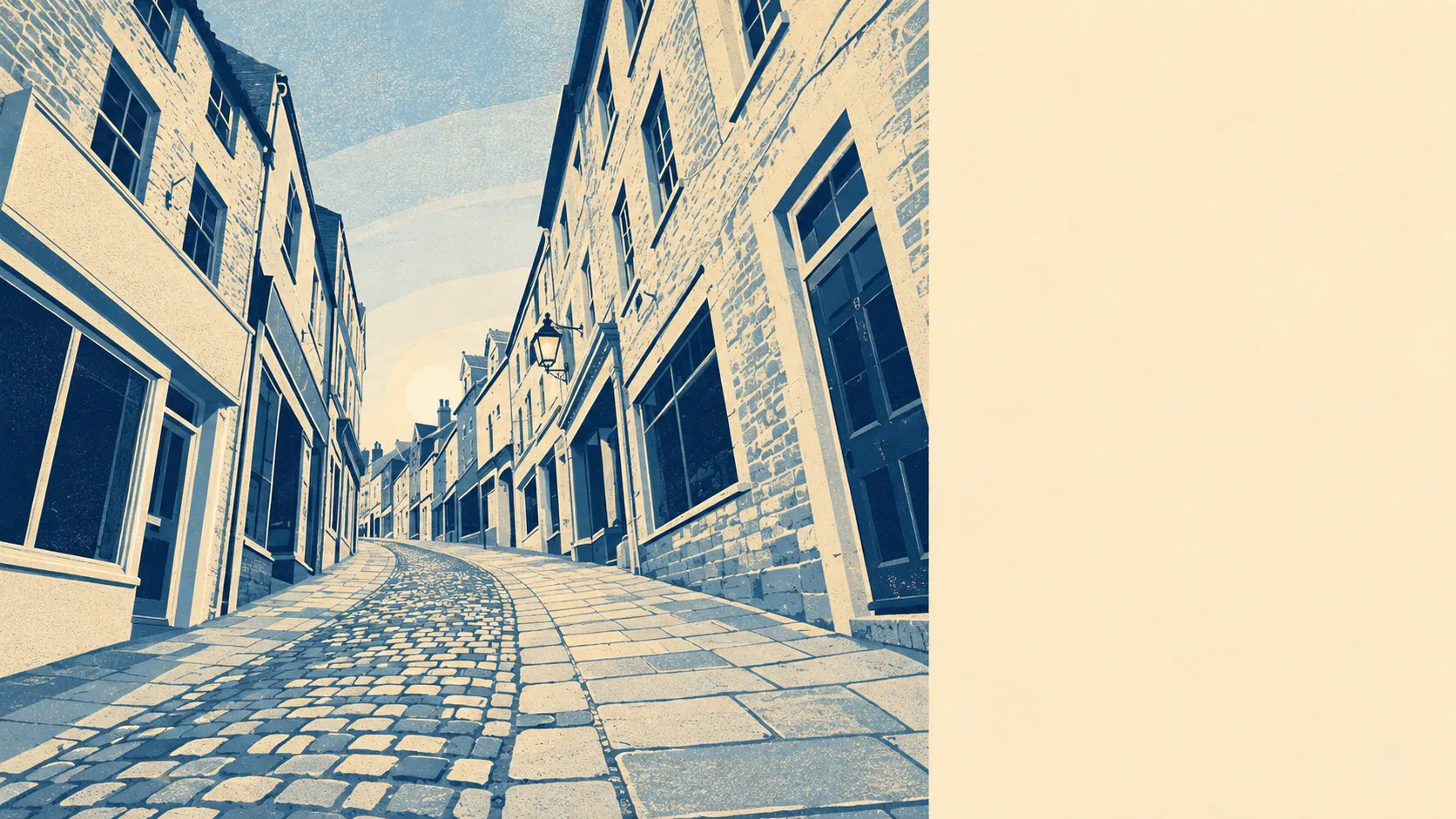
Homeowners, mostly, and a fair few of them on their own. Two thirds own the roof over their heads. The typical resident is in their early forties rather than the mid-twenties the town's reputation implies. Almost a third of households are one person. Frome looks like a young creative town from the outside and behaves like a settled Somerset one from the inside, and the numbers back the second reading.
On tenure, about 66% own their homes. Around 19% rent privately and about 14% rent from a social landlord, which is a higher social-renting share than the artisan-bakery version of the town tends to advertise. It is an ordinary working town underneath the stone frontages, and the housing mix is where that shows up first.
The typical resident is 43, and about 24% of the population falls into the 25 to 44 bracket. That is a town with a working-age core rather than a retirement town, but not one that skews notably young either.
Household income across the area's neighbourhoods was modelled at roughly £55,600 gross before tax for the financial year to March 2023. It describes that year rather than today, and it is a modelled average for the wider neighbourhoods rather than a figure anybody in particular takes home.
Household shapes tell you more about daily life here than the headline numbers do. All the population figures on this page come from the 2021 census, and it counted about 30% of households as one person living alone, with about 14% of all households a pensioner living alone, that second group being a slice of the first rather than an addition to it. Couples with dependent children make up about 20% and lone-parent households about 10%. A town where nearly a third of front doors open onto one person is a town where the pub, the market and the two weekly markets in the town centre are doing social work as well as commercial work.
On qualifications, about 34% of adults hold a degree-level qualification and about 16% hold none at all, with full-time students at around 1%. That is a genuine spread rather than a uniformly graduate town, which is what happens when a place with an industrial past acquires a reputation for creative types without ever swapping out the original residents.
Health self-reports are reasonable: about 82% of people describe their health as good or very good, and about 5% as bad or very bad. Across Somerset as a whole, which is a much wider area than this town, preventable mortality sits better than the England average and adult smoking, at about 11%, sits similar to it. Those are council-area figures with an England benchmark attached, not measurements of any street in Frome.
For completeness, 241 people here live in communal establishments rather than private households, which is small enough that it does not shift any of the shares above.
Who lives here comes out middling in the way that most functional market towns do: mixed, mostly settled, neither notably comfortable nor notably struggling. The interesting part is the gap between how the town presents itself and how ordinary the composition underneath actually is.