About £445,000, which is what a village with a harbour and no room to expand costs. Twelve homes changed hands in a year. A terrace goes for about £420,000. Somewhere in Cornwall there is a three-bedroom house for the price of a car, and it is not here. Flushing sells scarcity, and scarcity has never been on offer.
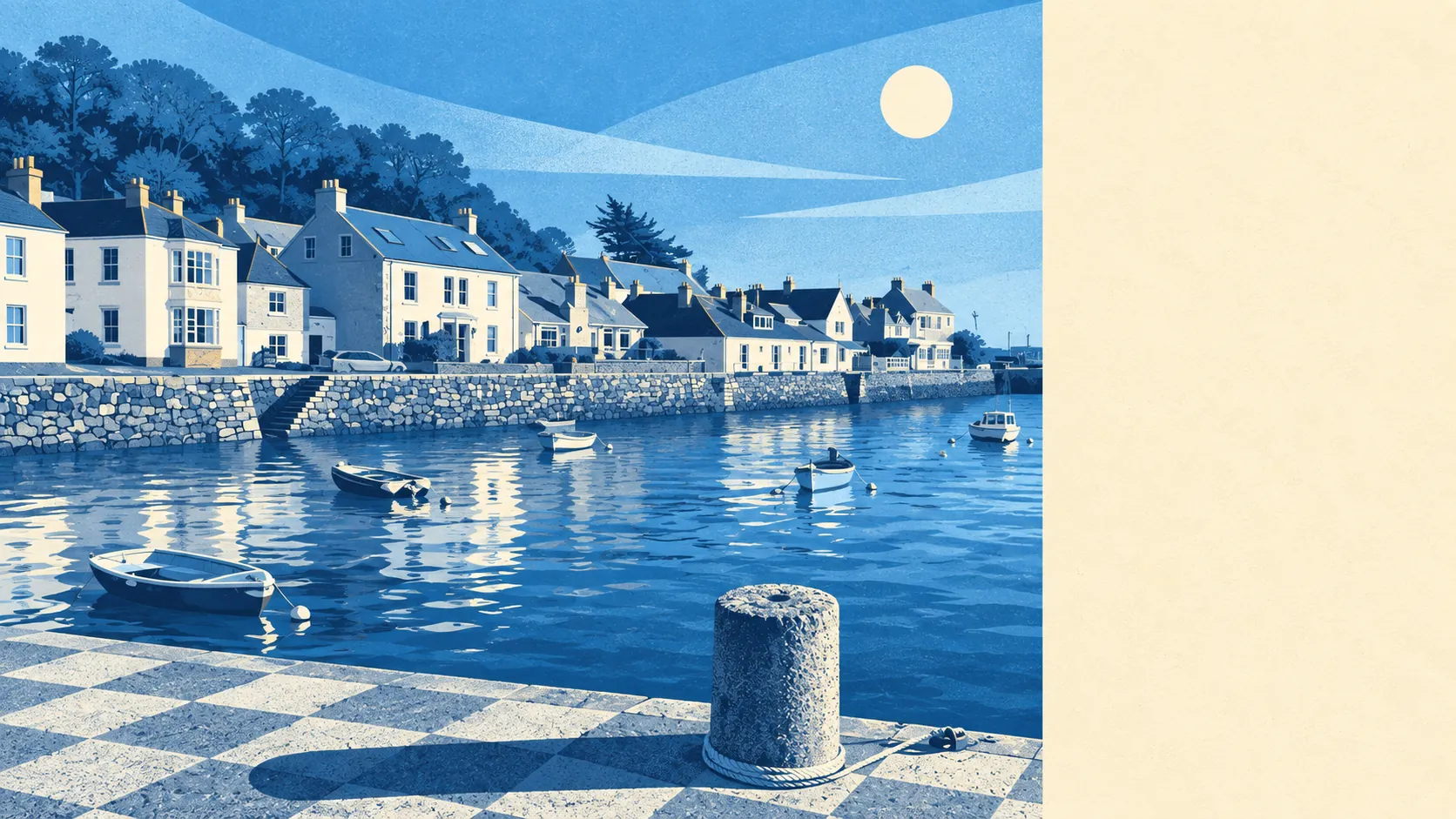
The Land Registry's recorded sales for the year to late January 2026 put the median at roughly £445,000 across twelve transactions, which is a village-sized sample rather than a market anyone should read too confidently. Within it, six terraced sales came in around £420,000 and four semi-detached sales around £632,500. That gap between the two is the whole geography of the place: the terraces sit tight to the quays, the bigger houses sit up the hill with the long view over the water, and buyers pay the difference for elevation.
For direction, the published house price index covering the Cornwall area put the average price at about £280,000 as of May 2026, up around 4% over twelve months. Flats moved differently, down about 0.4% over the same twelve months, which is a fraction of a percent and should be treated as flat rather than falling. Over five years the same index is up roughly 11%. None of that is a forecast, and none of it tells you what the next Flushing cottage will fetch when twelve sales a year is the entire evidence base.
Council tax sits mostly in band C, the most common band here, with around 22% of dwellings in bands A or B. The band D bill for the area runs to about £2,591 a year, which is the number most readers can hold against their own.
Renting is only answerable at county level. The typical private rent across the Cornwall area is about £1,000 a month, a mean taken from the national rent index rather than a median of advertised listings. By size, that same area-wide measure runs at roughly £689 a month for one bedroom, £882 for two, £1,078 for three and £1,509 for four or more. Studio and room rents are not published at this grain, so anyone quoting you one has made it up.
Against income, the arithmetic is unfriendly. Modelled gross household income before tax for the area was around £54,000 in the financial year to March 2023, which is not a current figure and should be read as describing that year. Set that against a median sale price of roughly £445,000 and the conclusion writes itself: buying here on local earnings alone is a stretch that most local earnings do not reach. The people completing on these houses are generally arriving with money made somewhere else, or selling something bigger elsewhere and treating the difference as the fee for waking up next to the water.
Per square metre, the sales that could be matched to an energy certificate's floor area, about half of them, came out at roughly £4,711, with a typical matched floor area of around 93 square metres. Half the sales measured, in a market of twelve. Treat it as a sighting shot rather than a valuation.
On bedrooms, the village runs to about 42% three-bedroom homes, 26% two-bedroom, 24% with four or more, and roughly 8% one-bedroom. That mix explains why so little turns over. Three-bedroom houses in places like this get bought once and kept, and the small flats that would normally churn barely exist.
Value for money is where Flushing does worst. The prices are high, the sample is thin, the running costs of the older stock are not kind, and nothing about local income supports the asking figures. What you are buying is the address and the water, at the full published rate, with no discount for the inconvenience of getting anywhere else.