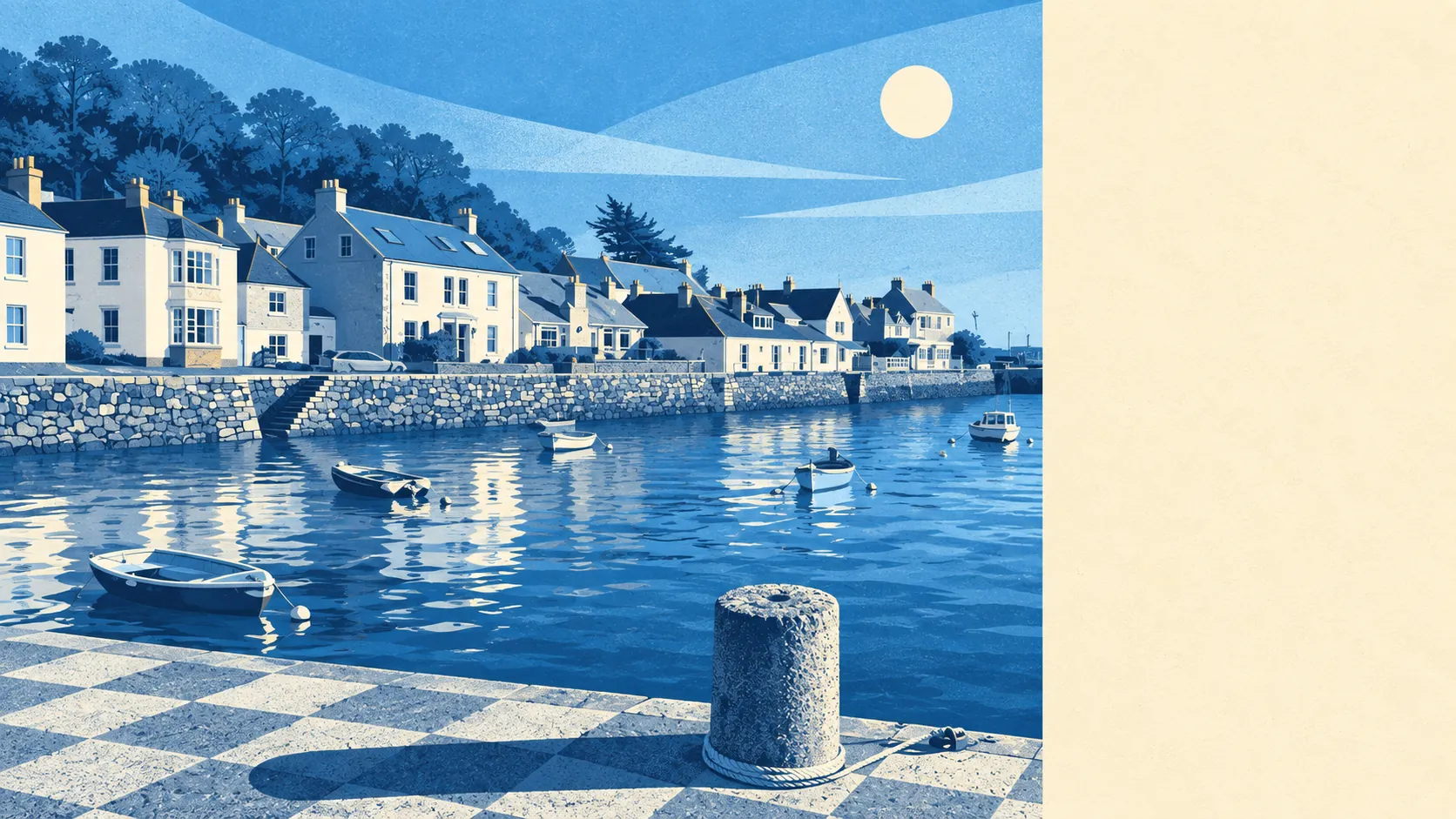
Yes, with a form, a wait and probably an argument about windows. There are 53 listed buildings here. The village sits inside a conservation area. The houses that make the place worth photographing are the same ones you are not allowed to quietly improve. Extending is normal here; extending without asking is not.
All 53 of the listed buildings in and around the village are Grade II, with none at Grade I and none at Grade II star. That grading matters less than people hope. Listing applies to the whole building, inside and out, so internal walls, staircases, fireplaces, original joinery and the roof structure are all covered, and works that would be permitted development on an ordinary house need listed building consent instead. Replacing rotten single glazing with something warmer is the conversation that catches most new owners, and it is a conversation, not a purchase.
The village also sits within a single conservation area, at Flushing. Conservation area status pulls back some of the permitted development rights a house would otherwise carry, adds consent requirements for demolition and for work to trees, and puts the appearance of the street front into the balance when a decision is made. Cornwall Council publishes the specific restrictions that apply, and they are worth reading before an architect is engaged rather than after the drawings are paid for.
There is also one scheduled monument in the area, the strictest protection tier in the system, which matters mainly if a plot sits close to it. Scheduled monument consent is a separate process from planning permission and is handled nationally rather than by the council.
None of this stops anyone. Planning applications recorded in the area ran to 1,278 between April 2024 and June 2026, with 573 of those in the last twelve months. That is a steady flow of people altering, extending, converting and re-roofing in a village with heritage constraints on most of its good streets. The constraints shape what gets proposed rather than preventing proposals.
Practically, assume less permitted development than you are used to and more paperwork than the estate agent implied. A rear extension on a twentieth-century bungalow away from the historic core is a different proposition from adding a dormer to a Grade II cottage on the quay, and the two sit within a few hundred metres of each other. Anyone buying with a specific plan in mind should check the listing entry and the conservation area boundary for the actual address before exchanging, because the difference between those two projects is measured in years of your life.
Freedom to alter a home here is middling: restrictive enough that nobody should assume anything, ordinary enough that the village is visibly full of people getting work approved. The heritage that makes Flushing expensive is the same heritage that makes changing it slow, and both facts arrive with the keys.