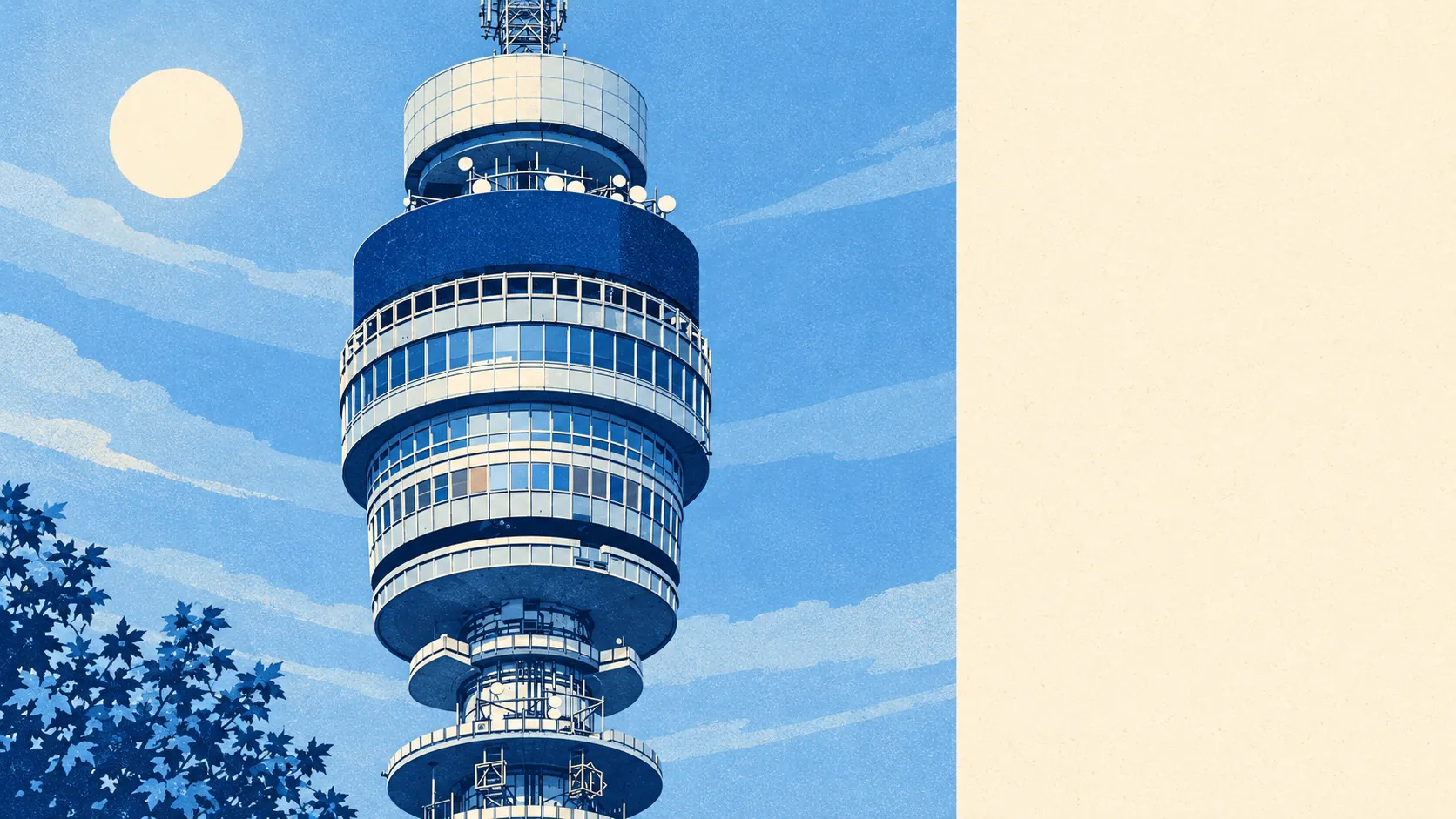
Fitzrovia records crime at about 1,640 offences per 1,000 residents, and most of it is somebody's phone ending up in somebody else's pocket. The residents are few and the pavements are packed. Theft does most of the damage. Violence is a smaller slice than you might fear. Live here alert and it works; live here with your phone in your back pocket and the street will take it off you.
The Metropolitan Police's figures for the year to May 2026 give that rate of about 1,640 crimes per 1,000 people. Westminster's published average is 440, so Fitzrovia's rate is roughly 273% above the council's own. The mix explains most of it. Theft from the person makes up 31% of recorded crime here against 2% across England and Wales. Other theft adds 23%, and shoplifting 11%. Violence and sexual offences, the largest category almost everywhere, are 10% here against 35% nationally. A district made of offices, shops and restaurants counts every crime against the crowds who pass through, while only the people who sleep there go into the denominator. That makes it a pickpocket's problem far more than a doorstep one, though it still counts. Across the force area, the Met charged someone in 10% of cases over the same year, against 12% nationally, so getting your phone back is not a plan.
The other heavy constraint is the architecture. Historic England lists 1,133 buildings in and around the area: 46 at Grade I, 124 at Grade II* and 963 at Grade II. Within the same wider box there are 23 conservation areas, including Charlotte Street, Charlotte Street West, Cleveland Street and Fitzroy Square, and 11 listed buildings are on the Heritage at Risk register. For an owner, that means permission for window frames, paint colours and anything visible from the street. Charles FitzRoy built Fitzroy Square partly to Robert Adam's design in the eighteenth century, and the people living round it today still have to ask nicely before changing a door knocker.
Buying is a flat market and an expensive one. The Land Registry recorded 42 sales in the twelve months to May 2026, all of them flats, at a median of £751,000. Council tax follows suit: the most common band is E, and only about 6% of homes sit in bands A or B. Fitzrovia sells one-beds at prices that would buy a large house in most of the country, without the garden.
Renting costs about £3,150 a month across Westminster, the Office for National Statistics' typical private rent for the borough in April 2026. Treat that as the borough's level, since Fitzrovia does not have a rent figure of its own. A one-bed across Westminster averages about £2,500 and a two-bed about £3,250, which matters here because most local homes are that size. Renters are the majority, with about three in four households renting.
The council-tax valuation list puts flats at 94% of homes and terraced houses at 4%. Detached and semi-detached homes don't feature at all. Just over half of homes were built before 1930, so the stock is mostly old buildings converted into flats, plus a few newer blocks. The energy certificates are better than the age suggests, with about 69% of certificated homes rated A to C. Half of homes use mains gas. About 23% are heated by electricity alone, which in a draughty Georgian conversion means the meter runs fast all winter.
Getting around is mostly on foot. About 77% of households have no car, and that looks less like a lifestyle choice than plain sense. At the 2021 census, 57% of working residents worked from home and 18% walked to work, so the commute for many people is a short one. There are 113 bus stops in and around the district, with an average of 45 buses an hour at peak through a typical stop. London Euston, London Marylebone and London Kings Cross rail stations are all on the area's edges. Gigabit broadband reaches about 97% of premises. A modelled Department for Transport figure from 2019 puts the nearest GP about four minutes' walk away, and that hasn't got further.
Flood risk is small, and mostly comes down to the drains. The Environment Agency's river-and-sea flood zones cover none of Fitzrovia. Counting postcodes on at least one flood indicator, surface water included, about 8% show high risk, 4% medium and 10% low. Summer cloudbursts that the drains can't cope with are the realistic risk here, not a river.
The schools look strong on paper, though the paper is borough-wide. Ofsted has graded 25 settings across Westminster, and all 25 are good or outstanding, with 9 outstanding. All Souls CofE Primary School is in the area. The one primary in the two postcode districts with published results averaged 106 in Key Stage 2 maths. Families are a small group here, with couples with children making up about 6% of households.
The people are young and well paid. Only about 23% of households own their home. The median age is 32, and that is pulled down by students and young renters who make up a large part of the population. Median gross household income is about £77,600, an Office for National Statistics model for the year to March 2023 averaged across the area. Just over half of households are one person living alone. It is a place where people's first London flat was within walking distance of their office.
The green space is better than the reputation. The nearest green space averages about 170 metres from the door, and there are around 36 within a kilometre, from the square at Fitzroy Square to the parks beyond Euston Road. The nearest water is about a kilometre away. You give up a private garden and get a dozen shared ones nearby, all kept by somebody else.
This page also covers Drury Lane, where the theatres keep the evening crowds coming.
Fitzrovia is right for single professionals and couples who work centrally, don't own a car and want everything on foot. It is wrong for families who need space, a garden or a street that goes quiet after the restaurants shut. It is also wrong for anyone who wants to put in uPVC windows.
Safety is the cost. You will be living in one of the busiest theft districts in London, so keep your phone in a zipped pocket and your bag in front of you. In return you get green squares a couple of minutes' walk away and most of central London within walking distance. That makes Fitzrovia a middling choice overall. It works well if you can live with the crowds, and badly if you can't.