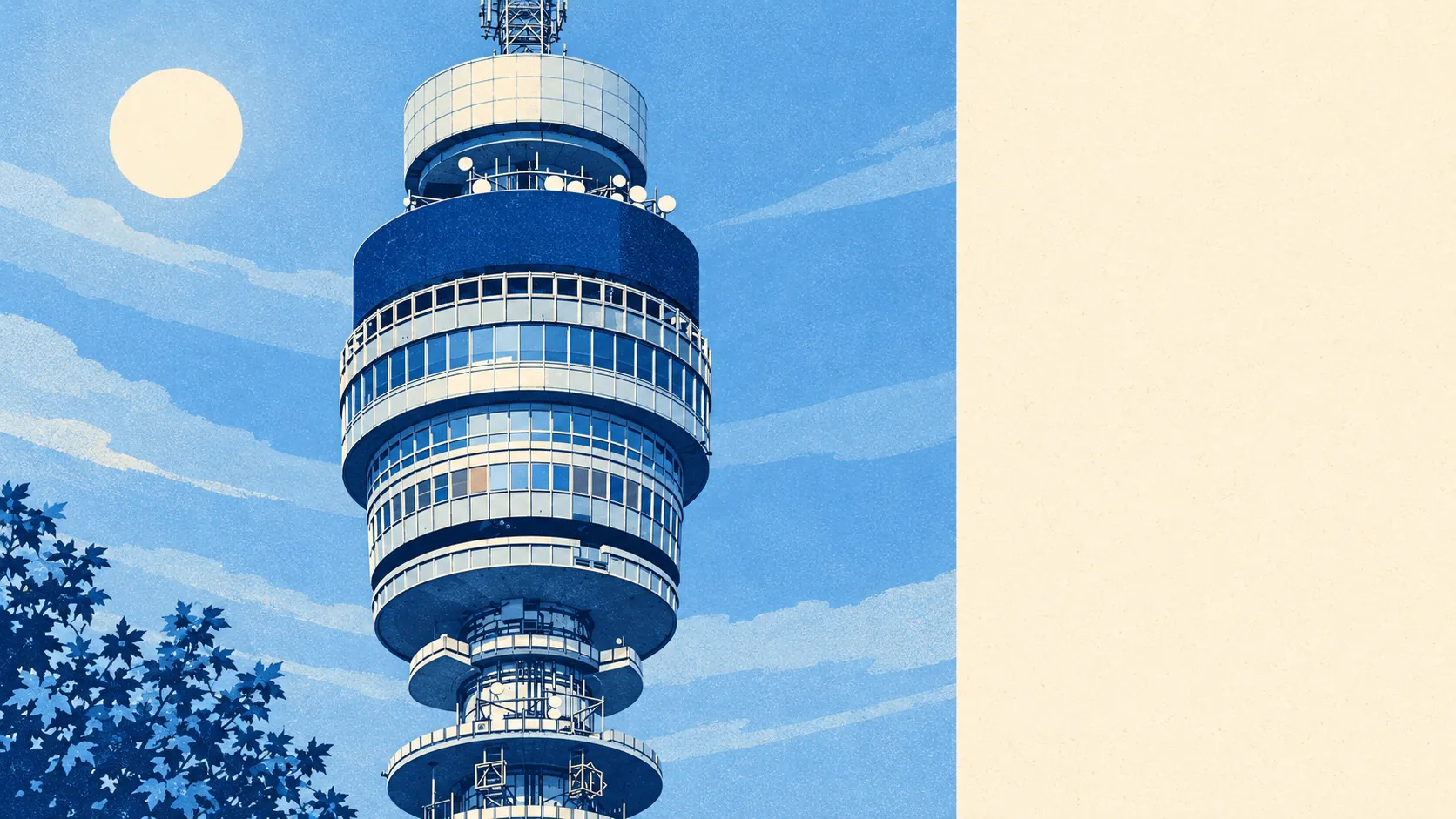
Fitzrovia is very well connected, mostly because you hardly need to travel anywhere. Four mainline terminals are on its edges. Very few residents use them to get to work. Most people either work from home or walk. Buses run all the time, broadband reaches almost every flat, and the main cost is the noise from the traffic outside.
London Euston, London Marylebone, London Kings Cross and London St Pancras International are all within reach. Even so, at the 2021 census only about 2% of working residents took the train to work. There are 113 bus stops in and around the district, and about 3% of residents used a bus to get to work. The termini are how people leave London, not how they get to work in it.
Most residents barely commute at all. At the 2021 census, about 57% of working residents worked from home and about 18% walked to work. Only about 5% drove and 3% cycled. About 77% of households have no car, and only about 4% have two or more. For most people here a car is a place to keep things, not a way to get to work.
The Department for Transport's modelled journey times, published in 2019, put the nearest town centre about 12 minutes away by car, 18 by public transport, 12 by bike and 22 on foot. A 22-minute walk to a town centre sounds odd for central London. It comes from how the model defines a "town centre", not from how far the shops actually are.
The same Department for Transport model has everyday errands close by. A GP is about 4 minutes away on foot or by public transport, or 6 by car. A food shop is about 3 minutes' walk. A hospital is about 11 minutes by car or public transport, or 12 on foot. Employment is about 3 minutes' walk or 6 by public transport, and about 11 by car. These are modelled averages for the area. The walking times will still hold, since the buildings haven't moved, but the public transport times date from 2019, before bus cuts, and are the least reliable of the set.
The buses are frequent as well as numerous. An average stop here has about 883 scheduled departures on a weekday and about 45 buses an hour at peak. About 99% of stops have a weekend service. With buses that frequent, nobody needs to check a timetable.
Gigabit broadband reaches about 97% of premises, and superfast about 98%. No premises fall below the legal minimum broadband speed. Every operator's 4G or 5G covers the whole area.
The traffic noise is the main drawback. Official noise mapping treats 65 decibels as the level at which road noise becomes significant, and virtually every postcode here, rounding to 100%, is near or above it. The loudest band recorded reaches 75 decibels. Rail noise doesn't reach any postcode at that level, even with four terminals nearby. Find out which side of the building the bedroom faces before you book a viewing.
There are 79 public charging points in and around the area, with 128 connectors between them. Only 4 are rapid chargers, so an electric car owner here plans charging around those, or charges overnight on a slow point.
Fitzrovia is well connected for anyone who doesn't need to go far, and most of its residents don't. The connections are good, but the constant traffic noise brings the overall picture down to good, not excellent.