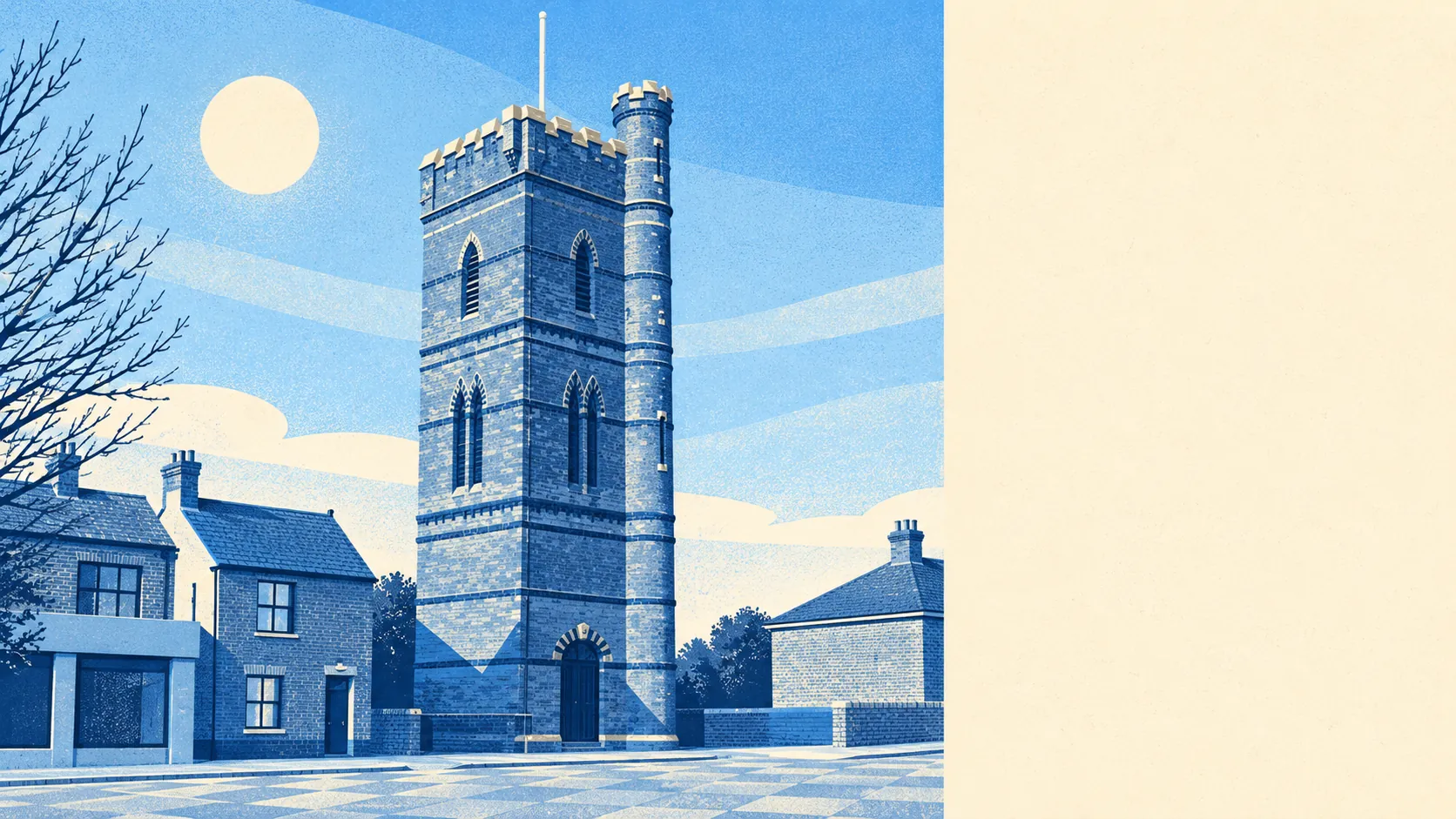
Epping is a sound but expensive middle-of-the-road choice: a forest town at the far end of the Central line that does most things competently and nothing cheaply. Most front doors are a short walk from trees. About two-thirds of households own. The trains start here. In return, a fifth of its postcodes carry a high flood risk, and almost none of that comes from the rivers.
The money sorts the buyers before anything else does. The Land Registry's typical sale price in Epping was about £545,000 over the twelve months to May 2026. Flats went for around £340,000, terraced houses about £530,000, semis about £690,000 and detached houses about £880,000. The council-tax list leans the same way: band D is the most common, and only 7% of homes are in bands A and B. The town is right for London households trading up with equity in hand. First-time buyers on one salary are mostly shopping for the flats, and even those start with a three.
Renting doesn't get anyone off lightly. Typical private rent across the Epping Forest district was about £1,840 a month in April 2026, up about 7% on a year earlier. That figure covers the whole council area, so the town's own rents may land either side of it.
The housing is mostly mid-century family stock, with an older layer along the High Street. On the council-tax valuation list, semis make up 28% of homes, terraces and flats 23% each, detached houses 16% and bungalows 9%. About a fifth were built before 1930. Energy certificates split roughly down the middle: 49% are rated A to C, 37% D and 14% E or worse. Mains gas heats 79% of homes, and 9% rely on electric heating alone.
Essex Police recorded crime at about 83 per 1,000 residents in Epping over the year to May 2026. That is roughly 9% above the average for Epping Forest district. Vehicle crime stands out at 11% of recorded incidents, against 5% across England and Wales. In Epping the car on the drive is a likelier target than the house it is parked outside.
The residents are settled earners. About 67% own their homes and the median age is 43. The Office for National Statistics models gross household income across the town's three middle-layer areas at about £68,000 for the financial year to March 2023, an average across the whole town before tax. At the 2021 census, during the pandemic, 47% of working residents worked from home and 32% drove. Plenty of people paid a premium to live at the end of a tube line and then stopped taking it.
Flood is where Epping asks the most of a buyer, and the reason is odd for a town built on a ridge between the Roding and Lea valleys. The Environment Agency puts none of the town inside its river-and-sea flood zones 2 or 3. The postcode indicators include surface water, and they put about 21% of postcodes at high risk on at least one measure, another 21% medium and 52% low. The most recent recorded flood on file dates from 1987 and was put down to local drainage and surface water. The hill keeps the rivers away. It does nothing about the rain.
The surroundings are where Epping earns its keep. On average the nearest green space is about 230 metres from home, with around 13 within a kilometre, and water is about 280 metres away. The northern end of Epping Forest wraps round the town, much of it open for unlimited walking and looked after by the City of London Corporation. This page also covers Coopersale, Thornwood Common and Stapleford Tawney, which are closer still to the fields. A dog owner who works from home will get more out of the place than anyone else, and the forest costs nothing extra.
The Central line terminates here, in fare zone 6, with direct trains through Stratford and the City to Oxford Street, though the overnight weekend service turns back before reaching the town. There are 42 bus stops, each with about 66 weekday departures on average and three or four an hour at peak. Gigabit broadband reaches 76% of premises and superfast 99%. All four mobile operators cover 99% of the area with 4G or 5G. In the Department for Transport's 2019 modelling, the nearest hospital is about 23 minutes away by car and 47 by public transport. The tube that gets you to Oxford Street is no help with a broken wrist.
The heritage rules are moderate. There are 55 listed buildings, two at grade II* and 53 at grade II, many of them 18th-century fronts along the High Street. There are three conservation areas: Epping, Bell Common and Coopersale Street. Inside them, new windows, extensions and demolition all need the council's approval. When the railways killed the coaching trade, The George and Dragon and The Black Lion survived as pubs. Anyone wanting plastic windows nearby will meet the same planning rules that protect them.
The famous names cover a wide range. Winston Churchill was the town's Member of Parliament from 1924 to 1945, including his years as wartime Prime Minister. David Byron of Uriah Heep, the illustrator Jill Barklem, the actor Nick Berry and the singer Dodie Clark are also on the list. Churchill had to win elections here. Dodie Clark only needed subscribers.
Overall Epping is a fair, middling place to live, with one excellent card and one awkward one. The forest is a few minutes' walk from almost everyone, and that is worth a lot to anyone escaping London. The flood risk comes down from the sky and gathers in the streets, which is not what a ridge-top postcode suggests. Epping is right for a hybrid-working household with London equity that wants trees, a terminus and a band D bill. A single first-time buyer, or anyone who wants the hospital closer than the woods, will get more for their money elsewhere.