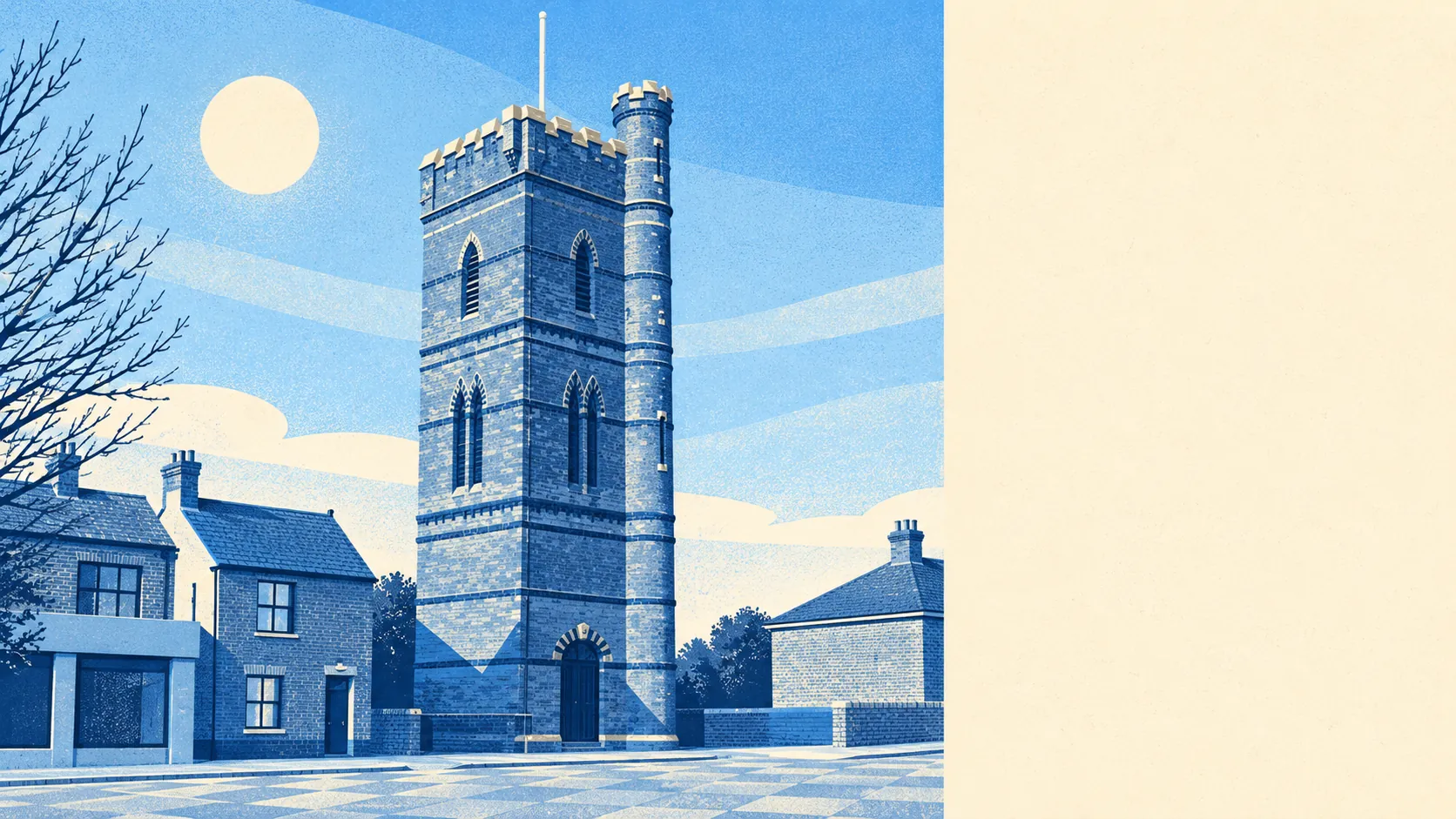
Epping has a direct line into London and a fairly ordinary set of connections everywhere else. The Central line starts here. At the last census nearly half of working residents worked from home, and most of the rest drove. Broadband reaches almost every home. Electric car owners get three chargers and not one rapid charger.
The Central line terminates in Epping, in London fare zone 6, with direct trains through Stratford and the City to Oxford Street. At the 2021 census about 2% of working residents went to work by train, a category that covers national rail, with the tube counted separately. Until 1994 the line carried on to North Weald and Ongar. Much of that track now belongs to the Epping Ongar Railway, a heritage line that does not call at the tube station. Epping has 42 bus stops, and about 1% of working residents commuted by bus.
The 2021 census, taken during the pandemic, found 47% of Epping's working residents working from home and 32% driving to work. Only 5% walked, and cycling barely registered. About 16% of households have no car, while 38% have two or more.
The Department for Transport's modelled journey times, which date from 2019, put the nearest town centre about 8 minutes away by car, 12 by public transport, 11 by bike and 18 on foot. For a town with a tube terminus, the everyday trips still favour whoever has the car keys.
Gigabit broadband reaches about 76% of Epping's premises and superfast about 99%, and no premises fall below the universal service minimum. Every operator's 4G or 5G signal covers 99% of the area, with at least one network everywhere.
Epping has 3 public charge points with 20 connectors between them, and none of them rapid. Charging here is something you plan, since a quick top-up while shopping is not an option.
For a typical commute, the shape is plain. London-bound workers who use the tube have a line that begins at their own station. Everyone else, and anyone heading to the town centre, is quicker by car.
In the same 2019 Department for Transport modelling, the nearest GP is about 8 minutes by car, 15 on foot and 12 by public transport. The nearest hospital is about 23 minutes by car and 47 by public transport. A food store is about 10 minutes' walk or 7 by car, and the nearest major employment centre is about 4 minutes by car and 20 by public transport. These are modelled averages for the area, and the distances will not have moved since 2019, but the public transport times are the least reliable, because bus services have been cut since they were measured. The hospital run is the trip where the public transport time stretches furthest.
The buses themselves run more often than the modest bus commute suggests. Each stop averages about 66 scheduled weekday departures, three or four an hour at peak, and 98% of stops have some weekend service. The buses are good enough. The car still wins, because the car is already on the drive.
Official noise mapping treats 65 decibels as the point where road noise becomes significant, and about 99% of Epping's postcodes are near or above it, with the loudest mapped band reaching 75 decibels. Rail noise registers at 0% of postcodes. Trains start their journeys here without anyone hearing them. Visit a house when the traffic is heaviest, since the map gives the area and only being there tells you about the bedroom.
Epping is middling for connections: very good for anyone whose life runs along one tube line into London, and ordinary for every journey that does not.