The area around Chingford is forest on one side, reservoirs and river on the other, and suburb in between. The average home is a short walk from green space. Water is not much further. The high street is mostly shops, with pubs thin on the ground. Few London postcodes have this much countryside within reach of the front door.
Green space is everywhere. The average home in Chingford is about 140 metres from the nearest green space, and has about 27 green spaces within a kilometre. The forest runs along the north and east of the town, with Chingford Plain and Pole Hill inside walking distance of a good share of the streets. Most Londoners plan a day out to reach what Chingford residents cut through on the way to the shops.
Water is close too. The average home is about 410 metres from the nearest stretch of blue space and has about 18 within a kilometre, from the River Lea and its reservoirs to the west to the ponds and brooks in the forest. Chingford takes its name from a ford over one river or another, and the town never strayed far from the water.
The National Cycle Network is further off, at about 2 kilometres from the average home, and fewer than 1% of postcodes are close to it. Cyclists here ride the forest tracks and the river paths and leave the official network to someone else.
The rated premises in the area include 497 shops, 34 restaurants and 17 pubs. That is a high street of shopfronts more than a night out, and the forest does more of the entertaining than the pubs do.
The borough council's area recorded fine-particle pollution at about 9 micrograms per cubic metre in 2024, a borough-wide figure that covers Walthamstow and Leyton along with Chingford.
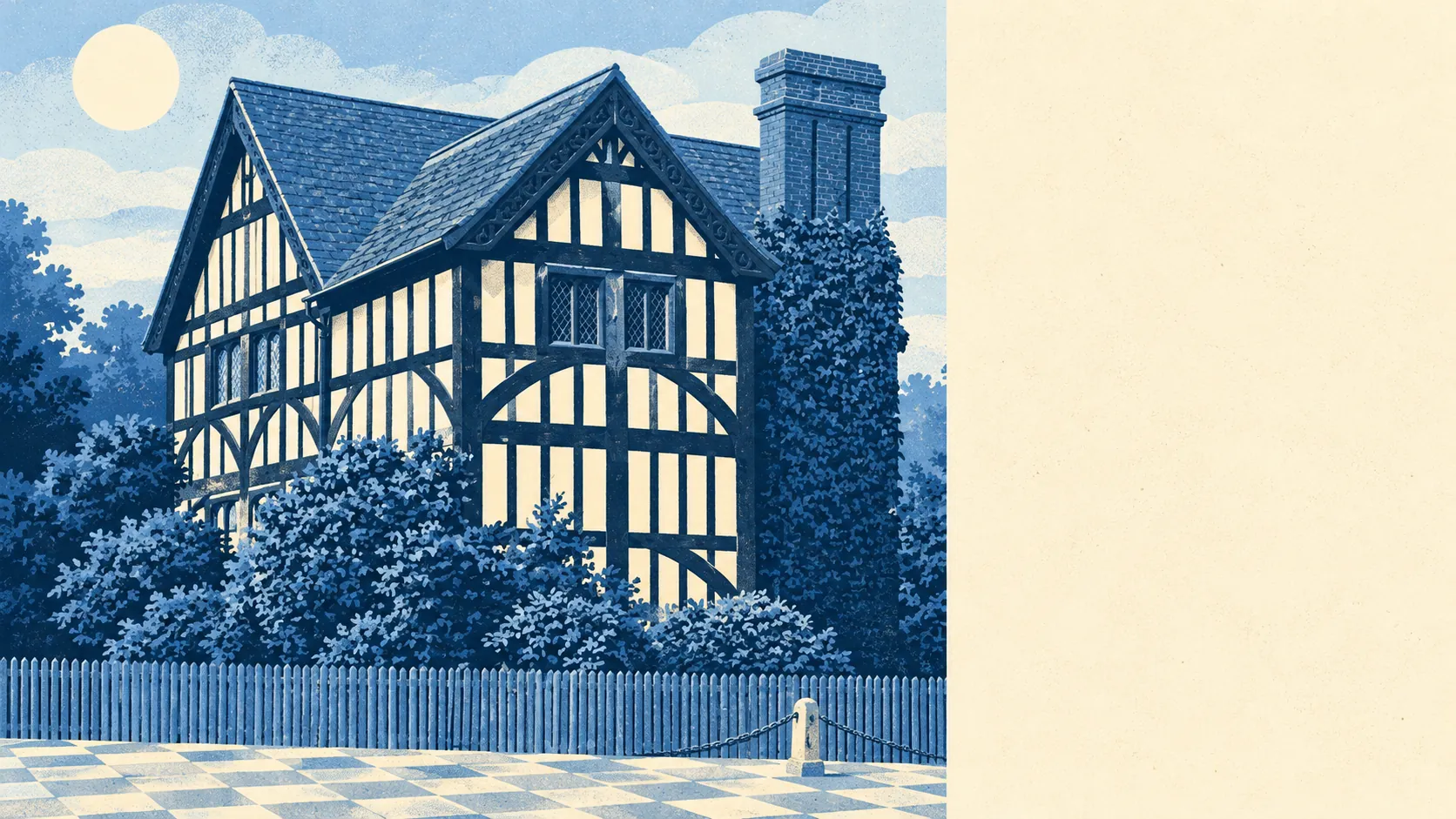
The town is a cluster of smaller places stitched together: Chingford Green, Chingford Hatch, Chingford Mount, Friday Hill and Highams Park, each with its own parade. Queen Elizabeth's Hunting Lodge stands on Chingford Plain at the forest edge, and Butler's Retreat next to it is a café again after years shut. At the bottom of Friday Hill, the Pimp Hall Nature Reserve holds the dovecote of a vanished manor, which survived after the farmhouse beside it came down. In Chingford, the pigeons kept their house longer than the farmers did.
Private gardens add to all of that. Across the area's 42 neighbourhoods there are about 63,000 square metres of private garden for every 1,000 residents, which in a suburb built mostly in terraces and semis means a real back garden for most houses. For a borough of London, that is a lot of lawn to mow on top of a forest you don't have to.
The valuation list for business rates holds 1,253 rateable premises in the area. Shops lead with 496 entries and offices follow with 201. Those are premises on the list and some will be empty or changing hands at any given time, but the shape is a suburb that shops locally and works somewhere else.
Eating out is reasonably safe ground. Of 337 food premises with a hygiene rating, about 65% hold the top score of five, and about 6% sit at the low end of the scale.
None of the area falls inside an area of outstanding natural beauty, a site of special scientific interest or ancient woodland on the official designation maps. The forest, protected by its own act of Parliament since 1878, provides the landscape on the doorstep without any of those labels landing inside Chingford's boundary.
The surroundings are the best thing about living here, with forest at one end of the road and water at the other. Anyone who needs green space close by will struggle to find a London postcode that does it better.