Bude is the rare seaside town that stayed a town after the tourists went home. The typical resident is fifty. Two in three own outright. Most homes are houses and bungalows, not converted flats above a chip shop. That combination is unusual on a coast that mostly sold itself off in one-bedroom slices, and it is the single most useful thing to know before you look at a listing here.
The council-tax valuation list, which covers every dwelling rather than just the ones certificated since 2008, puts bungalows at the top of the pile at about 23% of stock, with terraces at 20%, flats at 20%, detached at 19% and semis at 17%. That is an unusually even spread, and it means Bude does not have a signature street the way a Victorian resort does. About 26% of dwellings predate 1930, so a quarter of the town is older housing and three quarters is not. On energy, roughly 59% of certificated homes sit in bands A to C, around 29% in band D, and about 13% in band E or worse. Around 71% run on mains gas, which is better than most of north Cornwall manages, but about 13% are heated by electricity alone. That last figure is the one to check on a specific property rather than in aggregate: an electric-only bungalow with an older certificate is a different monthly bill from a gas-heated one on the same street, and you want to know which you are viewing before you fall for the sea view.
On price, the Land Registry's last twelve months put the median sale at about £355,000 across 100 sales, which is enough transactions to trust. The split by type is where the real information sits. Detached homes ran to a median of roughly £426,000, semis about £300,000, terraces about £297,000, and flats around £180,000. Semis and terraces land within a few thousand pounds of each other, so the choice between them here is about garden and parking rather than budget. Council tax skews low: band C is the most common, and about 41% of dwellings sit in bands A or B.
Renting is a wider-lens picture. The typical private rent across the Cornwall area runs at about £1,000 a month, up around 5% over the year. That is a local-authority average covering everything from Bude to Falmouth, not Bude's own number, so treat it as the shape of the market rather than a quote for a specific flat.
Crime is a quiet story, which is what most people want from this section. Police.uk recorded a rate of about 70 crimes per thousand people in the year to May 2026, which sits roughly 6% below the Cornwall average. That is a published rate calculated on its own population base, not something you can work out from a headcount. It puts Bude in the unremarkable middle of a rural county, which for a town with a summer visitor economy is a better outcome than it sounds.
Getting about is the compromise. There is no railway here and effectively nobody commutes by train, so the car does the work: roughly 53% drive to work, about 16% walk, and around 23% work from home. There are 61 bus stops in the town, with weekday services averaging around 39 departures per stop and 96% of stops carrying some weekend service, which is genuinely better than rural Cornwall usually offers. Journey times from the Department for Transport's modelling put the town centre at around eight minutes by car and 18 on foot, a doctor's surgery about seven minutes by car, and a hospital at roughly 78 minutes by car. That hospital figure is the one that shapes lives here. Broadband is better than the roads: about 97% of premises can get superfast, around 66% can get gigabit, and nothing sits below the universal service obligation.
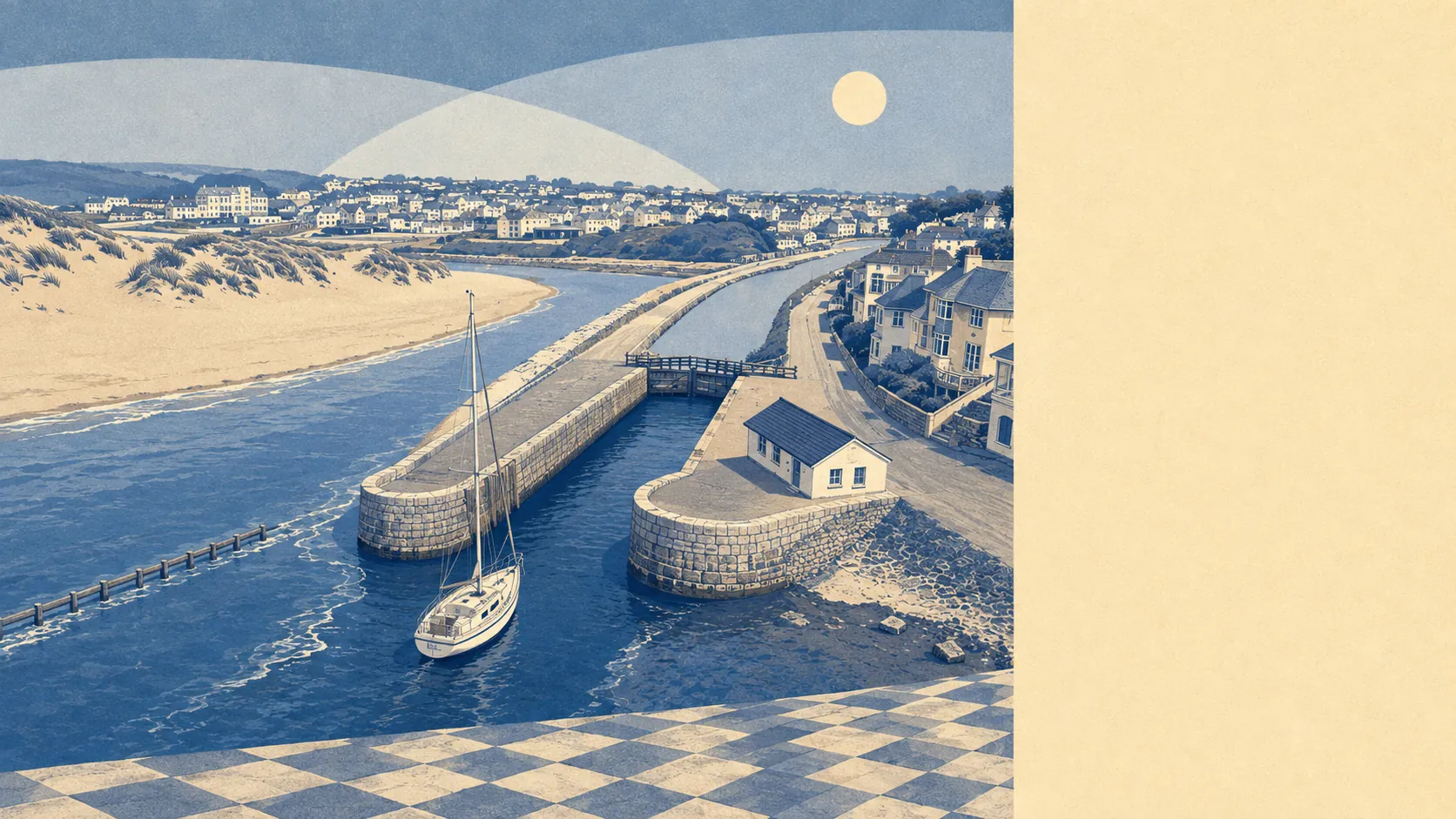
The surroundings are the reason people move. Green space averages roughly 140 metres from a Bude postcode with about 19 sites within a kilometre, and open water sits around 290 metres away with an enormous number of access points, which is what happens when a town is built at the mouth of a river on the Atlantic coast. The flood picture is the counterweight and needs labelling carefully. About 17% of postcodes carry a high rating on at least one flood indicator, including surface water, and roughly 14% a medium rating. On the narrower Environment Agency river-and-sea zones, around 4% of the area sits in flood zone 3 and about 6% in zone 2, rising to roughly 11% once climate allowance is included. Nine flood events are on the recorded register, the most recent in June 1993 when channel capacity was exceeded on a main river. Around 58% of postcodes sit in the higher radon bands, which is a testing-and-ventilation matter rather than a dealbreaker. Ground stability is benign across the board, with no coalfield and the nearest abandoned mine some 14 kilometres away.
Heritage constraints are lighter than a Cornish coastal town might suggest. There are 45 listed buildings in total, one at grade one and four at grade two star, and two conservation areas covering Bude itself and Poughill. Unless you are buying inside one of those, replacing your windows is a conversation with a builder rather than a conservation officer, which is not something residents of the pretty harbour towns further south can say.
Ownership runs at about 63%, the median age is 50, and modelled household income for the area is roughly £43,300 gross before tax. About 34% of households are one person, and around a fifth are pensioners living alone. This is a town of settled households rather than a churn of short lets, whatever the summer suggests. The page also covers Stratton, Marhamchurch, Poundstock, Kilkhampton and Crackington Haven, which stretch the definition of Bude out into farmland and cliff in a way the postal address does not quite admit.
It suits people who want coast without pretension, who can absorb an hour and a quarter to a hospital, and who would rather have a bungalow with a driveway than a period terrace with a preservation order. Ofsted has graded 120 settings across Cornwall, with 95 good or better and three outstanding, so the schooling backdrop is solid, and Budehaven Community School handles the secondary end locally.
It does not suit anyone who needs a train, anyone whose work will not survive a video call, or anyone buying near the water without reading the flood mapping first.
Bude has quietly collected a better roster than its size warrants. Pamela Colman Smith, who drew the tarot deck half the world can picture without knowing her name, lived and died here. Jean Rhys started Wide Sargasso Sea in Bude in the 1950s. Archie Jewell survived the sinking of the Titanic and then the Britannic, which suggests a man who should have taken up farming.
The verdict is above average, and the shape of it is straightforward. Its real strength is what surrounds it: green space and water within a few minutes' walk of almost every postcode, in a landscape that costs money to visit and less to live in. The weak spot is flood risk, which is real, mapped, and concentrated enough that it is a property-by-property question rather than a town-wide one. Bude will not solve a commute and it will not get you to a hospital quickly. Everything else it does better than the price suggests.