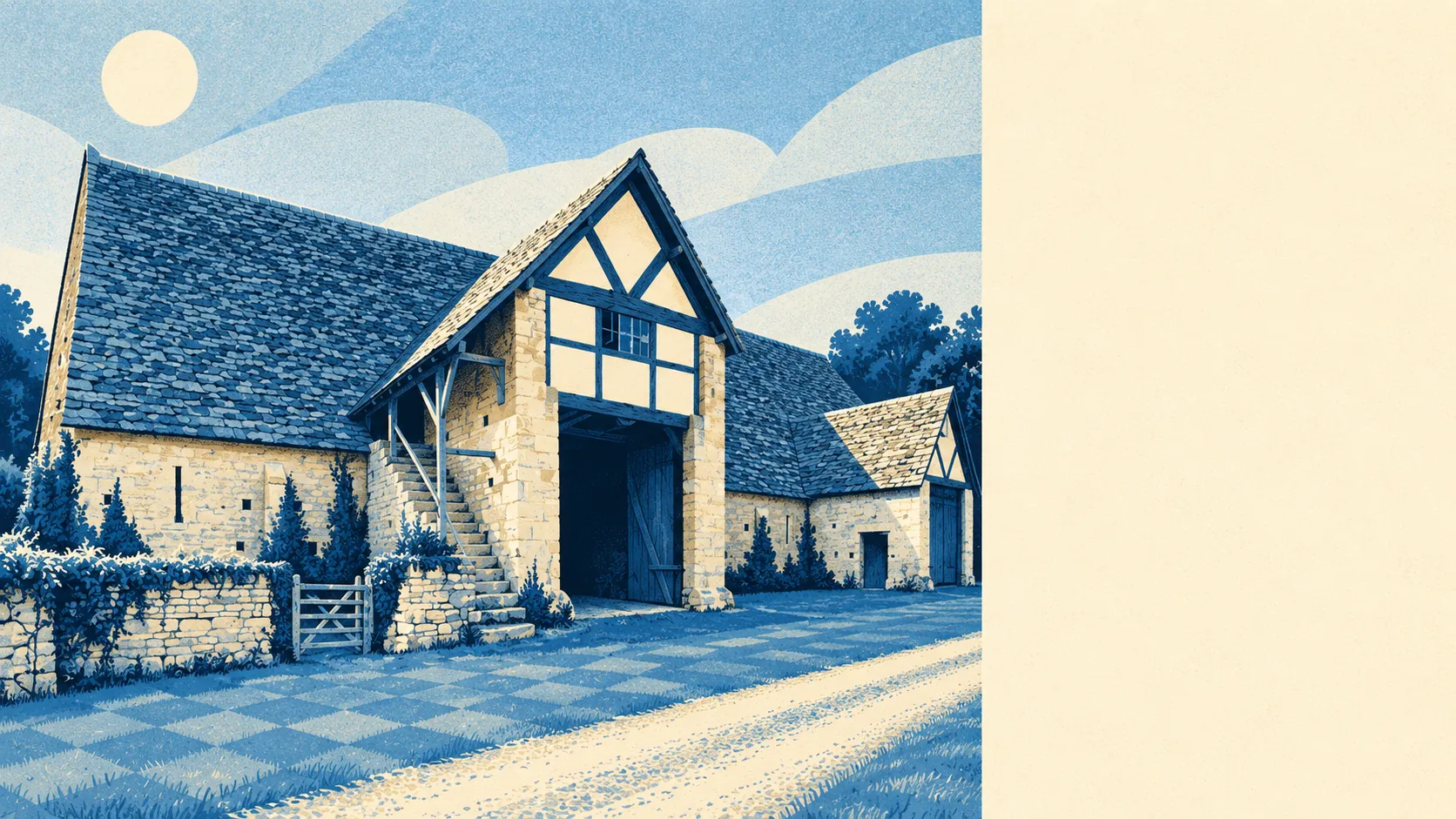
Bredon is a village where four in five households own the house they live in, and the people who buy here tend to keep their keys for a very long time. Most residents are past fifty. Most say their health is good. Crime runs at a fraction of the district's rate. For a buyer, that means neighbours who notice and streets that change slowly, and the price you pay is the car journey to almost everything else.
At the 2021 Census about 81% of Bredon's households owned their home outright or with a mortgage, and the typical resident was 51. The Office for National Statistics models gross household income for the surrounding neighbourhood at about £64,000 a year in the financial year to March 2023. That figure is an estimate averaged across the area, before tax, and no single household reported it. People move here to look at Bredon Hill for the rest of their lives, and the ownership figure suggests most of them are doing exactly that.
West Mercia Police figures put Bredon's crime rate at about 25 per 1,000 residents in the year to May 2026, roughly 64% below the Wychavon average of about 69. Kemerton Camp, the Iron Age hillfort on the summit of Bredon Hill, is still the most heavily defended thing in the parish. Nobody has needed to add to it.
The River Avon runs along the edge of the village, yet none of Bredon's postcodes fall inside the Environment Agency's river-and-sea flood zones 2 or 3. The broader postcode indicators, which also count surface water, are less tidy. About 9% of postcodes show high risk on at least one measure, 7% medium and 24% low. The Agency holds five recorded floods for the area, and the most recent dates from April 1947, when the river ran out of room in its own channel.
Getting anywhere is where Bredon asks for patience. The nearest named station is Ashchurch for Tewkesbury, and under 1% of working residents commuted by train at the last census. About half drove, and about 40% worked from home. The ten bus stops average 16 weekday departures each, roughly one an hour at peak, and most of them still run at weekends. The Department for Transport's 2019 model puts the nearest town centre 15 minutes away by car or 32 by public transport, and a hospital 31 minutes by car or around 85 by bus. The bus times will only have got worse as services were cut. Broadband runs the other way. Gigabit-capable connections reach about 91% of premises, superfast about 99%, and every postcode gets 4G or 5G from at least one operator. The fibre reaches the front door more reliably than the bus reaches the hospital.
Historic England lists 38 buildings in Bredon, two at Grade I, one at Grade II\* and 35 at Grade II. The village has its own conservation area, and there is one scheduled monument in the area as well. If your house is listed or inside the conservation area, new windows, a different roof or an extension go through Wychavon's planning office first, and plastic frames turn into a negotiation rather than a purchase.
The Land Registry recorded 18 sales in the twelve months to April 2026, with a median of £350,000. Seven detached houses sold at a median of about £385,000 and seven semis at about £365,000, while the four terraces that changed hands came in at around £244,000. The most common council tax band is C, only about 8% of homes sit in bands A or B, and a Band D bill runs to about £2,370 a year. Eighteen sales in a year is what happens when the people who bought here won't sell.
Wychavon's typical private rent, an average for the whole district, was about £930 a month in April 2026. Renting is a minority pursuit in Bredon itself, with about 12% of households in the private sector.
The council-tax list covers every home in Bredon, and on it about 50% are detached, 20% semis, 17% bungalows, 9% terraced and 3% flats. Around 21% were built before 1930. Most of the homes with energy certificates are post-war. Of those, 42% are rated C or better, 47% D and about 10% E or below, and about 80% of homes heat with mains gas. Big detached houses and bungalows are what people build when they mean to stay put, and in Bredon they did.
Green space is roughly 180 metres from the average front door, and water about 430 metres. Here the water is the Avon and the slope is Bredon Hill, so the evening walk has two directions and both of them are good. This page also covers Bredon's Norton, Kemerton and Overbury, smaller villages scattered around the same hill.
Bredon is right for buyers who want to own, stay and know the people on either side by name, and who can drive or work from home. Anyone who needs a train to work, more than one bus an hour, or a town centre on foot should look at Tewkesbury and accept the trade.
What you buy into here is a village of owners who stay put, look out for each other and keep the crime figures low. You pay for it in miles, because every journey that matters starts with the car keys. That makes Bredon a good place to live with one real cost, and the cost is getting anywhere else.