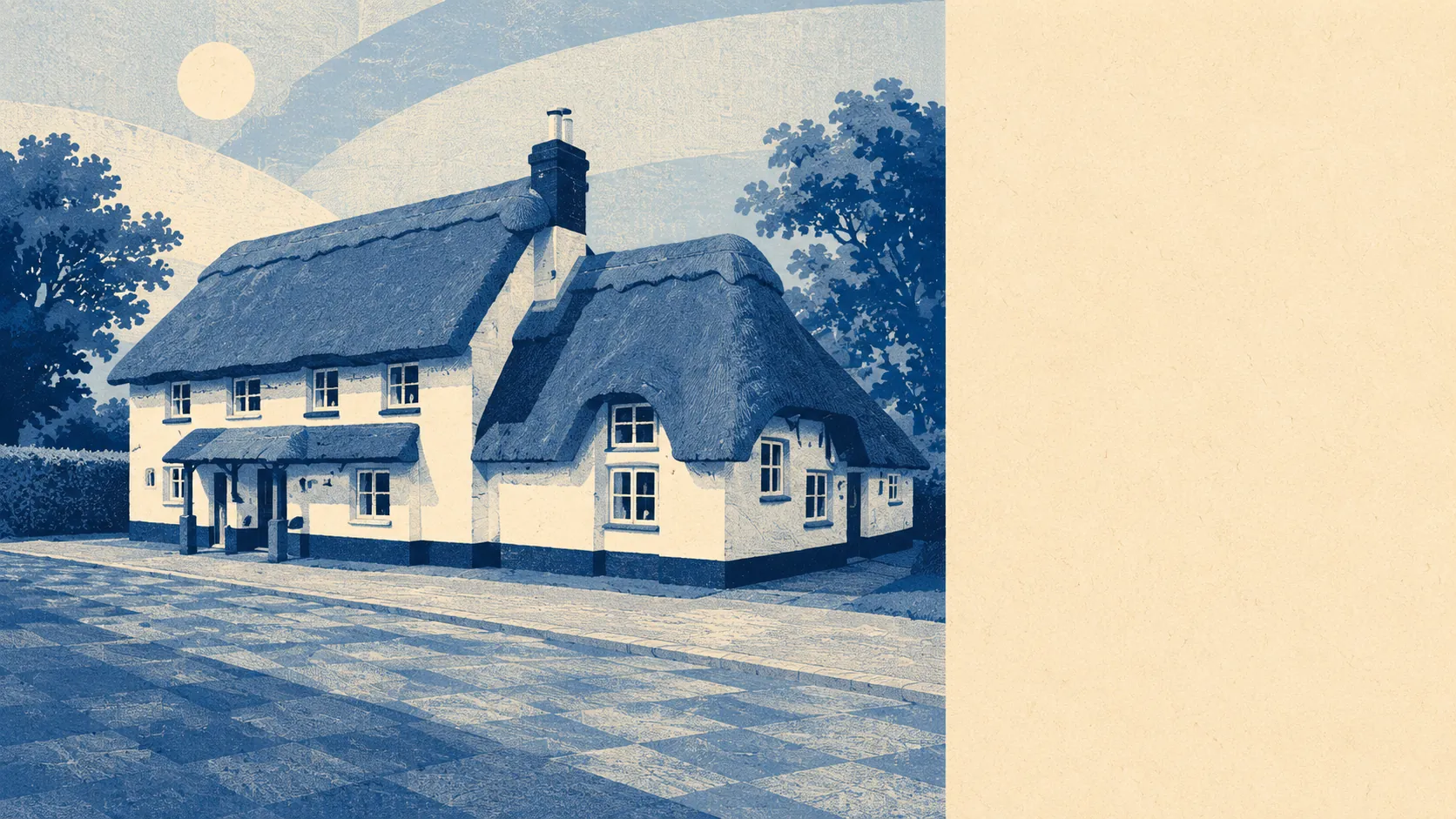
Yes, and you will be asking permission more often than you would somewhere ordinary. The area carries a heavy load of listed buildings and a scatter of conservation areas across the surrounding villages. Applications go in here by the thousand, so nothing is frozen. What is missing is the freedom to knock something through on a whim and deal with it later. Extending is normal here. Extending unsupervised is not.
The area holds 240 listed buildings. Three are grade one, six are grade two star, and 231 are grade two. Listing is not a badge that sits on the deeds and does nothing: it means consent is required for alterations affecting the building's character, and that covers the inside as well as the elevations you can see from the road. Windows, chimneys, internal walls, staircases and roof coverings all come into scope. The practical effect is that the cheap version of a job stops being available, because the materials and detailing are part of what is being consented rather than a line on a quote.
Seven conservation areas sit within the surrounding area, taking in Burley, Sopley, Winkton and Burton among others. Designation adds a second layer over and above whatever the individual house is or is not. Demolition, work to trees and some external changes that would be automatic elsewhere become matters for the council, and the precise restrictions differ from one designated area to the next. The only reliable move is to establish which designation a specific address falls inside before an architect starts drawing anything.
Seventeen scheduled monuments sit in the wider area, most of them bowl barrows on the heath along with a couple of hill forts. Scheduling is the strictest protection in the system and it applies to the ground rather than a building, so it matters mainly for land, outbuildings and anything involving excavation near one. Very few houses will be affected. The ones that are will find it is not a negotiation.
None of which has stopped anybody. Across the planning record from April 2024 to July 2026, 3,111 applications were submitted in this area, with 1,267 of those in the most recent twelve months. That is a place constantly rebuilding itself around its own constraints, which is the more useful signal than any complaint about the process. People here extend, convert, reroof and rebuild. They just do it with a reference number.
The ground deserves attention before the drawings do. The British Geological Survey puts shrink-swell hazard here at class three, with about 92% of the area reaching class three or above. Shrink-swell means ground that changes volume as it takes on and loses moisture, which is the mechanism behind seasonal movement in shallow foundations. It is not a reason to walk away from a house, and it is a reason to expect a conversation about foundation depth, nearby trees and drainage, and to have a structural engineer look at anything ambitious rather than relying on a builder's standard detail.
Practically, permitted development still exists here and still covers a good deal of ordinary work on an ordinary unlisted house outside a designated area. The problem is the odds of being that house. With this much listing and this many conservation areas layered across the villages, the sensible default is to assume something applies to your address and be pleasantly surprised, rather than to assume nothing does and find out after the scaffolding arrives.
Freedom to alter your own home is one of the tighter aspects of living here. The house you buy is largely the house you keep, give or take a consent, an engineer's report and a longer timeline than the brochure implied.