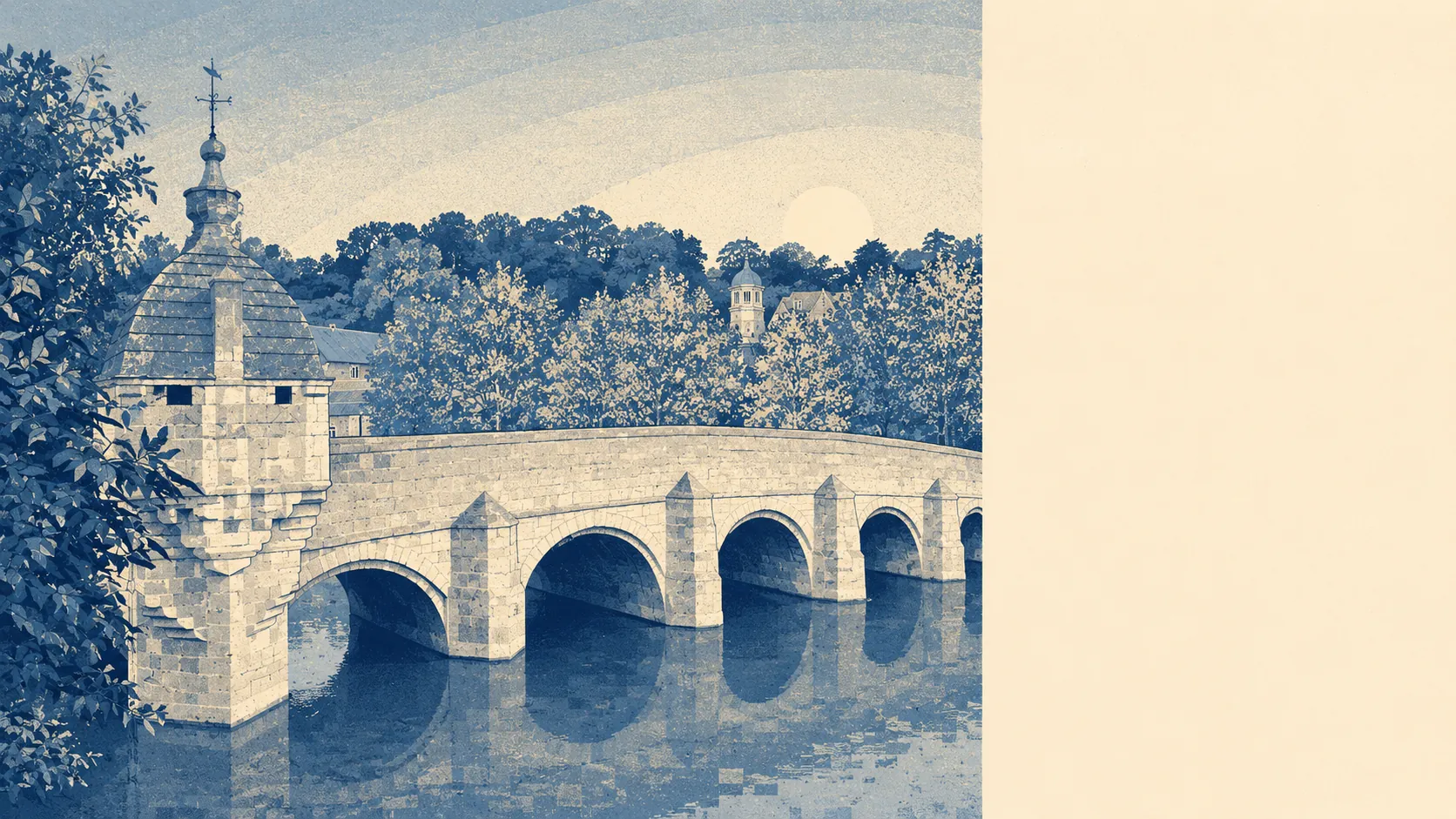
Yes, if you can live with a town that is legally obliged to stay pretty. It sits in a valley eight miles from Bath, built out of the same honey-coloured stone. Most people here own their homes. The typical resident is knocking on fifty. It is a good place to live in the way a listed building is a good place to live: lovely to look at, and it will have opinions about your windows.
The housing stock is more ordinary than the postcard suggests. Terraces run to about 31% of every dwelling on the council-tax list, with semis at roughly 24%, detached houses at about 18%, flats at around 16% and bungalows at 11%. Roughly a quarter of the stock predates 1930, which is the weavers' cottages and the mill conversions doing their work, but the bulk of what is actually for sale went up after the war. Energy certificates put around 39% of certificated homes in band D and about 13% in band E or worse, against roughly 48% managing band C or better. Around 76% run on mains gas. Roughly 10% are heated by electricity alone, and in an old stone house on the hill that is a running-cost fact worth knowing before the viewing rather than after the first January bill.
Prices reflect the scenery. The Land Registry's last twelve months put the median sale at about £415,000 across 125 sales. Detached houses ran to a median of roughly £570,000, terraces to about £437,000, semis to around £380,000, and flats to about £195,000. The terraces selling for more than the semis is the whole town in one line: people are paying for the stone and the position, not the square metre. Band C is the most common council-tax band, and only about 27% of dwellings sit in bands A or B, so the cheap end of the valuation list is thin.
For renting, the typical private rent across the Wiltshire area is about £1,060 a month. That is a whole-county average rather than this town's own figure, and Bradford-on-Avon is not the part of Wiltshire that drags an average down.
On safety, the published rate is about 55 recorded crimes per thousand residents in the year to May 2026, roughly 12% below the Wiltshire average. That is a real gap rather than a rounding artefact, and it is the sort of number that surprises nobody who has tried to find something happening here after nine on a Tuesday.
Connectivity is the awkward one. Bradford-on-Avon Rail Station is in the town, on the line through to Bath, and yet only around 2% of residents commute by train, with roughly 1% on the bus and about 39% driving. The explanation is that around 44% work from home, which is the highest-leverage fact about this place: it is a commuter town where a lot of people have stopped commuting. There are 76 bus stops in the area and the average stop sees about 103 scheduled weekday departures, with roughly 86% of stops getting some weekend service. Gigabit broadband reaches about 71% of premises and the faster standard fibre tier covers around 99%, so the working-from-home arrangement is not running on hope.
The surroundings are the best thing about the place and it is not close. Green space sits about 150 metres from the average postcode, with around 25 separate green spaces within a kilometre, and water is nearer still at roughly 300 metres, courtesy of the river and the Kennet and Avon Canal. About 1% of the area falls inside the Cotswolds National Landscape. The flood picture needs labelling carefully, because two different measures exist. On postcode indicators, which include surface water, around 14% of postcodes carry a high flag and about 18% a medium one. On the Environment Agency's river-and-sea zones, roughly 3% of the area sits in zone three and about 2% in zone two. Both are true and they are measuring different things. The town grew up around a ford, so the river being close is the founding feature and the standing liability at the same time.
Heritage is where the bill arrives. There are 333 listed buildings in and around the town, of which 8 are Grade I and 30 are Grade II star, and the whole centre sits inside the Bradford-on-Avon conservation area. The Town Bridge, with its former lock-up and its gilded fish, is Grade I. So is the fourteenth-century tithe barn at Barton Farm. What that means in practice is that replacing a window, adding a rooflight or painting a front door can become a conversation with the planning department rather than a Saturday. Buyers who want a period house and a free hand are wanting two things this town has never offered together.
The character follows from the constraints. Around 72% own their homes, the median age is about 50, and typical household income runs to roughly £61,000 before tax. Roughly 34% of households are one person living alone, and about 20% of all households are a single pensioner. The page also covers Monkton Farleigh and South Wraxall on the higher ground north and northwest, which are villages rather than suburbs and price accordingly.
It suits people who work from home or have stopped working, want to walk to a canal before breakfast, and treat a conservation area as a feature rather than a tax. It suits families reasonably well: Ofsted has graded 106 of 128 settings across Wiltshire good or better, six of them outstanding, and St Laurence School serves the town.
It does not suit anyone who needs to be somewhere specific by nine every morning, anyone whose plan involves a two-storey rear extension in a rendered finish, or anyone who wants a house with no history attached. The hospital is a long way off by any measure the modelling gives, and the nearest one runs to about 30 minutes by car.
For a town this size the resident list is odd. Henry Shrapnel, who invented the shell that carries his name, was born at Midway Manor. Alex Moulton designed bicycles here and the company is still headquartered in the town. John Methuen and his son Paul were both British ambassadors to Portugal, which is a strange thing for one small Wiltshire town to have produced twice.
Bradford-on-Avon is a good place to live and an above-average one on the balance of everything measured here. Its real strength is the setting: the green space, the water and the valley, which are as good as anything on this side of the county. The weak spot is the freedom to alter what you buy, because the same heritage that makes the town worth photographing makes your loft conversion somebody else's decision. Buy the house you want, not the house you intend to change.