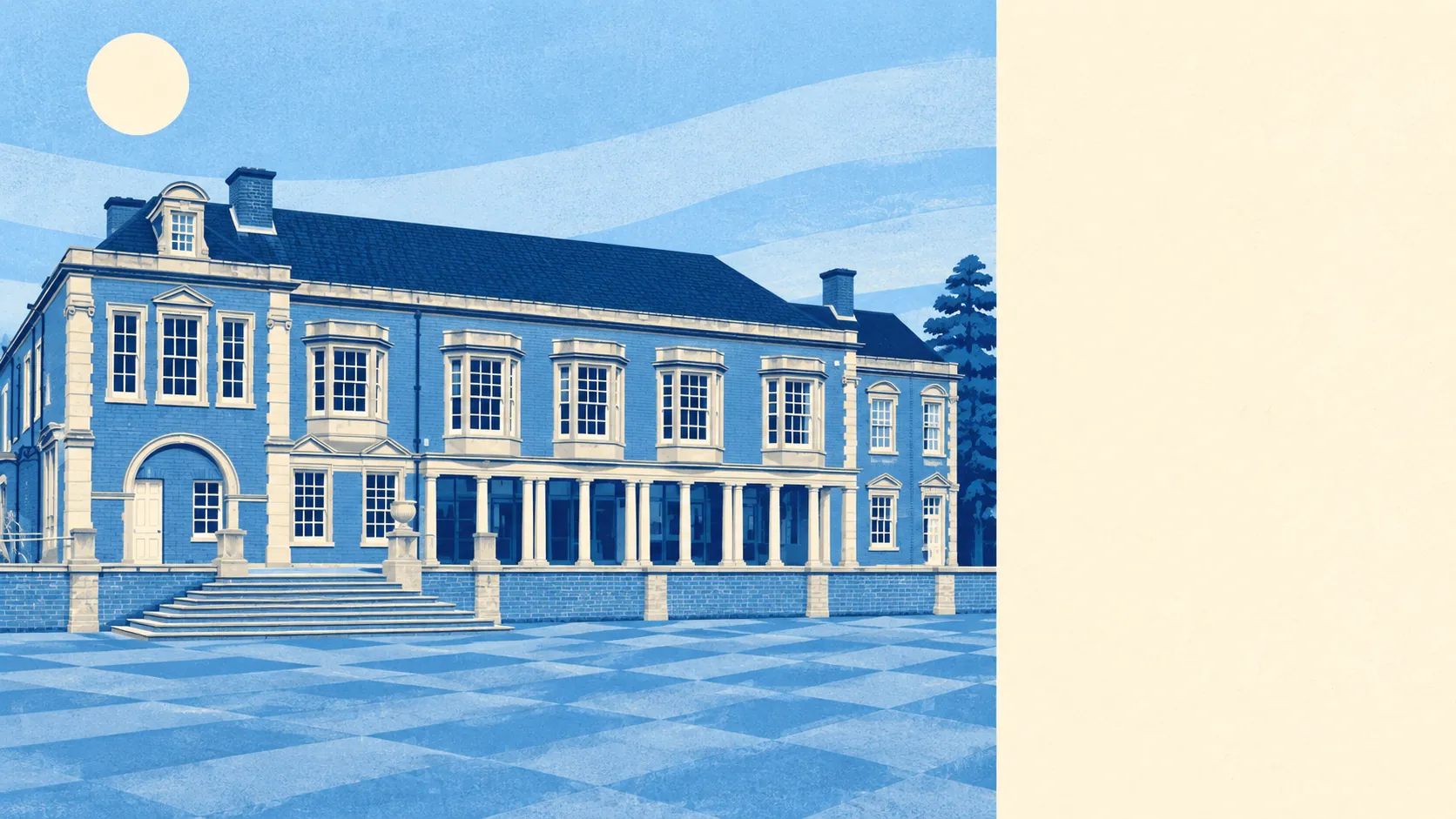
Bracknell is a good place to live, as long as nobody needs it to be pretty. Every school inspectors have graded is good or better. There's a park at the end of most streets. Close to four in ten work from home, and almost nobody takes the train. It's a commuter town that stopped commuting and found the place was fine to stay in.
The housing is the new-town plan in brick. On the council-tax valuation list, terraces make up about 37% of all homes, flats 26%, detached houses 19%, semis 13% and bungalows 3%. Very little of the old market town survived the planners, and the list shows it: only about 2% of homes were built before 1930. That has an upside for running costs. Around 64% of homes with an energy certificate sit in bands A to C, 32% in D and about 5% in E or worse. Mains gas heats about 77% of homes, and around 12% rely on electricity alone. Ask about that before the viewing, because a heating bill never appears in the listing photos.
The Land Registry recorded 804 sales in the year to May 2026, with a median of about £388,000. By type, flats went for around £225,000, terraces £370,000, semis £447,000 and detached houses £615,000. The semi sells well above the terrace, which puts a price on a side gate and not sharing a wall. The most common council-tax band is C, and only about 15% of homes are in bands A or B, so cheap-band hunting here is short work.
Rent is harder to pin to the town. The typical private rent across the Bracknell Forest area was about £1,500 a month as of April 2026, up about 6% on a year earlier. That is a borough-wide figure, so it mixes the town's flats with the bigger houses in the villages around it. Across the same area a one-bed averaged about £1,100 and a three-bed about £1,700. Budget from the bedroom count, not the headline.
Safety is one of the two areas where Bracknell falls short. Recorded crime ran at about 79 per 1,000 residents in the year from June 2025 to May 2026, roughly 17% above the Bracknell Forest average of about 68. The mix leans towards violence and sexual offences, at 39% of the total against 35% nationally, and shoplifting, at 10% against 8%. A town with the borough's main shopping centre will pick up the borough's shoplifting, and the villages around it look better by comparison. One force-wide figure is worth knowing: Thames Valley Police charged about 9% of crimes over the same year, against 12% nationally, which put it 37th of 42 forces.
Schools are where Bracknell does best on paper. Ofsted has graded 17 settings here, and all 17 are good or better, with 2 outstanding. Secondary options include Garth Hill College, King's Academy Easthampstead Park, Ranelagh School and The Brakenhale School, which still carries one of the town's old spellings. That's more of the old town than the planners kept. When every school has a clean sheet, parents stop comparing inspection reports and start timing the walk. The typical walk is about eight minutes to a primary and about 19 to a secondary.
Bracknell and Martins Heron stations both sit on the Waterloo to Reading line. At the 2021 census about 2% of workers used the train to get to work, 46% drove and 39% worked from home. The town built for the railway ended up working from the spare room. Buses are frequent: there are 354 stops, and those with timetable data average about 61 weekday departures each. Gigabit broadband reaches about 98% of premises, and every mobile operator covers the whole area with 4G or 5G, so the spare room has a good connection.
Flood risk is the weak spot, and it needs reading carefully. About 26% of postcodes are at high risk on at least one flood indicator, including surface water. In the river-and-sea flood zones the shares are small: about 2% in the highest zone and 1% in the next. The Environment Agency lists 3 recorded flood events, the latest in 1981, when a main river overflowed. Rivers are not the main threat. Water with nowhere to go after heavy rain is. On the brighter side, the nearest green space is about 130 metres away on average, with around 27 within a kilometre. Water is about 350 metres away, from the ponds at Farley Wood and the Easthampstead Mill Pond to the lakes at South Hill Park.
Heritage rarely gets in the way. There are 98 listed buildings: none Grade I, one Grade II* and 97 Grade II. The two conservation areas are Easthampstead and Winkfield Row. Outside those, most homes were put up by a development corporation, and no planning officer will mourn their plastic windows.
About 62% of households own their home, around 20% rent from a social landlord and 16% rent privately. The median age is 38. Median gross household income was about £69,000 in the financial year to March 2023. Too young for a retirement town and too settled for a starter one, it is a town of people in the middle of their mortgages.
This page also covers the neighbourhoods around the centre. Priestwood is the oldest suburb and Easthampstead is the old village, whose church has stained glass by Sir Edward Burne-Jones. Bullbrook is named after a brook the new town then mostly put into culverts. That's new-town thinking in a single act. Popeswood, Warfield, Jealott's Hill, Newell Green, Winkfield Row and Winkfield Street make up the rest.
Bracknell suits families who put schools above scenery, people who work from home and want fast broadband, and anyone who likes a park within a short walk. If what you want is a three-bed, a school with a good grade and a quiet cul-de-sac without paying village prices, the town was built for you.
It suits less well anyone who wants period character, a lively town-centre evening or a daily train into London. If you picture a Georgian front door and a pub quiz in a building older than the motorway, you're shopping in the wrong borough.
The famous names are modest. Dani Harmer, who starred in The Story of Tracy Beaker, is from here, John Nike built his leisure business here, and Claudie Blakley was born in Easthampstead. The best story belongs to the Old Manor, a 17th-century pub with priest holes. Dick Turpin is said to have drunk at the coaching inn next door, and tunnels between the two are believed to have existed rather than been found. Every planned town needs one legend it can't check.
Bracknell is a good place to live if you want a town that works rather than one that poses. Its real strength is the green space around it, with parks, ponds and woods within minutes of almost every front door. The weak spot is flood risk, so check the address before you fall for the kitchen. Nobody moves here for the skyline, and plenty stay for the school run.