Yes, if your car agrees. Eight in ten own their home. Nearly half work from the kitchen table. Almost nobody takes the train. Biddenden solved the commute by declining to make one.
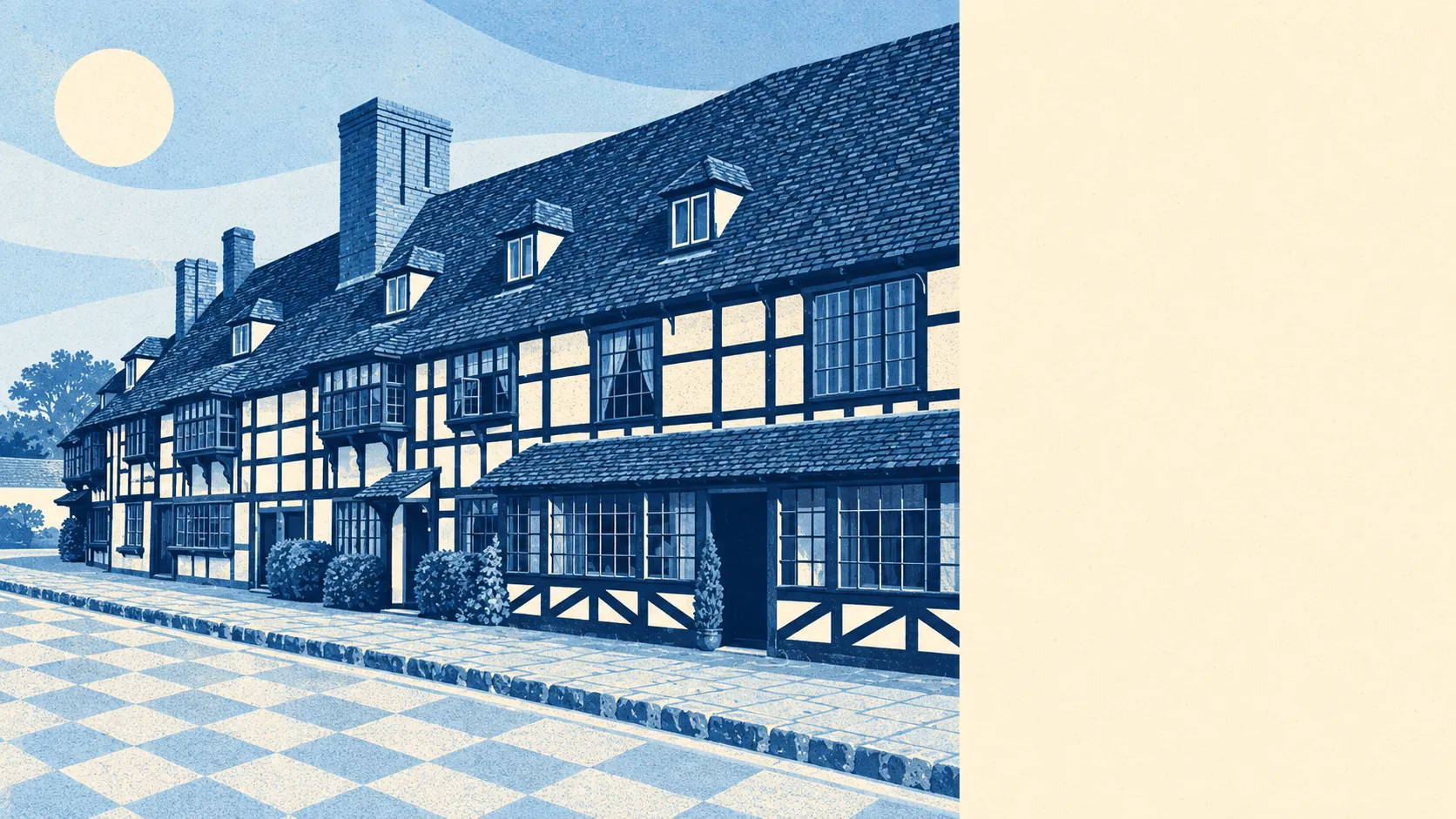
The housing is mostly detached, with land in between and not much apology for it. About a third of homes on the council-tax valuation list are detached and a fifth are semi-detached, while terraces and bungalows come in at about 13% each. Flats hardly register at about 4%. Around a quarter of the stock predates 1930, which explains the timber frames on the High Street. It also explains the energy certificates. Only about 43% of certificated homes reach band C or better, and 27% sit at E or worse. Mains gas reaches only about 35% of homes, so most heat themselves with something that doesn't come down a pipe, and about 8% run on electric heating alone. Ask how the house is heated before you ask about the beams.
The Land Registry recorded 22 sales in the year to May 2026, at a median of about £540,000. That median hides a split. Eleven detached houses went for a median of £900,000, seven semis for about £390,000, and four terraces for about £324,000. With numbers this small, one big farmhouse sale can drag the whole figure around, so read the type rather than the headline. Band C is the most common council-tax band, and about 22% of homes sit in bands A or B. The valuation list is a humbler document than the estate agent's window.
Renting is a minority sport here, with about 10% of households in private rentals. The typical private rent across the Ashford area was about £1,240 a month as of April 2026, up about 5% on a year earlier. That is a borough-wide figure, built on the flats and terraces of Ashford itself. A detached house off a Biddenden lane is a different conversation with a different landlord.
Crime is low. Kent Police figures put the rate at about 54 crimes per 1,000 people in the year to May 2026, roughly 34% below the Ashford average. Nobody moves here for the nightlife, and the crime numbers are consistent with that.
Transport is the weak spot. Biddenden had a railway station on the Kent and East Sussex Railway for nearly five decades, and it closed in 1954. The nearest stations now are Headcorn, Staplehurst and Pluckley, all a drive away, which is why only about 2% commute by train and 47% drive. Buses exist, in principle. The area has 12 stops, averaging about 12 weekday departures each, and only 60% of stops with service data see a bus at the weekend. The Department for Transport's modelling puts the nearest town centre about 14 minutes away by car and about 37 minutes by public transport, and hospital about 34 minutes by car against roughly 86 by bus and train. About 43% work from home, which is how the village got round the timetable. Broadband doesn't help as much as it should. Full-fibre-grade gigabit connections reach about 20% of premises, superfast about 66%, and about 5% fall below the universal service obligation, the legal minimum. So check the line before you give up the office.
On flooding, the Environment Agency's river-and-sea flood zones cover none of the area's postcodes. On the wider postcode indicators, which include surface water, about 20% of postcodes carry a high rating on at least one measure and a further 12% a medium one. That points to rain with nowhere to go rather than a river bursting its banks. Check the specific address. Green space is the easy part. The nearest formal green space is roughly 680 metres away on average and water is about 170 metres off, while under 1% of the area falls inside the High Weald Area of Outstanding Natural Beauty. There is countryside in every direction, and the fields belong to somebody.
The area holds 161 listed buildings: three at Grade I, 11 at Grade II*, and 147 at Grade II. The Cloth Hall, Biddenden Place and the Parish Church of All Saints are among them, and so are plenty of ordinary-looking farmhouses. No conservation area is recorded across the patch, so the restrictions come one listed building at a time. If yours is on the list, listed building consent governs the windows, the extension and the interesting ideas. That conversation about plastic windows ends early.
About 79% of households own their home and the median age is 52. Median household income was about £60,000 before tax in the financial year to March 2023. The same settled picture covers Smarden, the neighbouring village this page also includes. West of Biddenden, the local cottage industry is vineyards, orchards, wine and cider, which is what a midlife crisis looks like when it files accounts.
Biddenden suits settled households who drive, work from home or have retired, and who want low crime and old buildings. It also suits families prepared to drive to school, since John Mayne Church of England Primary School is in the village and Ofsted rates the great majority of Kent's graded schools Good or better. It suits anyone who treats a listed farmhouse as a project rather than a threat.
It doesn't suit anyone who needs a train, a late bus, a flat, or fast broadband they haven't checked in advance. First-time buyers hoping for a starter home will find four terraced sales in a year and a lot of detached houses.
The village's past has always leaned towards the settled professions. Edward Nares, the theologian, was rector here for nearly three decades. The composer Robert Kahn spent his last years in Biddenden. John Mayne's name has been on the village school since it was founded in 1522. Its most famous pair, the conjoined Chulkhurst twins, are only "traditionally said" to have lived here at all.
Biddenden is a middling place to live, and the middle hides two extremes. Its real strength is safety, with crime well below the Ashford average and old houses standing where they have always stood. The weak spot is transport and connectivity, with no station, thin buses and patchy broadband. Buy here if you have made your peace with the car. Everyone else will be negotiating with it daily.