Yes, in most of Bicknacre you can extend a house without the heritage rules getting in the way. The listed buildings are spread thinly across a wide area. There is one conservation area, and it's in East Hanningfield. The thing that limits extensions here is the ground, which is clay. Planning officers are the second thing to deal with.
There are 74 listed buildings across the wider Bicknacre area: one at Grade I, six at Grade II* and 67 at Grade II. Listing covers the whole building, inside and out, so changes need listed building consent from Chelmsford City Council as well as any planning permission. Most homes here were built after the war, on the 1969 estate to the north and the Thriftwood Estate to the south, so listing is the exception for any one house.
There is one conservation area in the area, East Hanningfield The Tye. Inside it, extensions, demolition and some changes to the outside of a house get closer scrutiny, and work that's normally allowed without an application can need one. Outside it, which covers all of Bicknacre itself, those extra layers don't apply. Two houses either side of the green at East Hanningfield can face quite different paperwork.
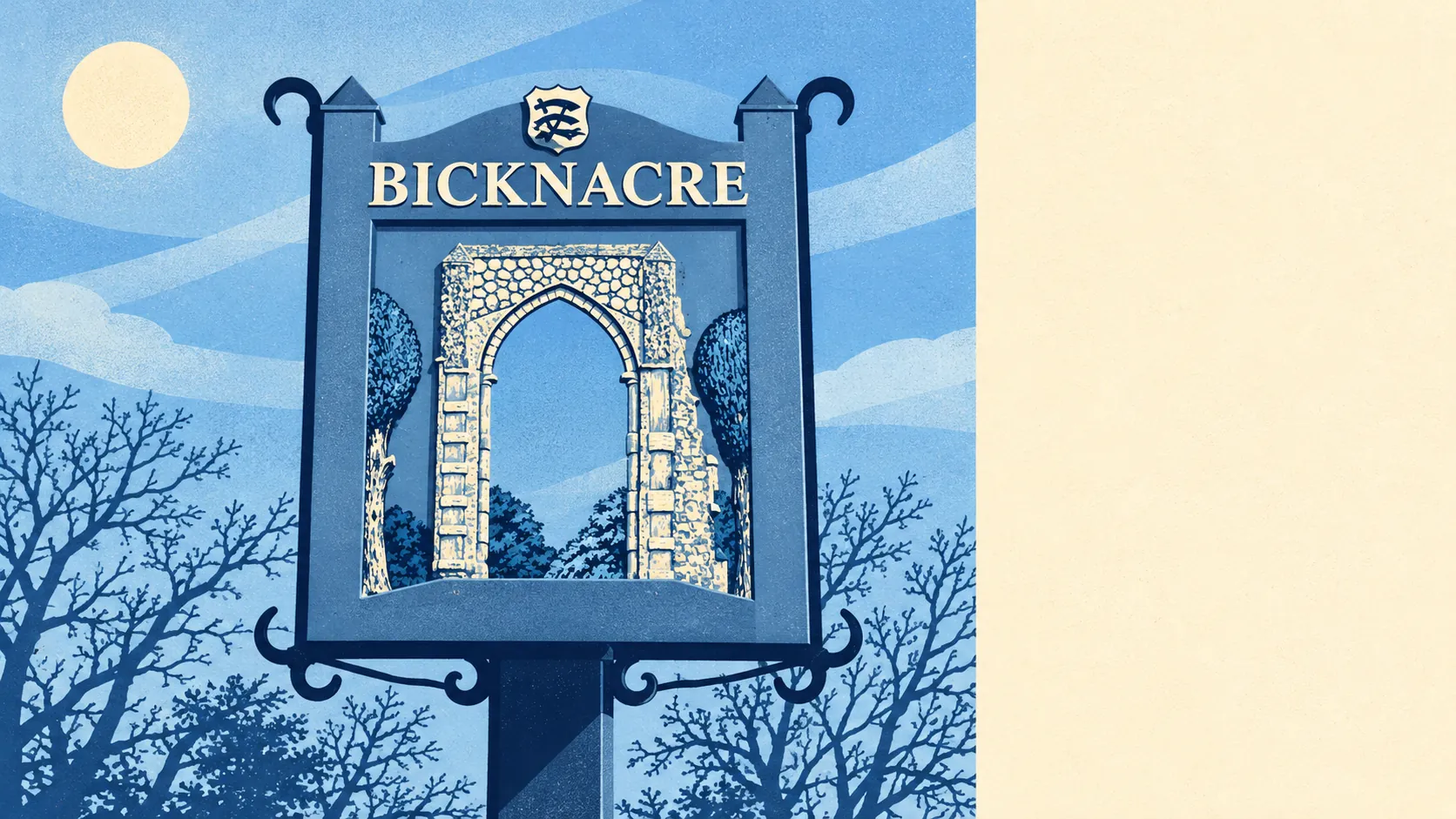
There is one scheduled monument, Bicknacre Priory, the strictest tier of protection there is, which matters mainly for land right next to it. The most protected structure in the parish is a church arch with no church attached.
People around here alter their homes all the time. Planning records covering Bicknacre and the surrounding postcode districts show 6,315 applications between April 2024 and June 2026, including 2,722 in the last twelve months. That catchment is much bigger than the village, but it shows the council handles a steady stream of extensions, loft conversions and alterations.
The British Geological Survey puts the area's shrink-swell hazard at class 3, and all of the area reaches that class. Clay soils swell when wet and shrink in dry spells, and trees close to the house make that worse. For an extension, that usually means deeper foundations than a builder would dig on sandier ground, and it's worth getting a structural engineer's view on the design. The council's rules can be read in an afternoon. The clay has the final say on what goes in the ground.
For a post-war house in Bicknacre that isn't listed, many rear extensions and loft conversions fall under permitted development, the national rules that allow certain work without a planning application. Anything bigger, or anything on a listed building or inside The Tye, goes to the council. Ask Chelmsford City Council to confirm whether the address is listed or in the conservation area. That takes a single enquiry, and it beats finding out halfway through the work.
Bicknacre gives an owner a fair amount of room to extend. The heritage rules are light, the clay adds cost, and the result is middling freedom for anyone planning to build.