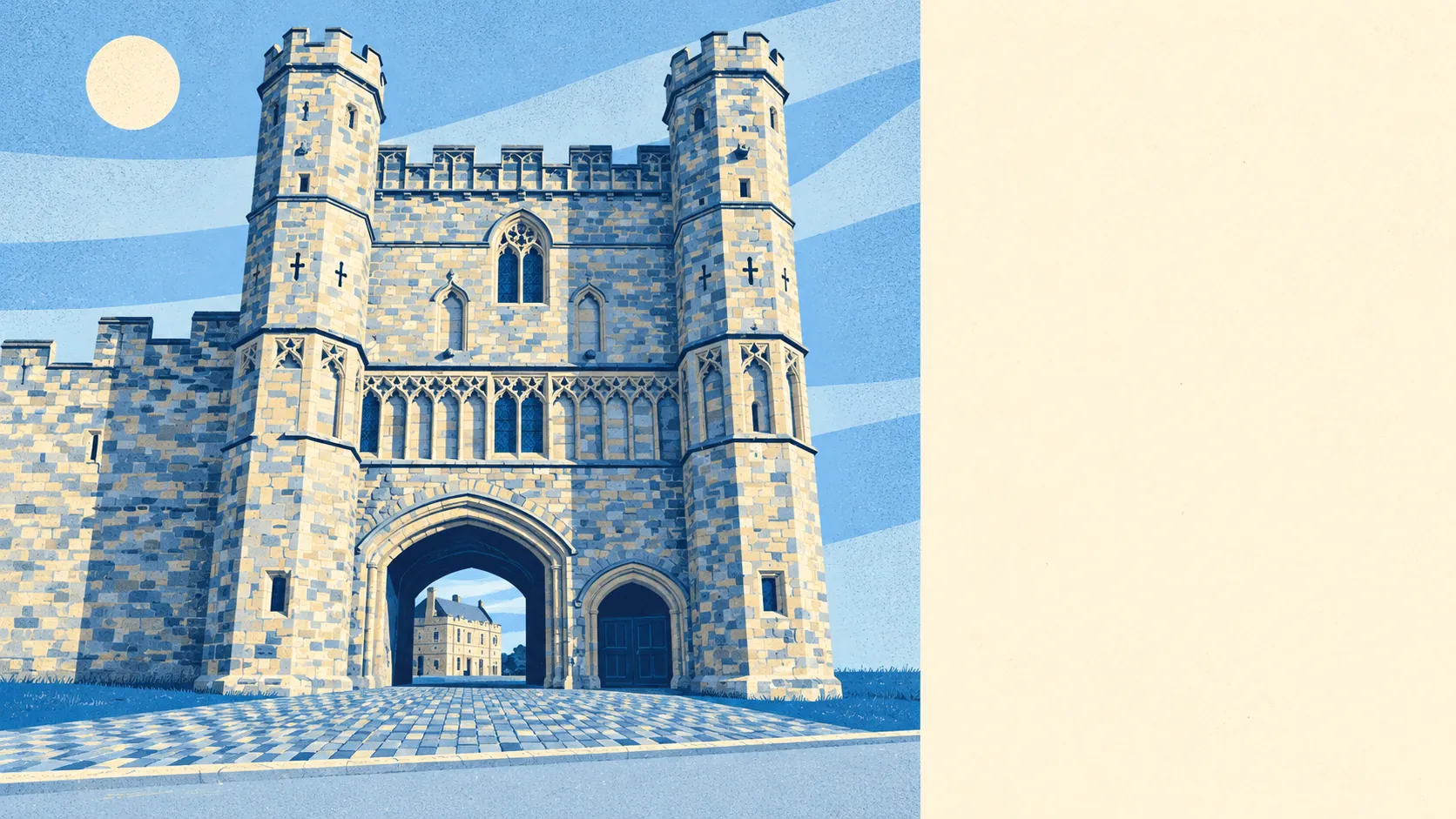
Yes, provided you like your town already finished. Seven in ten households own their home. The typical resident is heading for fifty. Every street sits inside a protected landscape. Battle isn't waiting to be discovered: it was discovered in the eleventh century and has been showing people round ever since.
The houses are less medieval than the postcards suggest. The council-tax valuation list puts 27% of homes as detached, 21% semi-detached, 20% terraced, 15% flats and 15% bungalows. Only 28% were built before 1930. The High Street does the timber-framed front, and the ordinary detached house behind it does most of the housing. Energy ratings are middling: of the homes with a certificate, about 49% rate C or better, 38% sit at D and 13% are E or worse. About 74% of homes are on mains gas and 8% heat with electricity alone. Before you fall for the beams, ask which kind of heating you're viewing.
The Land Registry logged 60 sales in the year to April 2026, at a median of about £349,000. A detached house went for about £530,000, a semi for about £354,000, a terrace for about £335,000 and a flat for about £218,000. There's barely any gap between semis and terraces. The jump comes when you want a house with no neighbour on either side, and the High Weald charges properly for it. Band C is the most common council-tax band, and only about 15% of homes sit in bands A or B. Battle doesn't do cheap housing in any quantity, and it isn't pretending to.
Private rent across the Rother area typically runs at about £1,160 a month, as of April 2026. That's a district-wide figure covering coast and countryside alike, not a Battle price, so treat it as the starting point and expect the town itself to argue upwards.
Sussex Police recorded crime at about 76 per 1,000 people between June 2025 and May 2026, roughly 4% above the Rother average. That's level with the district. Anti-social behaviour makes up 27% of recorded incidents here against 16% nationally, so the typical complaint is nuisance rather than danger. The most violent thing ever to happen in Battle is still the thing it's named after, and nobody has come close since.
Getting around is the weak spot, and the station makes it look better than it is. Battle has its own stop on the Hastings line, with Crowhurst one stop down, yet at the 2021 Census only 2% of working residents went to work by train. Half drove, and about 35% worked from home. The 40 bus stops average 14 weekday departures each and 0.6 buses in the peak hour, so at rush hour you'll often wait more than an hour. The Department for Transport's 2019 modelling puts the nearest hospital about 20 minutes away by car and 39 minutes by public transport, and bus figures like that tend to get worse as routes are cut. Broadband is better. Gigabit connections reach 62% of premises, superfast reaches 99%, and 98% of the area gets 4G or 5G from every operator. Plenty of people here have worked out that the best commute is none at all.
The surroundings are where Battle earns its keep. The whole town sits inside the High Weald National Landscape. The nearest green space is about 140 metres away on average, with around 14 inside a kilometre. None of the town falls inside the Environment Agency's river-and-sea flood zones. Measured by postcodes on at least one flood indicator, surface water included, about 6% carry high risk, 7% medium and 20% low. It's worth checking your exact address, but this is not a town that spends winter watching the river. The coast is about 8 kilometres away, which is close enough for a day out and far enough that the sea never comes to visit you.
History has a say in what you do with your house. The area has 141 listed buildings, 5 of them Grade I, 6 Grade II* and 130 Grade II, including the Battle Abbey gatehouse, the abbey ruins and precinct wall, the Almonry and the Pilgrims Rest. Battle Abbey is also a scheduled monument. The Historic England data used here shows no conservation area. If the house you want is one of the listed ones, the conservation officer gets a say in your window frames, your roof and probably your paint colour. Buyers who plan to "modernise sensitively" tend to learn how much the word "sensitively" is doing.
The town is settled and comfortable. About 72% of households own their home and the median age is 49. Modelled gross household income averaged about £59,000 in the financial year to March 2023. It's a place people move to once they've sorted their lives out, not while they're still working it out, and the High Street is pitched at them.
This page also covers Ninfield and Sedlescombe, plus Telham, where William first set eyes on the English army from the hill and decided the view was worth the fight. Buyers still have that reaction on Telham Hill, with a mortgage broker in place of an army.
Battle suits people who have already decided where their life happens. That means home workers, couples whose children are at or past secondary age, and anyone who wants the countryside on the doorstep and a High Street they can walk to. If you drive, work remotely and count a listed facade as a perk rather than a planning risk, the town will suit you.
It suits people who need the train every morning less well, along with renters hoping for a bargain and anyone who expects a town to get livelier over time. The buses won't rescue a car-free household. If you want a bit of noise on a Friday night, you'll be driving to the coast for it.
Battle has a surprisingly good record of producing women who did the work while someone else got the fame. Eliza Acton was born here in 1799, and her 1845 book Modern Cookery for Private Families supplied the template that Mrs Beeton's cookery section borrowed in 1861. Barbara Bodichon went on to co-found Girton College. The shoe designer Moya Bowler and the musician Tom Chaplin also have their names on the town's list. Beeton is still the name everyone knows.
Battle is a good place to live, a notch above average, and honest about its limits. Its real strength is the landscape around it: protected countryside, green space close to every door and a flood risk low enough that rain doesn't worry anyone. Its weak spot is getting anywhere, with a station most residents don't use and buses that barely run at rush hour. If you can live without the commute, the town is hard to fault. If you can't, the Hastings line will remind you twice a day.