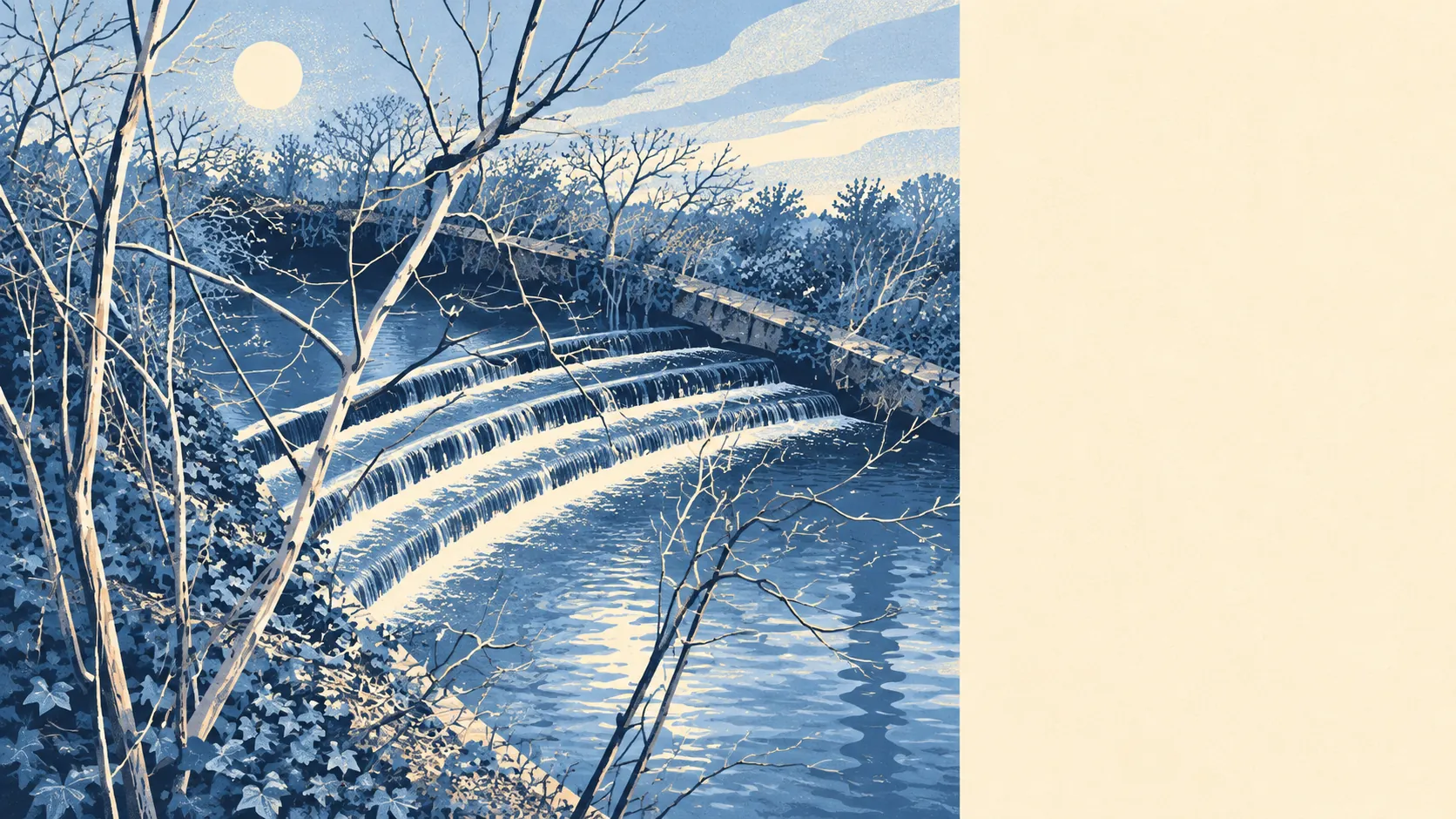
Yeading has a lot of green space for somewhere this built-up. For most homes there's a park at the end of the road and water a short walk away. The gardens are a decent size. The high street is practical and makes no effort to be anything else. The houses are crowded together, but there is plenty of open space around them.
On average, the nearest public green space is about 140 metres from a Yeading front door, and there are about 26 green spaces within a kilometre. So you get a choice. The playing field, the dog-walking loop and the bit of grass where children practise penalties are often three different places within a short walk. Stockley Park, with its country park and golf course, is nearby for anyone wanting more than a local park.
Water is a little further. The nearest river, brook, canal or lake is about 450 metres away on average, and there are about 20 of them within a kilometre. Yeading Brook runs through the district and the Grand Union Canal runs past it towards Bulls Bridge. The towpath is still here from the days when the canal carried the area's bricks, and these days people jog along it.
The National Cycle Network is about 5.4 kilometres away on average, and no postcode in Yeading is close to it, so cycling for leisure starts with a ride to get to the route. No ancient woodland survives anywhere in the area.
Most of Yeading's amenities are shops. The rated-premises register counts 290 shops, 16 restaurants and 6 pubs across the district. That high street is for everyday needs, the kind of places you pop into for bread and a phone charger, and there isn't much in the way of evening entertainment.
Hillingdon's fine-particle air pollution measured about 8 micrograms per cubic metre in 2024, a borough-wide figure that includes Heathrow's surroundings as well as Yeading.
Yeading was farmland and brickfields with a canal dock until after the Second World War. Then a prefab estate went up, and the larger estates around Yeading Lane followed. The result is a suburb of semis and short terraces between Hayes and Northolt. It is full of houses and well supplied with green space. Most of the conservation areas and listed buildings are on the edges, towards Hayes Village and Bulls Bridge.
Private gardens are a large part of what Yeading offers. Residents have about 45,900 square metres of private garden for every 1,000 people. Post-war estates were built with plots that leave room for a lawn, a shed and a trampoline. In the nineteenth century Yeading's brickworkers kept pigs for extra money, and the plots are still big enough for that to sound possible.
The valuation list for business rates holds 687 rateable premises in the area. The largest groups are 289 shop premises, 94 offices and 51 warehouses. That is a register of premises, not a count of businesses open today, but the mix is clear. Yeading's commercial property is mostly shops and workplaces, with very little of it aimed at visitors.
For eating out, 185 food premises have a hygiene rating. About 55% have the top score of five, and about 12% are at the low end of the scale. It is a mixed picture, so check a takeaway's rating before you order.
No area of outstanding natural beauty, site of special scientific interest or ancient woodland overlaps Yeading. The green space here is ordinary parks, playing fields and towpath, and none of it carries a designation.
The surroundings are one of Yeading's real strengths. Every home has plenty of parks and water within reach, and most have a decent garden as well.