The area around Wroughton is its best feature, and it starts where the gardens end. Green space is a short stroll from most front doors. A dozen or so parks and open spaces sit within walking distance. The Downs fill the view to the south. Swindon supplies the shopping; the hills supply the reason to stay.
The typical home is roughly 160 metres from the nearest green space, with about 13 green spaces within a kilometre. That's a density most towns would put on a banner. Here it's the backdrop to the school run, and the dog gets more countryside than most people's holidays.
Water is close as well. The nearest blue space, a pond, stream or other open water, is roughly 310 metres from the typical home on average, with about 34 within a kilometre. None of it is the seaside, and nobody's selling Wroughton as a lakeside retreat, but the ducks are well provided for.
Getting further out on two wheels takes a bit more effort. The National Cycle Network is about 2.1 kilometres away on average, and no postcodes sit close to it, so the nearest signed route is a ride to reach rather than something at the end of the road. The Ridgeway, the ancient national path, runs close by for anyone happier on foot.
The premises records for the wider area list 138 shops, 34 pubs and 6 restaurants. The pub count comfortably beats the restaurant count, which tells you where Friday evening is spent. On the business rates valuation list for Wroughton itself there are 89 rateable premises, with shops the largest category at 26 and offices next at 10. Those are premises on a list, not a guarantee that everything is open and trading.
Food hygiene is reassuring. Of 30 rated food premises, about 87% hold the top score of five, and about 7% sit at the low end. Eating out here is a safe bet on cleanliness, if a limited one on choice.
Fine-particle air pollution across the Swindon council area averaged about 7 micrograms per cubic metre in 2024. That's a council-wide figure, not a reading from any Wroughton street.
About 12% of the area falls inside the North Wessex Downs, the designated area of outstanding natural beauty that gives the southern edge of the village its skyline. There are no sites of special scientific interest in the area and no ancient woodland. That's not a fault; it simply means the landscape's value lies in the open downland rather than old forest or rare habitats.
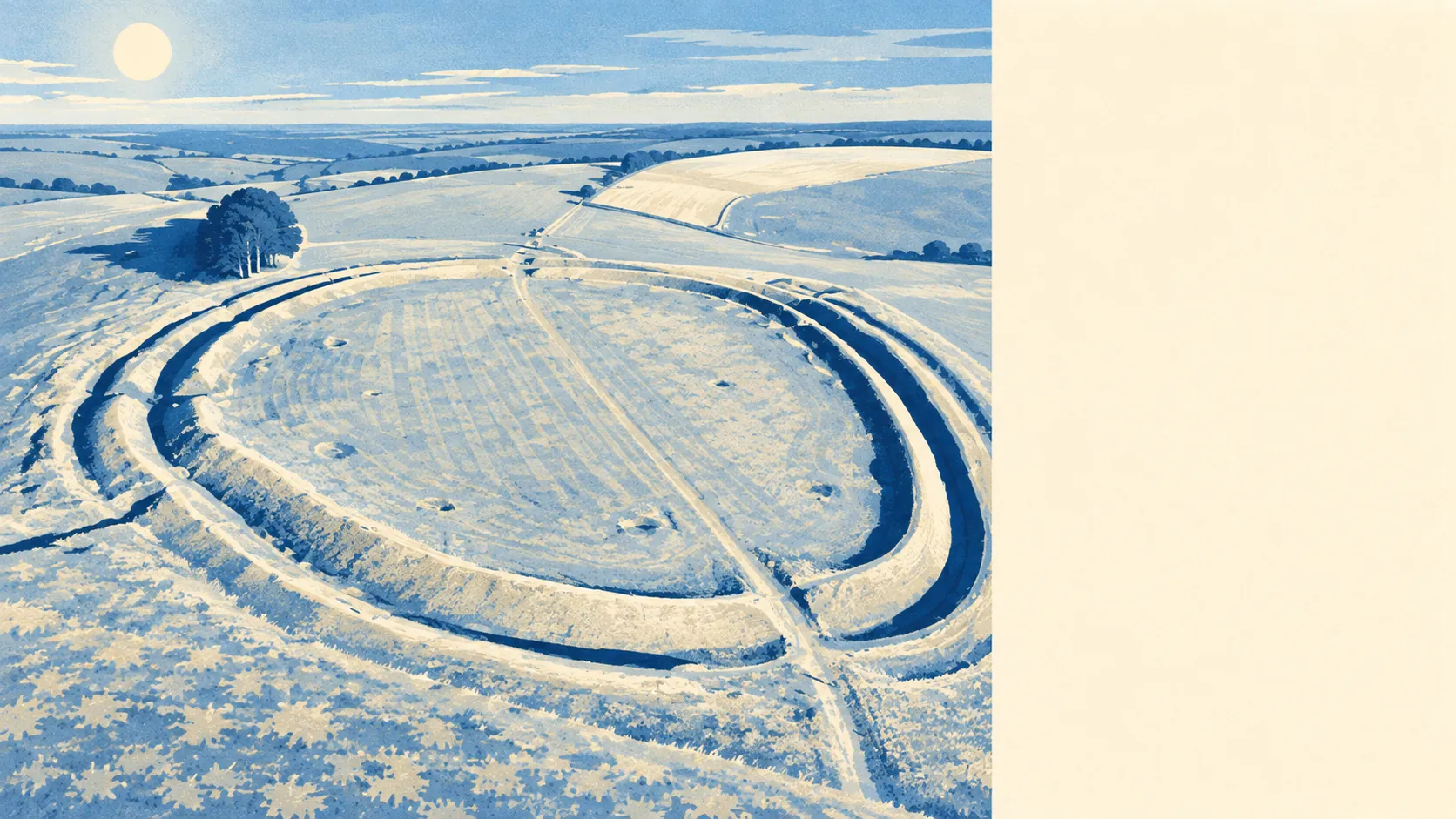
The surrounding country is chalk hills, old tracks and prehistoric remains. Barbury Castle, the hillfort, and the barrows on Burderop Down and Barbury Down sit on the higher ground, while Overtown and Elcombe mark the older settlement edges nearer the village. In the other direction, Swindon's Queen's Park and Town Gardens are within reach for anyone who wants formal flowerbeds instead of sheep. Few places this close to a large town have a Neolithic-to-medieval landscape as their Sunday walk.
Private gardens are generous. There's about 145,000 square metres of garden for every 1,000 residents, so most homes come with outdoor space of their own, not a balcony and a hopeful pot plant.
The surroundings are Wroughton's real strength: open downland on the doorstep, green space around every corner, and gardens big enough to lose a football in.