Yes, Worplesdon is a good place to live, as long as you turn up already rich. Eight in ten households own their home. Half the working residents never commute. Two in three households run more than one car. The commons are free; living next to one is not.
The housing is mostly detached houses and bungalows, and terraces barely come into it. Across the council-tax valuation list, about 30% of homes are detached, 27% semi-detached, 19% bungalows, 13% terraced and only 6% flats. About a fifth were built before 1930. With flats that scarce, the first rung of the ladder is somewhere else, usually Guildford. The energy ratings are middling: of homes certificated since 2008, about 45% sit in bands A to C, 39% on a D and 16% on an E or worse. A D is an energy rating that shrugs. About 80% of homes heat with mains gas and only about 2% rely on electric heating alone, so running costs are unlikely to shock anyone.
Now the part that decides everything. The Land Registry's twelve months to the end of April 2026 recorded 15 sales at a median of £750,000. Split by type, nine detached houses went for a median of about £1,470,000 and four semis for about £620,000. That's a small sample, and one big sale can move it, but no sample size is going to make this place cheap. Council tax follows the houses. Band D is the most common band, bands A and B cover only about 6% of homes, and Band D costs about £2,550 a year. Round here, finding a Band A house is like finding an unguarded parking space in Guildford on a Saturday.
For renters, the typical private rent across the Guildford area was about £1,720 a month as of April 2026. That covers the whole borough, not this parish. It includes plenty of town-centre flats Worplesdon doesn't have. Only about one household in eight rents privately here, so the letting market is thin, and what does come up tends to be a house with a garden priced accordingly.
On safety, police figures for June 2025 to May 2026 put the crime rate at about 47 per 1,000 residents, roughly 46% below the Guildford average of about 87. Surrey Police charges about 11% of the crimes it records, a little under the national 12%. That's a figure for the whole force, not for Worplesdon. Recorded crime here is low enough that a handful of incidents would swing any breakdown by category, so nobody should read the mix as the character of the place.
Schools are a strength, and parents who drive know it. Ofsted has graded 147 of Surrey's 159 inspected settings Good or better, with 30 Outstanding. Worplesdon Primary School in Fairlands took over from the old Perry Hill School in 1976. Wood Street Infant School is also close by. The one primary school in the local postcode districts recorded an average maths score of 101 at the end of Key Stage 2. For secondary, Hoe Valley School and Woking College are within reach. The modelled trip to the nearest secondary is about 26 minutes by public transport or 12 by car. Guess which one wins at 8am.
The transport numbers show how people actually live here. Worplesdon Rail Station runs to London Waterloo and Guildford, and Guildford Rail Station and Woking Rail Station are both close. Yet only about 3% of workers take the train. About 51% work from home and 38% drive. Superfast broadband reaches about 99% of premises but gigabit reaches only about 2%, which is a bold setup for a parish full of home workers. There are 15 bus stops, averaging about 34 weekday departures each and about three an hour at peak, and every one gets a weekend service. The Department for Transport's 2019 model puts the town centre 14 minutes away by car and 26 by public transport, which explains the driveways.
The surroundings are why people pay the price. The nearest green space is on average about 168 metres from the front door, there are about six within a kilometre, and water is about 377 metres away. Whitmoor Common, Broadstreet and Backside Commons and Stringer's Common are all run by Surrey Wildlife Trust, heather and bracken included. On flooding, none of the parish's postcodes sit in the Environment Agency's river-and-sea flood zones 2 or 3. About 7% of postcodes are rated high on at least one flood indicator, surface water included, so check the exact address before you fall for a view. Radon is in the lowest band, and the ground-stability hazards register low across the board.
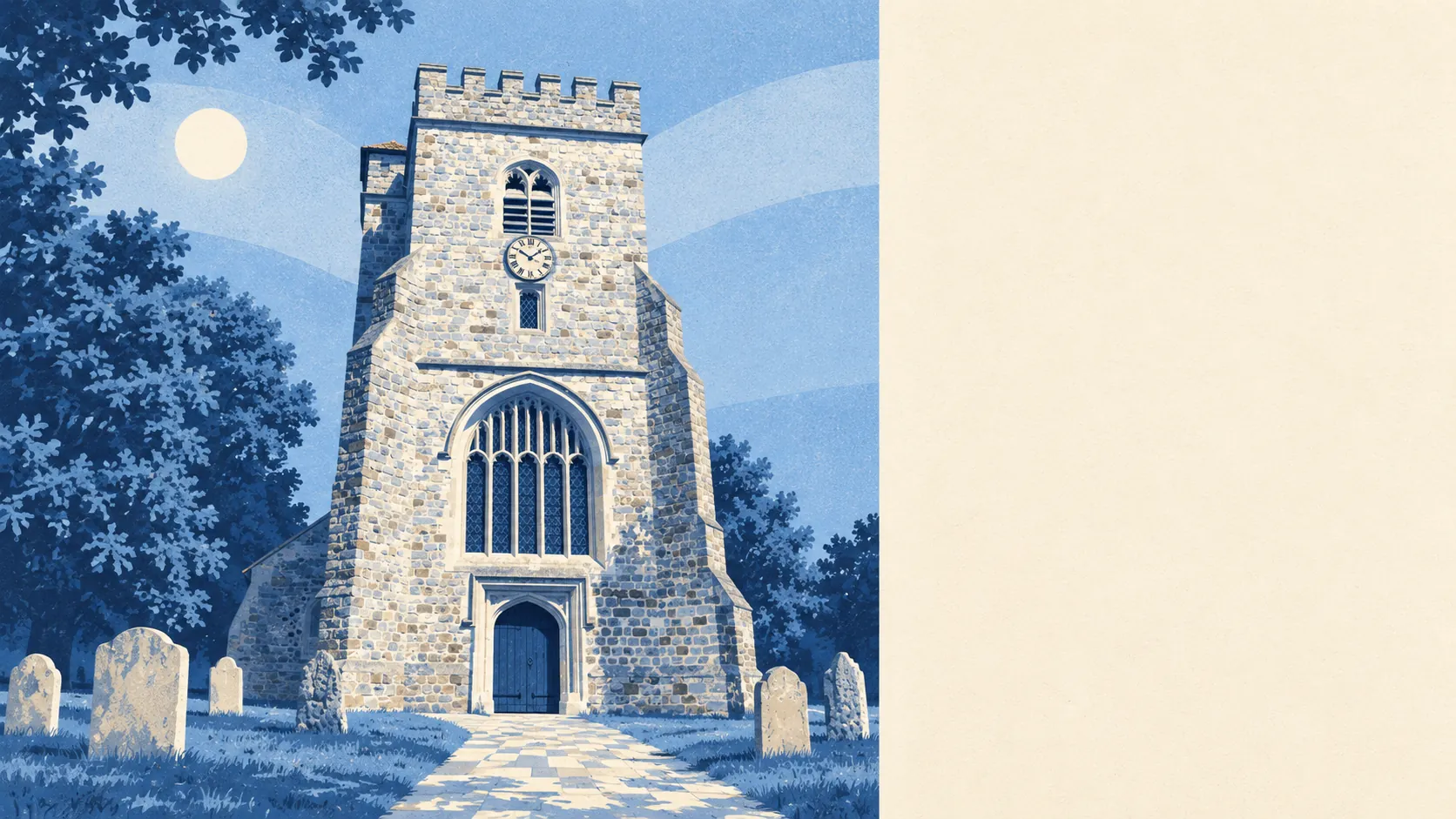
Heritage rules are real but limited. There are 26 listed buildings: one Grade I, one Grade II* and 24 Grade II. The Grade I is St Mary's, the parish church, whose chancel dates from the 13th century. There's one conservation area, Worplesdon itself. If you own a listed building, you need consent before you change anything, and inside the conservation area expect the planners to have views on windows, extensions and trees. Most homes fall under neither, so for most owners an extension means an ordinary planning application.
As for the neighbours: about 79% of households own their home, the median resident is 46, and the Office for National Statistics models gross household income at about £80,000 for the year to March 2023. About 48% of homes have four or more bedrooms, so the kids leave and the spare rooms stay. About 48% of adults hold a degree, and the whole place has the relaxed feel of people who've already won.
Worplesdon suits established families trading up with the equity already in hand, people who work from home and want a common rather than a courtyard, and anyone whose idea of a night out is the cricket club bar. The Worplesdon and Burpham club traces its roots to 1890, and Saturday cricket is part of village life.
It suits first-time buyers much less, as it does anyone who wants a flat, a pub crawl on foot or a train every few minutes. Guildford sells all three, and the trade is honest both ways: more noise and less space in exchange for walking everywhere.
The past has left more than a church. There are Roman villa ruins on a farm on Broad Street Common, and the manor turns up in Domesday Book as Werpesdune. In the early 20th century the artist Sidney Sime lived here, known for magazine illustration and for his work in Lord Dunsany's fantasy books. The parish repaid him with the Sidney Sime Memorial Gallery inside Worplesdon Memorial Hall, built in 1922 to remember the dead of the First World War. A man who drew imaginary worlds for a living picked a real one with a better view.
Worplesdon is a good place to live, and above average once you've paid for it. Its real strength is the surroundings: commons within a short walk of almost everyone, low crime and strong schools. The weak spot is value. You pay dearly for the privilege, and houses rarely come up. The fields and commons cost nothing, but you'll pay a lot for a house next to them.