The countryside around Whitchurch is the main reason to live here, and the town seems to know it. Green space is a short walk from most doors. The river runs through the middle. A protected landscape starts at the edge of town. The high street is small and doesn't pretend otherwise. The town is the base camp, and the land around it is what you're paying for.
Green space is close at hand. The average home is about 165 metres from the nearest patch, with around 16 green spaces within a kilometre. Most people who buy here to be near the countryside don't need to leave town to find some.
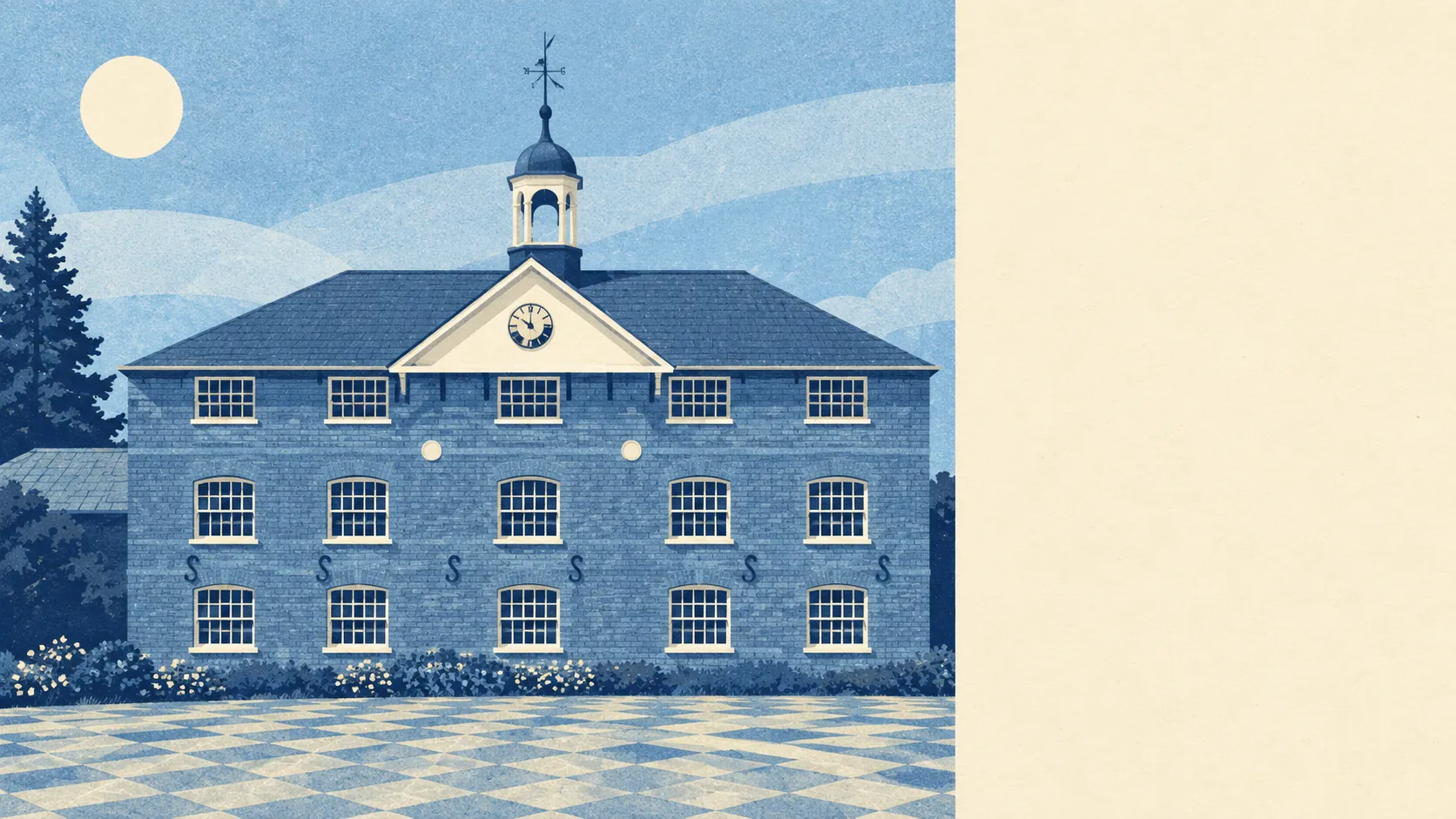
Water is just as close. The nearest river, stream or pond averages about 320 metres from home, with around 27 bodies of water within a kilometre. The River Test runs through the middle of town, powered Whitchurch Silk Mill for centuries and still sets the scene. Plenty of towns market themselves on a river view. Here it's hard to avoid one.
Cycling is where the countryside gets less convenient. The nearest stretch of the National Cycle Network averages about 5 kilometres away, and no postcodes are close to it. The lanes are there, but the signed long-distance routes start somewhere else.
The high street is modest. The rated-premises data counts 35 shops, 6 pubs and 1 restaurant. That's six places to drink and one to book a table, so on a birthday the town has to be generous or you go out of town. Of the 30 food premises with a hygiene rating, 70% hold the top score and none sits at the bottom.
Across the Basingstoke and Deane council area, fine-particle air pollution averaged about 6.4 micrograms per cubic metre in 2024. That's a council-wide figure, not a reading taken in Whitchurch itself.
About 8% of the area falls inside the North Wessex Downs National Landscape, which is the designation Whitchurch likes to call itself the gateway to. The data records no overlap with a site of special scientific interest and no ancient woodland within the area's boundary. The protection mostly starts at the edge of town, with the town itself left to get on with it.
Around the town the character comes from the landed estates and the old sites. Laverstoke Park and Hurstbourne Park are close by, and Laverstoke and Freefolk sit across the Test from each other. Watership Down, which Richard Adams made famous while living in Whitchurch, is a real hill nearby, not something he invented. Scheduled monuments such as Abra Barrow and Egbury camp are scattered across the surrounding countryside. That makes for a landscape where Iron Age earthworks and old estate parkland are more common than housing estates.
Homes here come with room outside. There are about 187,000 square metres of private garden for every 1,000 residents, which is generous by any town standard. Buyers moving from a city flat will find mowing the lawn becomes a regular job.
The valuation list holds 128 non-domestic premises, with shops the largest group at 33 and offices next at 11, alongside a run of workshop, warehouse and industrial units. These are premises on the rating list, not a count of businesses trading today, but they describe a town that still makes and stores things as well as selling them.
For eating out, the hygiene picture is clean. Of the 30 rated premises, 70% have the top score and none has a low one. The choice is small, and every rated place passes.
The surrounding area is one of Whitchurch's real strengths: river, parkland and protected downland within walking distance, and plenty of garden at home. Anyone after a busy night out will need to travel. Anyone after a long walk won't.